Avoid your inquiry is delay response, please enter your WhatsApp/Skype along with the message, so we can contact you at the very first time.
We will reply you within 24 hours. If for urgent case, please add WhatsApp/WeChat:
Warning: Undefined variable $public in /www/wwwroot/lvfertilizer.com/wp-content/themes/hyhadmin/header.php on line 350
Warning: Trying to access array offset on value of type null in /www/wwwroot/lvfertilizer.com/wp-content/themes/hyhadmin/header.php on line 350
,. Or call
Warning: Undefined variable $public in /www/wwwroot/lvfertilizer.com/wp-content/themes/hyhadmin/header.php on line 350
Warning: Trying to access array offset on value of type null in /www/wwwroot/lvfertilizer.com/wp-content/themes/hyhadmin/header.php on line 350
directly.
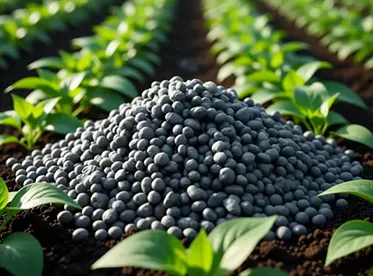
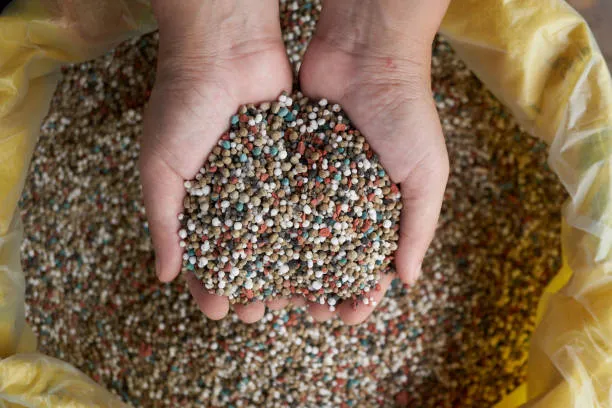
Bulk blending is a widely adopted method for producing multi-nutrient fertilizers tailored to specific agronomic requirements. This process, also known as dry blending or physical fertilizer blending, involves the mechanical mixing of discrete, granular fertilizer materials to achieve a target nutrient ratio. Its flexibility and economic efficiency have made it a cornerstone of customized crop nutrition and precision agriculture.
This guide provides a technical overview of the bulk blending process, from manufacturing and quality control to its agronomic applications and position within the broader fertilizer industry.
It is critical to distinguish granular fertilizer blending from the manufacturing of compound or granulated fertilizers.
The primary distinction lies in the manufacturing process: bulk blending is a physical process, while compounding is a chemical one. This difference has significant implications for nutrient segregation, application uniformity, and production cost.
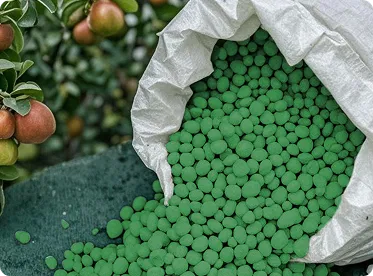
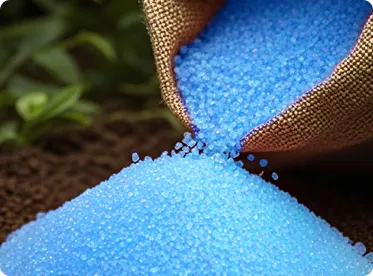
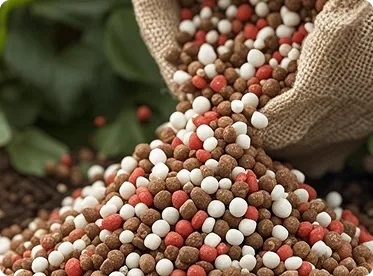
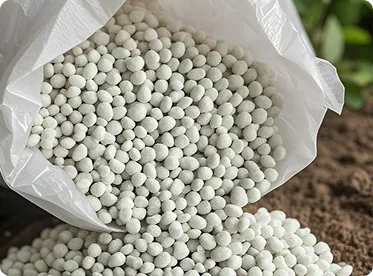
BB Fertilizer
The quality of a dry blended fertilizer is determined by a series of controlled steps designed to ensure formulation accuracy and physical integrity. The process is managed within a dedicated fertilizer blending plant.
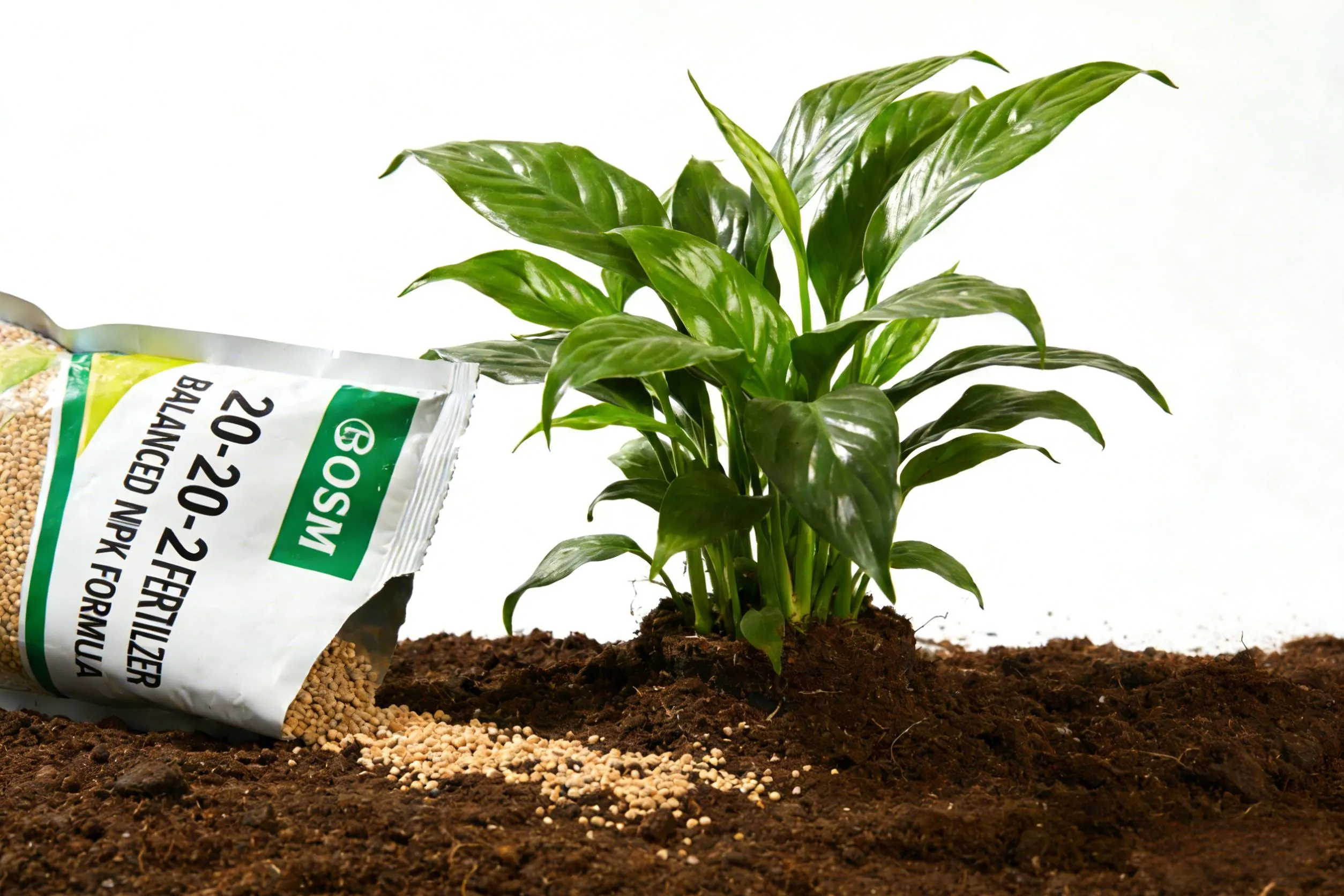
The process begins with the selection of high-quality straight fertilizers and fertilizer raw materials. The most common components are sources of the three primary macronutrients:
Additionally, secondary nutrients (Calcium, Magnesium, Sulfur) and micronutrients (Zinc, Boron, Iron) can be incorporated to meet specific soil or crop deficiencies.
The most significant technical challenge in fertilizer blending is managing the risk of segregation. Segregation occurs when components separate during handling, transport, or application, leading to non-uniform nutrient distribution in the field. This risk is primarily mitigated by ensuring particle size compatibility.
The Granulometric Spread Index (GSI) is a key metric for assessing the uniformity of particle sizes. To create a stable blend, the GSI of all components should be closely matched. The European Fertilizer Blenders Association (EFBA) provides guidelines for minimizing segregation.
| Granulometric Spread Index (GSI) Value | Risk of Segregation | Industry Recommendation |
| < 10 | Low | Ideal for minimizing granulometric segregation. |
| 10 – 18 | Moderate | Considered an acceptable range for quality blends. |
| > 25 | High / Severe | Indicates a high probability of severe segregation and uneven nutrient spreading. |
A low GSI and a minimal difference in the median particle size (d50) among components are essential for blend quality.
Once materials are selected and weighed using a precise batching system, they are mixed in specialized fertilizer mixing equipment. Common types include the ribbon blender, drum mixer, and vertical screw blender. The objective is to achieve a statistically homogeneous mixture, where any sample taken from the batch accurately reflects the intended fertilizer formulation. The blend’s uniformity is verified through regular sampling and laboratory testing of fertilizers.
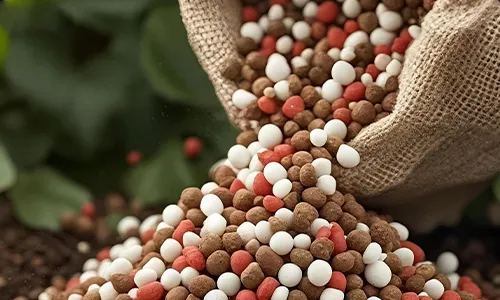
Mixing Uniformity
The adoption of bulk blending is driven by clear economic and agronomic advantages, particularly in the context of modern farming practices.
The capital investment and operational costs for a dry blending facility are significantly lower than for a chemical granulation plant. This results in a more competitive production cost per ton, especially for creating custom fertilizer blends.
The following data from the International Fertilizer Development Center (IFDC) illustrates the cost competitiveness of the dry-blend process compared to chemical granulation methods for a standard 15-15-15 NPK grade.
Production Cost Comparison: 15-15-15 Grade Fertilizer ($/Ton)
| Cost Component | Dry Blends | Compaction Granulation | Steam Granulation | Nitrophosphate |
| Fixed Costs | $10.02 | $19.01 | $21.72 | $32.24 |
| Variable Costs | $16.66 | $18.66 | $20.60 | $21.26 |
| Raw Materials | $158.87 | $134.93 | $134.93 | $171.06 |
| Total Cost/Ton | $185.55 | $172.60 | $177.25 | $170.18 |
| (Source: IFDC data) |
While raw material costs can vary, the substantially lower fixed and variable costs make bulk blending an economically attractive model for regional fertilizer retail operations and distributors.
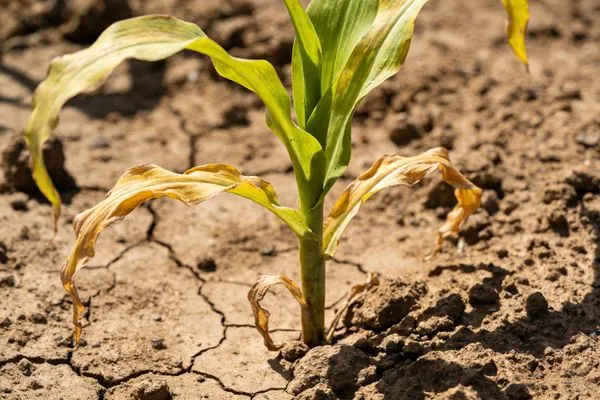
Bulk blending is intrinsically linked to precision agriculture. It enables the creation of customized nutrient formulation based on data from soil testing and analysis. This allows farmers to apply nutrients at a variable rate across a field, matching the specific needs of different zones. This practice optimizes crop nutrient requirements, increases yield potential, and improves Nutrient Use Efficiency (NUE).
Improved NUE is a critical benefit, as demonstrated in an on-farm study in Florida, which showed that a reduced, custom NPK blend maintained corn yields while increasing nitrogen efficiency from 47% to 80%.
Nitrogen Use Efficiency (NUE) in Corn Case Study
| Fertilizer Treatment | N Rate (lbs/acre) | Yield (bushels/acre) | Nitrogen Use Efficiency (NUE) |
| Grower Standard Practice | 363 | ~250 | 47% |
| Reduced NPK Blend | 255 | ~250 | 80% |
| (Source: University of Florida/IFAS) |
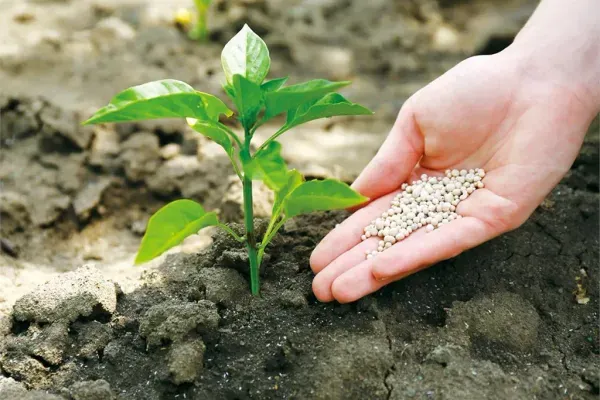
Economic and Agronomic Value Analysis
Maximizing the effectiveness of bulk blended fertilizers requires adherence to established best practices, often summarized by the 4R Nutrient Stewardship framework (Right Source, Right Rate, Right Time, Right Place).
The bulk blending industry is supported by a robust ecosystem of equipment manufacturers and solution providers.
A typical blending facility includes hoppers for material storage, a computerized control panel/system for managing formulas, an elevator/conveyor for transport, a central fertilizer blender/mixer, and a bagging and packaging line. Leading equipment manufacturers such as Sackett-Waconia, Doyle Equipment Manufacturing, AGI, Ranco Fertiservice, Inc., and FEECO International provide the technology that underpins the industry.
The fertilizer supply chain for bulk blends includes global raw material producers like The Mosaic Company and Nutrien Ltd., who supply the essential N, P, and K components. These materials are then utilized by fertilizer dealer/distributor networks and specialized blenders. Companies like Shandong Lvfeng Fertilizer Co., Ltd. operate as manufacturers providing a range of products, including custom BB fertilizer blending, compound formulas, and specialty products like water soluble NPK fertilizer for domestic and international agricultural markets. This integrated network ensures that farmers have access to the precise nutrient formulations required for efficient and sustainable crop production.