Avoid your inquiry is delay response, please enter your WhatsApp/Skype along with the message, so we can contact you at the very first time.
We will reply you within 24 hours. If for urgent case, please add WhatsApp/WeChat:
Warning: Undefined variable $public in /www/wwwroot/lvfertilizer.com/wp-content/themes/hyhadmin/header.php on line 350
Warning: Trying to access array offset on value of type null in /www/wwwroot/lvfertilizer.com/wp-content/themes/hyhadmin/header.php on line 350
,. Or call
Warning: Undefined variable $public in /www/wwwroot/lvfertilizer.com/wp-content/themes/hyhadmin/header.php on line 350
Warning: Trying to access array offset on value of type null in /www/wwwroot/lvfertilizer.com/wp-content/themes/hyhadmin/header.php on line 350
directly.
Your plant looks tired, and you reach for fertilizer—then worry you’ll burn the leaf tips or waste money. That stress is real. Overfeeding can spike salt levels in the soil and hurt roots. The fix is simple: dilute correctly, measure carefully, and feed in small, steady doses.
Yes—you can dilute NPK fertilizer, and you often should. The right dilution depends on the N-P-K analysis, your plant type (container vs. field), and the application method (soil drench vs. foliar spray). Start with label directions, then use a lower concentration for seedlings, bonsai, and potted plants; adjust by observing growth and avoiding excess salts.
How does NPK fertilizer dilution work for liquid feeding?
What dilution ratio should I use per gallon of water for potted plants?
Granular vs. liquid fertilizer: which is easier to dissolve and control?
Can I mix NPK with organic inputs like kelp or humic products?
Should I foliar feed—when does foliar application help (and when does it harm)?
Container plants & bonsai: why do they need weaker dilution?
How does soil pH affect nutrient uptake (phosphorus, potassium, nitrogen)?
Signs your concentration is too high: fertilizer burn, salt, and excess
A simple mixing checklist to fertilize efficiently and evenly
Buyer checklist: how distributors and brand owners choose a reliable fertilizer blend supplier
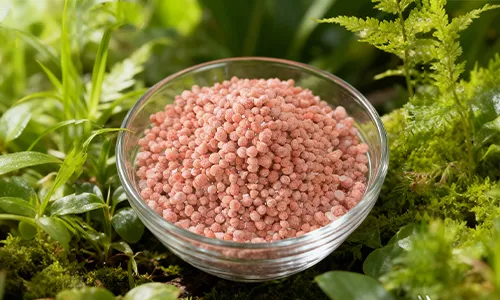
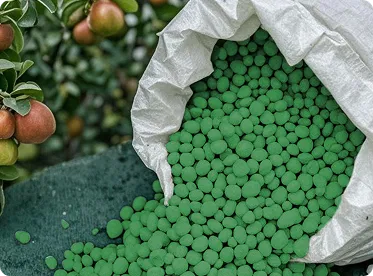
NPK 19-19-19 fertilizer granules
Think of N-P-K as a macro nutrition recipe: nitrogen supports green growth, phosphorus/phosphate supports roots and flowering, and potassium supports strength and stress tolerance. When you dilute a dry or water-soluble fertilizer into water, you’re creating a controlled “drink” for the plant—so roots can absorb nutrient ions at safe levels.
In my work supplying export-grade fertilizer products from China, I’ve seen the same pattern across countries and climates: most feeding problems happen because growers guess instead of measuring. A consistent formula, a stable dilution habit, and clean mixing tools usually beat “stronger is better.”
If you’re using npk fertilizer for routine feeding, remember this: dilution is less about “making it weak” and more about hitting an optimal range that matches growth stage, temperature, and your application method.
Most mistakes come from skipping math. Labels vary, but here’s a simple, safe starting approach for a liquid feed made from water-soluble NPK:
Start at 1/4 to 1/2 strength for indoor plants, seedling trays, and sensitive varieties.
Move to full label strength only after you see steady growth and no tip burn.
A practical way to think about it:
If the label says “1 tablespoon per gallon of water,” your safer first try is 0.5 tablespoon per gallon (that’s roughly the “0.5” step-down).
If your scoop is in metric: start around 5 ml instead of 10 ml.
If your label gives grams, you can reduce by half: e.g., 4 gram → 2 gram.
| Plant type | Safe starting dilution | Notes |
| Potted plants | 1/4–1/2 of label rate | Flush with plain water monthly to prevent salt buildup |
| Rose | 1/2 label rate | Increase during active growth, reduce in heat stress |
| Seedling | 1/4 label rate | Small roots + high sensitivity |
| Bonsai | 1/4 label rate | Tiny soil volume, easy to overdo |
| Outdoor crop | Follow agronomy plan | Use soil test + irrigation schedule |
If you’re unsure, choose the weaker option. Over-fertilization in containers often shows up as salt buildup, and extension guidance commonly recommends leaching with plenty of water if salts become excessive. For example, Penn State Extension describes flushing/leaching when soluble fertilizer salts become too high in potting media.
Granular products are convenient for slow feeding, but they can be harder to fine-tune. Liquid feeding is more “steerable,” especially in a container or greenhouse.
Here’s the real-world difference:
Granular: you apply and water in; release depends on moisture and temperature. If you over-apply, reversing is slower.
Liquid fertilizer: you dissolve into water, then apply; concentration control is much easier.
| Feature | Granular | Liquid |
| Control of dose | Medium | High |
| Speed (fast-acting) | Medium | High |
| Risk in small containers | Higher | Lower (if measured) |
| Best use | field soil, long cycles | potted plants, fertigation, quick corrections |
| Solubility management | depends on granule design | depends on mixing + water quality |
For distributors and importers, this is also a product-positioning point: offering both a granular line and a soluble/liquid line expands your customer base across field farms and greenhouse operators.
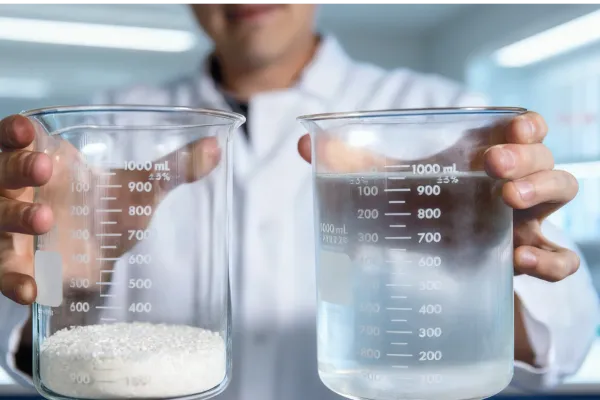
selecting the right water soluble fertilizer formulation
Yes, but mix smart. Many buyers ask if they can “upgrade” a standard fertilizer program by adding organic boosters like seaweed or humates. In practice, compatibility depends on the chemistry and the order of mixing.
A simple, safe rule:
Fill your container 70–80% with water.
Add NPK and stir until fully dissolved.
Add kelp (or other additives) last and stir again.
Apply soon—don’t store mixed solution for long.
Example “gentle combo” recipe (for garden containers)
1 part water-soluble NPK (at 1/2 strength)
1 cup of kelp meal tea (strained) or a light kelp extract
Optional: a small humic addition for soil health support
This kind of combination is popular because kelp is often used for stress support, while the NPK provides the main nutrition. If you’re selling to Fertilizer Brand Owners (OEM Clients), offer a compatibility sheet showing which additives blend cleanly (no sludge, no clogging).
Foliar feed can help when roots can’t access nutrition quickly—like cool soils, short-term deficiency, or micronutrient lock-up. But foliar methods demand caution because leaf tissue can scorch if concentration is too high.
A reliable reference explains foliar fertilization as applying nutrients by spray to leaves and stems for absorption, noting it can be useful but also debated depending on situation and formulation.
Practical foliar guidelines
Use a lower dilution than soil feeding.
Spray in cool hours (morning/evening).
Avoid mixing too many products until you confirm compatibility.
Don’t foliar spray during heat waves or drought stress.
If you plan a foliar application, treat it like precision work. Your goal is even coverage, not dripping runoff. A single wrong mix can create visible leaf burn.
This is where many new growers get surprised. A plant in open ground has a huge buffering system: more soil volume, more microbial action, and more drainage. A container is different—salts build up faster, and roots have nowhere to escape.
That’s why bonsai and small containers typically need:
lower concentration
smaller, more frequent feeding
occasional flushing (leaching) with clean water
Michigan State University Extension notes that excessive soluble salts can come from too much fertilizer in the soil solution and can be reduced by leaching with clear water (especially where drainage is limited).
“Less, but steady” beats “strong, but rare”
If you’re asking “Do I need fertilizer?”—the honest answer is: most plants do, but they need the right amount. In containers, I’d rather see gentle feeding twice than one heavy feed that causes stress.
Even the best fertilizer program fails if ph is out of range. pH shapes how easily roots absorb macro and micronutrient elements.
A straightforward guidance from HORIBA explains that soil pH affects nutrient availability and that many nutrients are most available in roughly pH 6.0–7.5 for many plants.
Purdue Extension also emphasizes that soil pH directly affects nutrient availability.
Simple pH impact snapshot (easy mental model)
Too acidic: phosphorus can become less available; roots struggle.
Too alkaline: many micronutrients become less available; plants look pale.
Near neutral: nutrients are more balanced and uptake improves.
This is why professional farm owners and government projects often start with soil testing before specifying a fertilizer blend. For tender projects, a one-page pH + nutrition guide adds real authority to your bid.
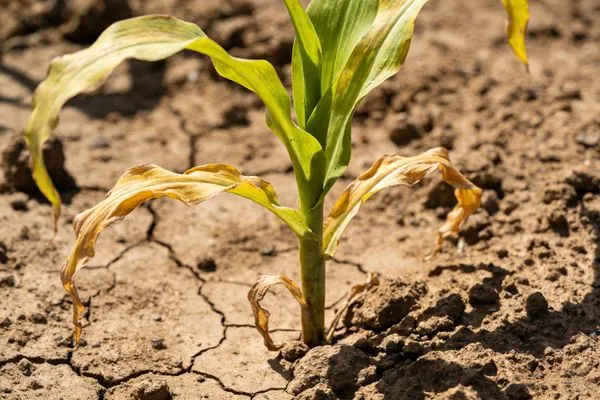
If you’re reading this, you probably want the main risk in plain words: excess fertilizer can burn plants. In containers, “burn” often comes from salts in the root zone.
University of Maryland Extension explains that excess fertilizer or salts can appear as marginal leaf browning/scorch and that salts can damage roots, leading to wilting and stunting; foliar contact can also cause scorch.
Common warning signs
Brown leaf tips or edges
White crust on soil (salt residue)
Wilting even when soil seems wet
Slow growth after feeding
A sharp “chemical” look on new growth
A quick “risk meter” (text chart)
Low risk: weak dilution + good drainage + periodic plain-water rinse
Medium risk: full strength + warm temps + fast growth
High risk: strong mix + small pot + poor drainage + frequent feeding
If you suspect burn, stop feeding and flush with clean water. That aligns with multiple extension recommendations about leaching soluble salts in container media (see Penn State Extension above).
This section is where many professional buyers turn “good intentions” into consistent results. Here’s my field-tested checklist that works for farms, greenhouses, and export customers running trials:
Read the label and confirm N-P-K analysis (your n-p-k).
Choose your application method: soil drench or foliar spray.
Measure the amount of water first (know your volume).
Measure the fertilizer dose (don’t eyeball).
Stir until fully dissolved (check solubility).
Apply evenly across the crop/root zone.
Track date + rate (a simple log prevents doubling).
One distributor client tested two programs on the same crop:
Program A: strong feeding once every two weeks
Program B: half-strength liquid feeding weekly
Program B produced steadier growth and fewer leaf-edge issues, especially in warmer weeks. The key wasn’t magic—it was stable nutrient concentrations and fewer spikes.
If you’re an importer or OEM brand owner, this is the kind of “simple protocol” content that builds buyer trust fast—because it reduces complaints and improves results.
Now let’s move to Action (AIDA). If you’re sourcing from China, here’s what serious buyers check before they place a container order:
Consistent formula and batch control
Stable granulation (for granular lines) and fast dissolve performance (for soluble lines)
Clear labeling for dilution ratio and per gallon of water guidance
Documentation for export, compliance, and traceability
OEM readiness: packaging, private label, and localized instructions
Technical support: application method guidance, not just sales talk
As a manufacturer and exporter of high-quality fertilizer products based in China, we build programs for:
Agricultural Distributors & Importers
Commercial Farm Owners & Cooperatives
Government & NGO Agricultural Projects
Fertilizer Brand Owners (OEM Clients)
You don’t need a “one-size-fits-all” product. You need a dependable partner who can match your market needs, crop conditions, and labeling rules—then deliver consistently.
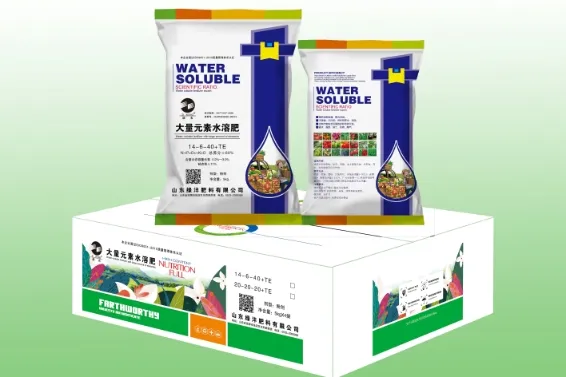
Can I dilute NPK fertilizer more than the label says?
Yes. For indoor plants, potted plants, and a seedling stage, weaker dilution is often safer. Start lower, watch growth, then adjust.
What if I already mixed too strong—what should I do now?
Stop feeding and flush with plain water. Extension guidance for containers often recommends leaching to reduce excessive salts in the soil solution.
Is liquid fertilizer better than granular for beginners?
Often yes, because liquid dosing is easier to control and correct. Granular can be great, but it’s slower to reverse if you apply too much.
Can I use a foliar spray with NPK?
You can, but keep dilution low and avoid hot sun. Foliar fertilization works through leaf absorption but carries burn risk if concentration is high.
Yes, you can dilute NPK fertilizer—and it’s often the best way to avoid burn.
Start low, especially for bonsai, containers, indoor plants, and seedlings.
Measure carefully: know your amount of water, dose, and ratio.
Liquid feeding is easier to control than granular when you need precision.
Watch for salt buildup and leaf-edge burn; flush with clean water if needed.
Don’t ignore ph—it can limit nutrient uptake even with great products.
If you’re sourcing at scale, choose a supplier that delivers consistent quality, clear labeling, and OEM support.
If you want, paste the NPK analysis on your bag (for example, 20-20-20) and tell me your plant type and container size—I’ll give you a clean, buyer-friendly dilution plan (including per gallon guidance) you can use in your product instructions and sales sheets.