Avoid your inquiry is delay response, please enter your WhatsApp/Skype along with the message, so we can contact you at the very first time.
We will reply you within 24 hours. If for urgent case, please add WhatsApp/WeChat:
Warning: Undefined variable $public in /www/wwwroot/lvfertilizer.com/wp-content/themes/hyhadmin/header.php on line 350
Warning: Trying to access array offset on value of type null in /www/wwwroot/lvfertilizer.com/wp-content/themes/hyhadmin/header.php on line 350
,. Or call
Warning: Undefined variable $public in /www/wwwroot/lvfertilizer.com/wp-content/themes/hyhadmin/header.php on line 350
Warning: Trying to access array offset on value of type null in /www/wwwroot/lvfertilizer.com/wp-content/themes/hyhadmin/header.php on line 350
directly.
Choosing the right fertilizer can dramatically affect crop yield, soil health, and farm profitability. In this guide, I explain how liquid, granular, and water-soluble fertilizers work, when to use each type of fertilizer, and how professional growers make smarter fertilization decisions for profitable crop production.
Farmers often struggle with uneven growth, poor nutrient uptake, or rising input costs. Using the wrong fertilizer type can waste money and limit yield. The good news? Understanding liquid vs granular fertilizer differences helps you match nutrients precisely to crop needs and soil conditions.
Normal fertilizer (usually granular or dry fertilizer) releases nutrients slowly through soil breakdown, while water soluble fertilizers and liquid fertilizer dissolve quickly, allowing fast nutrient absorption and precise application through irrigation or spraying systems. Each fertilizer type serves different crop stages, climates, and farming goals.
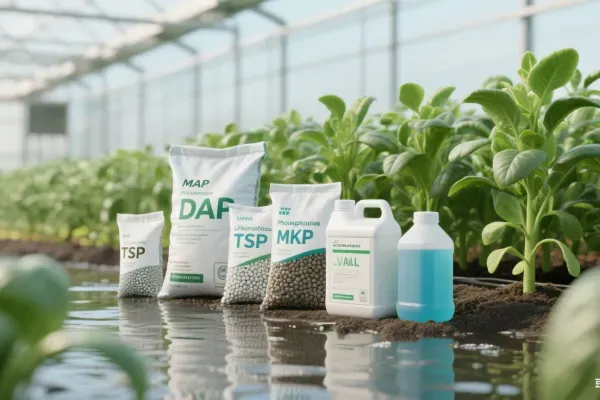
What Are the Water-Soluble Phosphorus Fertilizers
What Is Fertilizer and Why Do Crops Need It?
What Is Liquid Fertilizer and How Does It Work?
What Is Granular Fertilizer and When Is It Used?
What Is a Water-Soluble Fertilizer?
Liquid vs Granular Fertilizer: What’s the Difference?
How Nutrient Release and Uptake Affect Crop Growth
Application Method: How Farmers Fertilize Efficiently
Soil Conditions and Nutrient Requirements Explained
Which Fertilizer Type Supports Profitable Crop Production?
How to Choose the Right Fertilizer Supplier and OEM Partner
A fertilizer is any material added to soil or plants to provide essential plant nutrient elements required for growth. Crops remove nutrients every harvest cycle, so fertilization replaces what the soil loses.
Most fertilizers contain three primary nutrients:
| Nutrient | Function | Example Impact |
|---|---|---|
| Nitrogen | Leaf growth | Strong vegetative development |
| Phosphorus | Root & flowering | Early plant establishment |
| Potassium | Stress resistance | Higher yield quality |
Plants need balanced nutrient supply because nutrients are absorbed through roots or leaves. Without proper fertilization, crops show nutrient deficiencies, reduced yield, and weak resistance to stress.
Modern fertilizers provide nutrients in different delivery systems. Some are slow-release, while others are quick-release solutions designed for immediate plant response.
As a leading fertilizer manufacturer and exporter in China, we work closely with distributors and commercial farms worldwide to design formulations adapted to real field conditions—not just laboratory results.
Liquid fertilizer is a fertilizer solution where nutrients are dissolved or suspended in liquid form. Farmers apply it through irrigation systems, spraying equipment, or foliar feeding.
Liquid fertilizers provide nutrients rapidly because they are already available for plant uptake. When applied correctly, liquid fertilizers provide uniform nutrient distribution across large fields.
Key characteristics include:
Fast absorption
Precise dosage control
Ideal for fertigation and drip irrigation
Easy mixing with micronutrient blends
Liquid fertilizers are often used during critical growth stages or when quick correction is needed. For example, young plants respond quickly when liquid nutrients reach the root zone or leaves.
Many modern farms use liquid feed programs to maintain steady nutrient availability throughout the growing season.
Example applications:
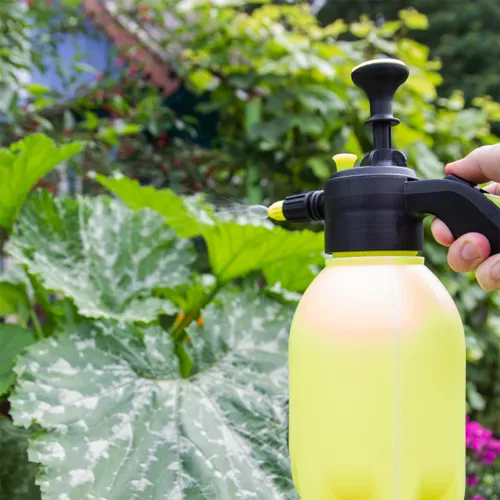
Foliar spray for tomato plants
Greenhouse vegetable production
High-value horticulture crops
A typical liquid concentrate like 24-25-4 contains 24% nitrogen, supporting rapid vegetative growth during early stages.
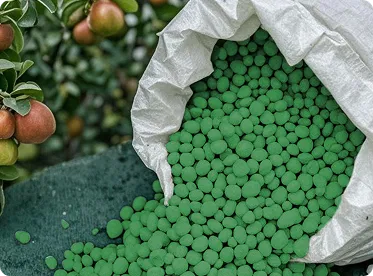
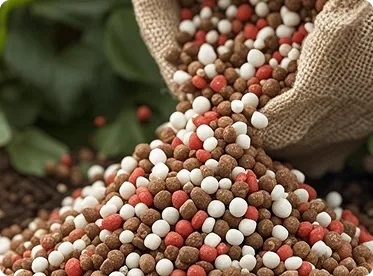
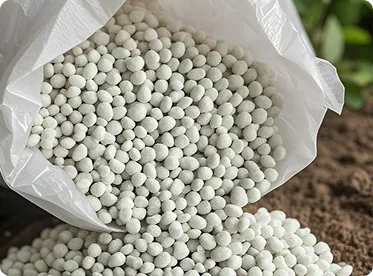
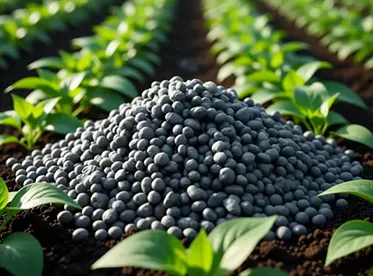
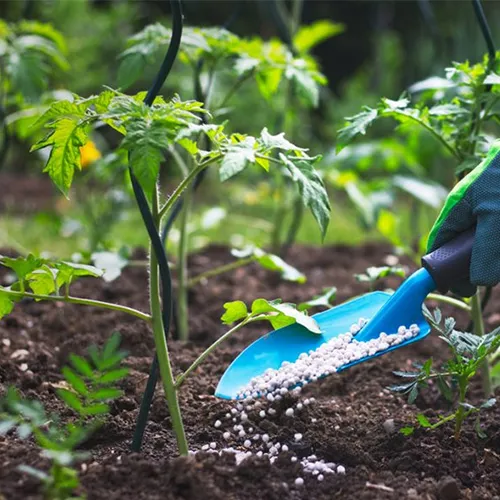
Granular fertilizer is a dry fertilizer produced in pellet form or particles designed for soil application. Granular products are typically sprinkled around plants or broadcast across fields.
Unlike liquid forms, nutrients supplied by the granular fertilizer must dissolve gradually before plants absorb them.
Granular fertilizers may:
Release nutrients slowly
Improve long-term soil fertility
Reduce application frequency
Support large-scale farming efficiency
Farmers commonly use granular fertilizer before planting or as top-dressing during crop development.
Advantages include:
Easier storage and transportation
Stable shelf life
Suitable for bulk application
However, nutrient release depends heavily on soil moisture and temperature. In dry conditions, uptake slows because granules must dissolve first.
Using granular fertilizers is common in cereal crops, plantations, and broad-acre farming where long-term nutrient release matters.
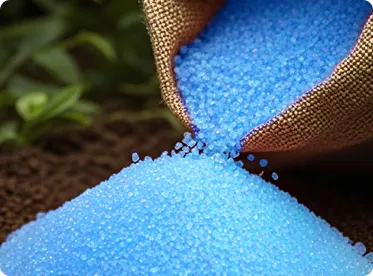
A water-soluble fertilizer is specially formulated to fully dissolve in water, creating a uniform fertilizer solution without residue.
Water soluble fertilizers are widely used in precision agriculture because nutrients become immediately available for plant uptake.
These fertilizers are typically applied through:
Drip irrigation systems
Fertigation equipment
Foliar spray programs
Key benefits:
High nutrient efficiency
Accurate dosing
Rapid correction of deficiencies
Water solubility allows farmers to tailor feeding schedules precisely. Crops receive nutrients exactly when needed, reducing waste and environmental runoff.
Many greenhouse growers prefer water soluble fertilizer because it ensures consistent nutrient delivery across all plants
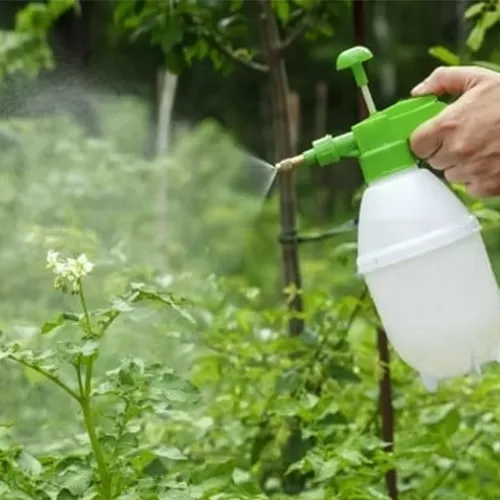
foliar spraying
Understanding what’s the difference between liquid and granular fertilizers helps growers select the best option for their crops.
| Feature | Liquid | Granular |
|---|---|---|
| Nutrient release | Quick-release | Slow-release |
| Application | Spray or irrigation | Soil spreading |
| Uptake speed | Fast | Gradual |
| Precision | High | Moderate |
| Labor | Lower with automation | Manual or mechanical |
The differences between liquid and granular systems mainly relate to water solubility and nutrient availability.
Liquid fertilizer works faster.
Granular fertilizer lasts longer.
Water soluble fertilizer combines speed with precision.
Whether you choose a granular or liquid fertilizer depends on crop type, climate, and operational scale.
Plants grow best when nutrient release matches crop demand. Poor synchronization leads to wasted fertilizer or nutrient stress.
Liquid nutrients become available for plant uptake almost immediately, making them ideal for correcting deficiencies.
Granular fertilizers release nutrients slowly through soil interaction. This controlled release supports steady growth over time.
Important factors affecting uptake:
Soil moisture
Root zone activity
Temperature
Fertilization timing
For example:
Early growth → quick-release fertilizer
Mid-season → balanced feeding
Late stage → potassium support
Understanding the difference between nutrients supplied by each fertilizer type helps optimize yield performance.
The application method strongly influences fertilizer efficiency.
Common Methods
1. Broadcasting (Granular)
Fertilizers are generally spread across fields.
Suitable for staple crops.
2. Fertigation
Fertilizer mixed with water in irrigation systems.
Improves nutrient distribution.
3. Foliar Spray
Nutrients absorbed through leaves.
Fast correction of deficiencies.
Liquid fertilizer often requires more precise equipment but results in better control.
Granular application than granular liquid systems may require fewer applications but less flexibility.
Farmers should avoid applying fertilizer during extreme heat or heavy rainfall to prevent losses.
Every farm has unique soil conditions and nutrient requirements.
Key factors include:
Soil pH
Organic matter content
Moisture availability
Crop nutrient demand
Chemical fertilizers are widely used because they deliver consistent nutrient ratios. However, combining them with organic fertilizer improves soil structure.
Farmers must analyze soil tests before applying fertilizer to avoid imbalance.
A gardener growing vegetables may need different fertilizer strategies compared with commercial grain farms.
Matching fertilizer type to soil ensures optimal nutrient distribution and improved crop production.
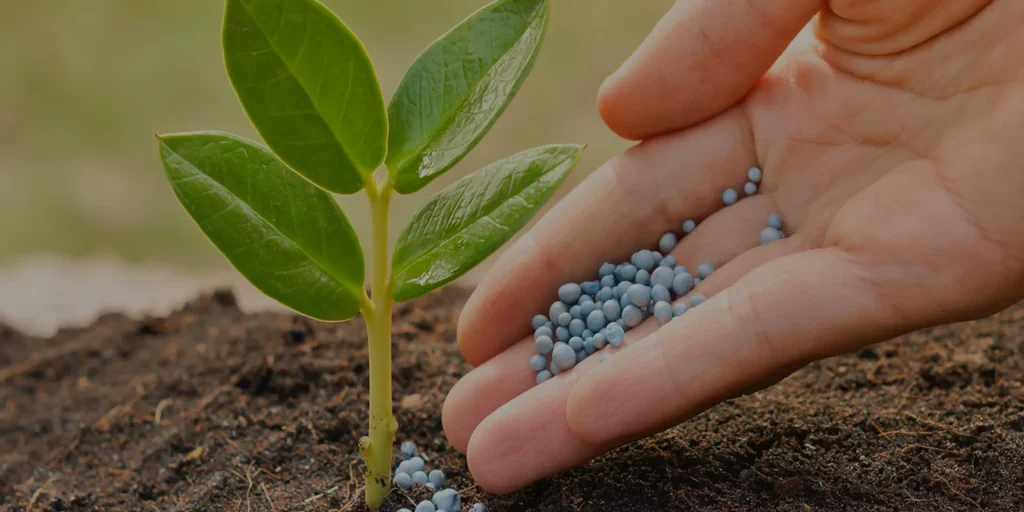
how to use complex fertilizer
From our experience supplying fertilizer to global distributors and agricultural projects, successful farms rarely rely on a single product.
Instead, they combine granular and liquid fertilizers strategically.
| Growth Stage | Recommended Fertilizer |
|---|---|
| Pre-planting | Granular base fertilizer |
| Early growth | Liquid feeding |
| Flowering | Water-soluble nutrients |
| Yield stage | Balanced potassium formula |
This hybrid approach improves crop production while controlling costs.
Government agricultural programs and cooperatives increasingly adopt precision fertilization to achieve profitable crop production with reduced environmental impact.
For distributors, importers, and fertilizer brand owners, choosing a reliable manufacturer matters as much as selecting fertilizer type.
As a China-based fertilizer manufacturer and exporter, we support:
Agricultural distributors seeking stable supply
Commercial farm owners needing tailored formulations
Government & NGO agricultural projects
OEM fertilizer brands requiring customization
What professional buyers should evaluate:
Production certifications
Nutrient consistency
Custom formulation capability
Export logistics reliability
Technical agronomy support
Working directly with manufacturers allows buyers to optimize fertilizer formulations for regional crops and climates.
How can I tell the difference between liquid and granular fertilizer?
Liquid fertilizer dissolves instantly and acts quickly, while granular fertilizer releases nutrients gradually through soil moisture.
Which fertilizer works best for young plants?
Liquid fertilizers are ideal because nutrients are immediately available for plant uptake and support early growth.
Are water soluble fertilizers better than dry fertilizer?
They are better for precision feeding and rapid response, but dry fertilizer works well for long-term soil fertility.
Can farmers use both fertilizer types together?
Yes. Many growers combine granular base fertilization with liquid feeding programs for best results.
Does fertilizer choice affect yield?
Absolutely. Matching fertilizer type with crop stage improves nutrient efficiency and final harvest output.
Is liquid fertilizer more expensive?
Per unit it may cost more, but efficiency and reduced waste often lower overall fertilization costs.
Fertilizer choice directly affects crop yield and nutrient efficiency.
Liquid fertilizer offers rapid nutrient availability.
Granular fertilizer provides slow and sustained nutrient release.
Water soluble fertilizers enable precision agriculture and fertigation.
Combining fertilizer types often delivers best results.
Soil conditions and crop stage should guide fertilization decisions.
Reliable manufacturers ensure consistent quality and supply stability.
Smart fertilizer strategies lead to profitable crop production.
If you are an agricultural distributor, farm operator, or OEM fertilizer brand seeking reliable supply and customized solutions, we welcome you to contact us to develop fertilizer programs tailored to your market and crops.