Avoid your inquiry is delay response, please enter your WhatsApp/Skype along with the message, so we can contact you at the very first time.
We will reply you within 24 hours. If for urgent case, please add WhatsApp/WeChat:
Warning: Undefined variable $public in /www/wwwroot/lvfertilizer.com/wp-content/themes/hyhadmin/header.php on line 350
Warning: Trying to access array offset on value of type null in /www/wwwroot/lvfertilizer.com/wp-content/themes/hyhadmin/header.php on line 350
,. Or call
Warning: Undefined variable $public in /www/wwwroot/lvfertilizer.com/wp-content/themes/hyhadmin/header.php on line 350
Warning: Trying to access array offset on value of type null in /www/wwwroot/lvfertilizer.com/wp-content/themes/hyhadmin/header.php on line 350
directly.
Bad fertilizer math wastes money fast. Too little feed limits crop growth. Too much raises cost, burns plants, and hurts yield. The smart fix is simple: use the right formula to calculate fertilizer accurately based on crop demand, product analysis, and application method.
To calculate compound fertilizer, start with the crop’s nutrient target, especially nitrogen, phosphorus, and potassium, then divide the required nutrient amount by the nutrient percentage in the fertilizer grade. For example, if you need 100 kg of nitrogen and use a 20-10-10 product, divide 100 by 0.20 to get 500 kg of fertilizer. The same logic also applies to greenhouse stock tanks and injector ratios.

What Is a Compound Fertilizer?
As a leading manufacturer and exporter of high-quality fertilizer products based in China, we work with distributors, importers, farm owners, cooperatives, government projects, and OEM fertilizer brands that need reliable numbers, not guesswork. In real projects, strong fertilizer calculations are just as important as strong product quality.
What does compound fertilizer really mean?
Why are accurate fertilizer calculations so important?
How do the three numbers on a fertilizer bag work?
How do you calculate the amount of fertilizer from NPK percentage?
How do you calculate fertilizer per acre?
How do you calculate NPK for custom nutrient targets?
What changes in fertilizer calculations for greenhouse crops?
How do stock solution calculations and injector ratios work?
How can a grower choose the right fertilizer analysis?
What common mistakes should buyers avoid?
A compound fertilizer contains more than one major plant nutrient in the same product. In most cases, buyers focus on nitrogen, phosphorus, and potassium, the three main nutrients shown as n-p-k on the label. A compound product may be made for basal use, top dressing, fertigation, or greenhouse feeding, depending on the crop and farming system.
For buyers, the key point is this: the product name is not enough. You must look at the fertilizer analysis and decide whether it matches crop needs. One grade may work well for maize, another for vegetables, another for fruit trees, and another for greenhouse crops. This is why importers and commercial growers should compare product grade with real fertilizer requirements, not only price.
In B2B trade, this matters even more. A distributor may stock several compound blends for different regions. A fertilizer brand owner may want OEM formulas for local soils. A government project may need stable, broad-use grades for extension programs. In all of these cases, you need to know how to determine the amount of fertilizer correctly before you talk about logistics or price.
Good calculation helps you match nutrients to crop demand. Bad calculation leads to waste, imbalance, and weaker returns. That is why most extension systems say fertilizer recommendations should begin with a soil test and crop need, not a guess. Oklahoma State notes that fertilizer recommendations should be based on soil-test results that identify nutrient deficiency and crop demand.
This matters because plants do not need “more fertilizer.” They need the right amount of nutrients at the right stage. If you oversupply nitrogen, you may push soft growth or leaching loss. If phosphorus is too low, root development can suffer. If potassium is too low, plant strength and quality may drop. In other words, the real goal is nutrient balance.
For commercial farms and cooperatives, correct math also protects purchasing decisions. When you know the amount of fertilizer needed, you can estimate tonnage, budget, storage, and field planning much more accurately. That is why many buyers now use a spreadsheet or calculator before placing bulk orders.
The three numbers on a fertilizer bag show the percentage of total nitrogen, available phosphate, and soluble potash in the product. For example, a 20-10-10 fertilizer has 20% nitrogen, 10% phosphate, and 10% potash. Penn State’s explanation of fertilizer ratios follows this same logic when working from nutrient recommendations.
That means each 100 kg of a 20-10-10 fertilizer containing 20 kg of nitrogen, 10 kg of phosphate, and 10 kg of potash. This is the foundation of nearly all compound fertilizer math. If you understand this one point, most other fertilizer calculations become much easier.
Here is a simple reference table:
| Fertilizer grade | Percentage of nitrogen | Percentage of phosphorus and potassium* | Main idea |
|---|---|---|---|
| 15-15-15 | 15% | 15% / 15% | Balanced field fertilizer |
| 20-10-10 | 20% | 10% / 10% | Higher nitrogen blend |
| 12-24-12 | 12% | 24% / 12% | High phosphorus starter |
| 13-13-21 | 13% | 13% / 21% | Higher potassium option |
*Commercial labels usually show phosphate and potash, not elemental P and K.
The core formula is simple:
Amount of fertilizer = nutrient required ÷ nutrient percentage in decimal form
So if you need 100 kg of nitrogen and use a 20-10-10 fertilizer:
nutrient required = 100 kg N
percentage of nitrogen = 20% = 0.20
amount of fertilizer = 100 ÷ 0.20 = 500 kg
That means you need 500 kg of this fertilizer to supply 100 kg of nitrogen. This logic is widely used in extension fertilizer math and is the fastest way to calculate fertilizer from nutrient demand.
Let’s show it another way. Suppose a crop needs 60 kg N, and your product is 15-15-15.
60 ÷ 0.15 = 400 kg fertilizer
So the weight of the fertilizer needed is 400 kg. Once you know the target nutrient, you can easily determine how many bags, pallets, or metric tons you need.
A quick buyer table:
| Nutrient target | Fertilizer grade | Formula | Result |
|---|---|---|---|
| 100 kg N | 20-10-10 | 100 ÷ 0.20 | 500 kg fertilizer |
| 60 kg N | 15-15-15 | 60 ÷ 0.15 | 400 kg fertilizer |
| 80 kg N | 16-8-24 | 80 ÷ 0.16 | 500 kg fertilizer |
This is the simplest way to calculate the amount of fertilizer when one nutrient drives the program.
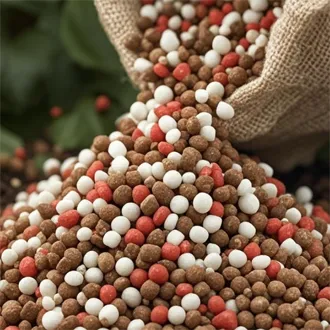
npk fertilizer
Field growers often work in per acre units. The method stays the same, but the recommendation is usually given as pounds or kilograms of nutrient per acre. Suppose the recommendation is 120 lb N per acre and the product is 30-10-10.
Use the formula:
pounds of fertilizer = pounds of nutrient required ÷ decimal nutrient content
So:
120 lb N ÷ 0.30 = 400 lb fertilizer per acre
That means the grower should apply 400 pounds of fertilizer per acre to meet nitrogen demand. Penn State and other extension systems use the same concept when converting nutrient recommendations into actual product amounts.
Another example:
crop target = 90 lb N per acre
fertilizer = 18-18-18
90 ÷ 0.18 = 500 lb fertilizer per acre
This is how you move from nutrient recommendation to real field operation. You stop asking “how much fertilizer should I use?” and start asking the better question: “How much product is needed to supply the target nutrient?”
Sometimes a grower does not just need nitrogen. They need a full nutrient target such as 120-60-60, or a ratio that supports a specific crop stage. In that case, you compare the crop target with the fertilizer with an analysis you plan to use.
For example, suppose your target is:
120 kg nitrogen
60 kg phosphorus
60 kg potassium
And your fertilizer is 20-10-10.
If you calculate based on nitrogen:
120 ÷ 0.20 = 600 kg fertilizer
That 600 kg fertilizer will also supply:
phosphorus = 600 × 0.10 = 60 kg
potassium = 600 × 0.10 = 60 kg
In this case, the product is a perfect match. This is a simple way to calculate npk when the formula already aligns with crop demand.
But not every product matches perfectly. Suppose the target is 120-60-90 and the fertilizer is still 20-10-10. Then 600 kg fertilizer supplies enough N and P, but only 60 kg K. You would need an extra potassium source. This is why smart buyers compare crop targets with different fertilizer grades before deciding which formula to stock or promote.
Fertilizer calculations for greenhouse crops often use ppm, stock tanks, injectors, and irrigation volumes rather than only field acreage. Purdue notes that greenhouse growers may use programs like FERTCALC to compute pounds of fertilizer for stock tanks based on ppm targets and injector settings.
In greenhouse work, the goal is often to supply a target concentration, such as a 200 ppm N solution, instead of a flat field-rate application. Michigan State also warns that every fertilizer label is not interchangeable. Different products need different mixing rates to reach the same ppm nitrogen target.
This changes the conversation. Instead of asking only about fertilizer application rates per hectare, a greenhouse manager may ask:
how many ounces of fertilizer per gallon?
what injector ratio is being used?
how many gallons of stock solution to mix?
how much product is needed to mix stock solutions for this week?
That is why greenhouse buyers usually prefer high-solubility, stable fertilizer products designed for injection systems.
This is one of the most important parts of greenhouse feeding. A fertilizer injector takes a concentrated stock and dilutes it into irrigation water. Georgia’s injector guide explains the idea clearly: with a fertilizer injector ratio of 1:100, 1 part stock solution is mixed with 99 parts water to make 100 parts final solution.
That means stock solution calculations start with three numbers:
target ppm nutrient in the final solution
injector ratio
fertilizer grade
Michigan State notes that the fertilizer label should tell you how much product is required at a given concentration and injector setting, and warns not to use one fertilizer label to mix a different product.
A simple working example:
You want a 200 ppm n solution using a 20-10-20 product and a 1:100 injector.
Because 200 ppm means 200 mg N per liter in the final diluted feed, the stock must be 100 times stronger than the final solution when the injector ratio is 1:100. In practice, growers often use label tables or established greenhouse calculators to avoid hand errors. Purdue specifically references calculator tools for this task.
Here is the practical logic:
| Item | Example value |
|---|---|
| Target final feed | 200 ppm N |
| Injector ratio | 1:100 |
| Fertilizer grade | 20-10-20 |
| Stock strength needed | 100× final concentration |
| Main concern | Solubility and accurate mixing |
Greenhouse and nursery growers often ask:
how many ounces of fertilizer to make stock?
how many gallons of stock tank will be used?
how many pounds of fertilizer are required for 100 gallons of dilute fertilizer or 200 gallons of dilute fertilizer after injection?
Those questions are normal. The key is to match the injector ratio and the nutrient target exactly.
The best starting point is still the crop and the soil. Extension sources repeatedly recommend a soil test or tissue-based fertility program before major nutrient decisions.
After that, compare:
crop stage
target nutrient balance
soil fertility or substrate condition
irrigation method
local climate
budget and logistics
A balanced NPK grade may be fine for general use, but some crops need a higher potassium finish, stronger phosphorus start, or a more controlled nitrogen program. That is why importers and distributors often keep more than one grade in the warehouse.
Here is a simple buyer guide:
| Situation | Better choice |
|---|---|
| General broad-acre feeding | Balanced compound fertilizer |
| Early rooting stage | Higher phosphorus option |
| Fruit filling / quality stage | Higher potassium option |
| Greenhouse fertigation | Fully soluble formula |
| OEM brand program | Custom formulation based on market need |
For OEM clients, this is where manufacturing flexibility matters. We often help buyers choose a formula, package size, and labeling system that matches their market.

npk fertilizer
The first mistake is focusing only on the larger number of the fertilizer and ignoring the total formula. Some buyers see a higher nitrogen number and assume the product is “stronger,” but the right product depends on crop timing and nutrient balance, not just one number.
The second mistake is ignoring label-specific mixing guidance. Michigan State clearly says not to use the label from one fertilizer to mix another. Different formulas need different mixing rates.
The third mistake is failing to recheck the math. In real operations, a small calculation error can affect hectares of land or a week of greenhouse irrigation. So always recheck your calculations. Confirm:
target nutrient
fertilizer grade
decimal conversion
final unit
injector setting
number of tanks, acres, or bags
This matters even more when bulk purchasing. If you misjudge the amount of fertilizer needed, you may buy too little and delay operations, or buy too much and tie up working capital. For importers and agricultural projects, accurate planning is part of professional procurement.
Suppose a maize farm needs 150 lb N per acre, and the chosen product is 25-10-10.
Step 1: Convert N percentage to decimal
25% = 0.25
Step 2: Divide nutrient target by nutrient percentage
150 ÷ 0.25 = 600 lb fertilizer per acre
Step 3: Estimate product for 50 acres
600 × 50 = 30,000 lb fertilizer
Step 4: Convert to bags
If one bag of fertilizer is 50 lb, then
30,000 ÷ 50 = 600 bags
Now the buyer can easily determine:
how many pounds of fertilizer are required
the number of bags
the total shipment volume
That is how fertilizer application planning becomes purchasing planning.
What is the easiest way to calculate compound fertilizer?
Use this formula: required nutrient ÷ nutrient percentage as a decimal. If you need 100 kg nitrogen and the fertilizer has 20% nitrogen, divide 100 by 0.20 to get 500 kg fertilizer.
How do I calculate fertilizer per acre?
Take the nutrient recommendation per acre and divide it by the nutrient content of the fertilizer. If the crop needs 120 lb N per acre and the fertilizer is 30% nitrogen, then 120 ÷ 0.30 = 400 lb fertilizer per acre.
How do I calculate NPK from a fertilizer grade?
Read the grade as nitrogen, phosphate, and potash percentages. Then multiply the fertilizer weight by each percentage in decimal form to find the amount of each nutrient supplied.
Why is a soil test important before fertilizer application?
Because nutrient demand should be based on actual soil conditions. Extension guidance says fertilizer programs should be built from test results and crop need, not guesswork.
What is a fertilizer injector ratio?
It shows how much stock solution is diluted into irrigation water. A 1:100 injector mixes 1 part stock with 99 parts water to make 100 parts final solution.
Can I use one fertilizer label to mix a different fertilizer?
No. Michigan State specifically warns not to use the label from one fertilizer to calculate another fertilizer’s concentration, because different formulas need different mixing rates.
Fertilizer calculation starts with crop nutrient demand, not guesswork.
The fastest formula is: nutrient required ÷ nutrient percentage.
The three numbers on the label show nitrogen, phosphate, and potash percentages.
Field rates are often planned per acre, while greenhouse systems often use ppm and injector ratios.
Stock solution calculations depend on the target concentration, fertilizer grade, and injector setting.
A soil test is the best base for nutrient planning.
Good math helps buyers estimate tonnage, bag count, stock-tank volume, and budget more accurately.
For distributors, OEM clients, and commercial farms, strong calculation support adds real value beyond the product itself.