Avoid your inquiry is delay response, please enter your WhatsApp/Skype along with the message, so we can contact you at the very first time.
We will reply you within 24 hours. If for urgent case, please add WhatsApp/WeChat:
Warning: Undefined variable $public in /www/wwwroot/lvfertilizer.com/wp-content/themes/hyhadmin/header.php on line 350
Warning: Trying to access array offset on value of type null in /www/wwwroot/lvfertilizer.com/wp-content/themes/hyhadmin/header.php on line 350
,. Or call
Warning: Undefined variable $public in /www/wwwroot/lvfertilizer.com/wp-content/themes/hyhadmin/header.php on line 350
Warning: Trying to access array offset on value of type null in /www/wwwroot/lvfertilizer.com/wp-content/themes/hyhadmin/header.php on line 350
directly.
When crops look weak or yields drop, many farms add more fertilizer—but the real problem is often timing. Apply too early and nutrients leach. Apply too late and plants can’t use them well. The fix is simple: match npk fertilizer timing to the crop’s growth cycle and your soil.
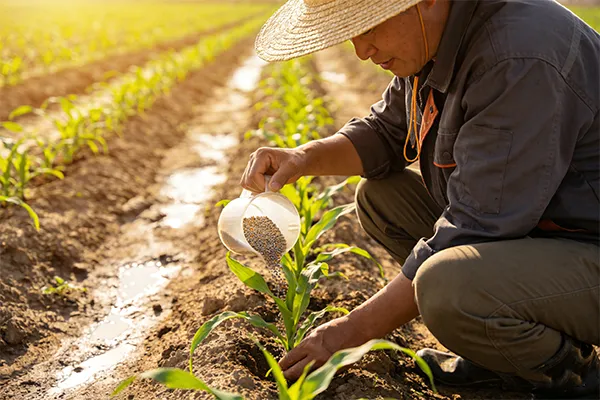
The best time to apply NPK fertilizer is when plants can take up nutrients fast—usually at planting (or right before), then again during key growth stages (like early vegetative growth and pre-flowering) using split applications for nitrogen. Soil test results, soil pH, and local weather decide the exact schedule. Extension and FAO guidance also emphasize applying nitrogen when plants will use it, and using split doses to improve nutrient use.
fertilizers
Why does the time to apply NPK fertilizer matter so much?
What is the best time to apply NPK for annual crops in the growing season?
How do soil test and soil pH change your fertilizer application plan?
Nitrogen timing: should you split N applications to reduce loss?
Phosphorus and potassium timing: when do plants need them most?
Granular vs liquid fertilizers vs slow-release: which timing works best?
Should you use foliar feeding, humic, or compost with NPK fertilizer?
How to apply NPK fertilizer for maize, leafy crops, flowers, and fruit?
Common mistakes: too much nitrogen, leaching, and nutrient deficiencies
Buying guide + case study + FAQs: choosing the best NPK supplier for bulk projects
In my experience exporting fertilizer to different climates, timing is the silent “profit lever.” You can buy great npk fertilizer, but if the time to apply is wrong, plants don’t receive the nutrients when they need them. That hurts plant health, and it also wastes money.
Plants take up nutrient elements at different speeds. Nitrogen moves easily in soil, so rain can push it away from the root zone. That’s why extension guidance says it’s best to apply nitrogen when plants will be ready to use it—rather than far ahead of demand.
A good schedule supports:
faster plant growth and healthier growth
stronger root development and better disease resistance
better fruit development and stable yields
less loss from leaching and runoff
This is why the best time to apply is usually tied to growth stages, not the calendar.
For most annual crops, the most common plan is base + topdress.
Base application (preplant or at planting):
Put NPK where young plants can reach it fast.
Support early stages of growth and root establishment.
Topdress application (early vegetative to pre-flowering):
Add more nitrogen when plants shift into rapid growth.
Maintain green foliage and steady nutrient absorption.
FAO guidance on timing and method emphasizes matching nutrients to plant requirements during the season, and notes that mobile nutrients like nitrogen benefit from proper placement and timing.
Simple rule that works:
If plants are not actively growing, don’t push heavy nitrogen. If growth is active, that’s when plants take up nutrients fast—and your fertilizer works harder.
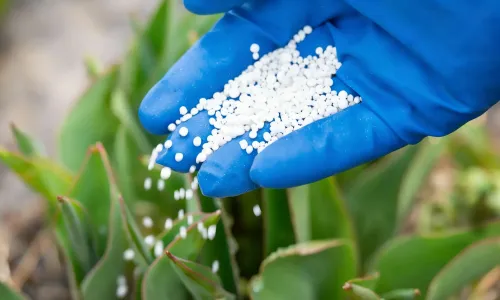
A soil test is the quickest way to stop guessing. It tells you what the soil already has and what it lacks—especially phosphorus and potassium, plus soil acidity (soil ph). North Carolina State Extension calls soil testing a quick, accurate way to determine soil pH and essential nutrient levels, and it helps avoid overfertilization. Penn State Extension also notes soil tests measure pH and available nutrients that drive recommended fertilizer rates.
If soil already has high phosphorus and potassium, you may focus more on nitrogen timing.
If soil pH is off, nutrient availability drops even if you apply fertilizer.
If your soil is sandy, nitrogen can leach faster, so frequent applications make more sense.
Quick soil test → timing decisions table
| Soil test result | What it means | Timing move |
|---|---|---|
| Low nitrogen risk + wet season | nitrogen loss likely | split nitrogen, avoid big early dose |
| Low phosphorus | weak root development | apply P early (preplant/planting) |
| Low potassium | weaker stress tolerance | plan K early + reinforcement before fruiting |
| pH too low/high | nutrient availability drops | correct pH early so plants take up nutrients better |
If you want optimal results, start with a basic soil test, then match fertilizer application to the growth cycle.
Yes—split timing often improves nitrogen efficiency.
University of Minnesota Extension explains nitrogen is mobile in soil and it’s best to apply it when plants are ready to use it, and sandy soils may benefit from more frequent applications at lower rates.
A practical example of split timing: Mississippi’s guidance on fertilizer timing notes nitrogen is not needed until plants germinate, and it’s best to split the recommendation with a second application around 30–45 days after the first.
Why split nitrogen works (plain language)
Plants get nitrogen when they can use it.
Less nitrogen sits in soil waiting to leach.
You reduce the risk of “too much nitrogen” early, which can push leafy growth and delay fruiting.
My export-side view: split nitrogen also helps importers and farm groups create a simple training routine for field teams. It’s repeatable. It scales. It supports healthy plant outcomes.
Think of the three primary nutrients like this:
Nitrogen helps leafy growth and fast vegetative growth.
Phosphorus supports root development and early plant establishment.
Potassium strengthens stress tolerance and supports flowers and fruit performance.
FAO explains nitrogen, phosphorus, and potassium are major nutrients used in large quantities by plants.
Timing guidance that shows up again and again:
Apply phosphorus early so young plants can build strong roots.
Ensure potassium is available before heavy fruit and flower demand.
Use nitrogen timing to match rapid growth peaks.
You don’t need to overcomplicate it. Just match each nutrient to what plants are doing right now.
Different fertilizer forms change how you schedule the work.
Granular fertilizers: good for base application and planned topdress.
Slow-release fertilizers: helpful when you want to slowly release nutrients and reduce frequent applications.
Liquid fertilizers: good for quick response, especially if you need to correct nutrient deficiencies fast.
If your weather is unpredictable, slow-release can smooth out supply. If you run commercial farms with tight labor schedules, granular fertilizers can be easier to manage at scale.
Small “timing map” (text chart)
Preplant / planting: granular base + correct P/K
Early growth: topdress nitrogen (often split)
Flowering / fruit set: support potassium and balanced nutrients
Late season: avoid excessive nitrogen (protect fruit quality)
This approach helps your fertilizer work efficiently and protects overall plant health.
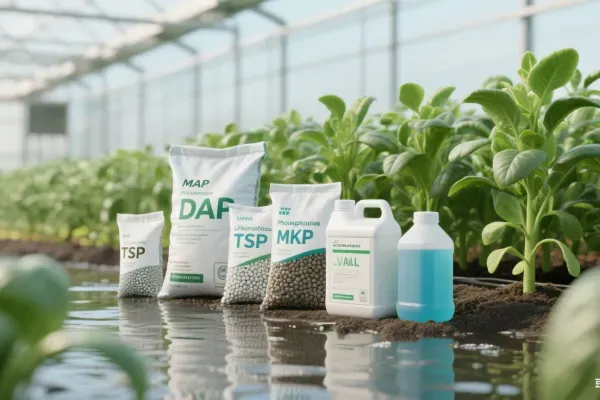
What Are the Water-Soluble Phosphorus Fertilizers
A lot of buyers ask about “boosters.” My answer: boosters are helpful when they support soil health and nutrient absorption, not when they replace good timing.
Compost supports soil health and feeds microorganisms in the soil.
Organic fertilizers can improve long-term soil structure and organic nutrients.
Humic substances are often used to support soil function and nutrient availability (especially where soil is tired or compacted).
FAO notes methods like fertigation can apply nutrients during the season according to plant requirements, and placement matters for mobile nutrients like nitrogen.
Also, soil testing guidance warns that overfertilization can stimulate excessive plant growth and increase disease likelihood—so adding organic inputs with a plan is smarter than “more is better.”
Practical tip:
Use compost for baseline soil improvement. Use NPK for precise nutrient support. Use humic as a supportive tool when soils struggle with availability or uptake.
Timing changes by crop type. Here are practical patterns you can adapt.
Maize (corn) timing
Maize demand for nitrogen rises fast after early establishment. Many agronomy guides discuss nitrogen timing options like preplant, at planting, and in-season sidedress.
Use base NPK at planting, then apply additional nitrogen in split doses during active growing stages.
Leafy crops
Leafy crops respond strongly to nitrogen, but too much nitrogen can create soft growth and quality issues. Plan small, steady doses during active growth, and keep an eye on foliage color.
Flowering plants and ornamental crops
For flowering plants, balance matters. Early phosphorus supports root system strength, and potassium supports flower performance. Avoid late heavy nitrogen if it pushes leaves instead of blooms.
Fruit crops
Fruit crops benefit from potassium during fruit and flower stages, and careful nitrogen timing so you don’t overpush leaves. This supports fruit development and better quality.
Good discipline: watch for signs of nutrient deficiencies, use soil test data, and adjust timing rather than blindly increasing rates.
Most fertilizer mistakes are timing mistakes.
Mistake 1: Applying nitrogen too early
Nitrogen moves with water, so early heavy nitrogen can leach before plants take it up.
Mistake 2: Ignoring drainage and rainfall patterns
Heavy rain + sandy soil = higher risk of leaching. Split applications help, and slow-release options can also help stabilize supply.
Mistake 3: Skipping soil tests
Without a soil test, you might apply phosphorus and potassium that the soil doesn’t need—or miss what it does need. Soil tests also measure pH, which regulates nutrient availability.
Mistake 4: Thinking “more fertilizer = more yield”
Overfertilization can stimulate excessive plant growth and increase disease risk.
Quote I share with distributors:
“Good fertilizer doesn’t fix bad timing. Good timing makes fertilizer look smart.”
As a China-based manufacturer and exporter of high-quality fertilizer products, our role is not just to ship bags. We support programs—government tenders, cooperative supply plans, OEM private labels, and distributor networks. Timing guidance becomes part of that support.
What B2B buyers usually need from a fertilizer partner
stable bulk supply and reliable delivery windows
consistent formulation and batch control
documentation for government and NGO projects
technical support (rates, schedules, training)
OEM services for fertilizer brand owners (custom packaging, branding)
Case study (typical export scenario)
Customer: Agricultural distributor supplying commercial farm owners and cooperatives
Problem: uneven results across regions; nitrogen losses during early rains
Plan: soil test program + switch to split nitrogen timing + balanced NPK base
Result: steadier plant growth, fewer deficiency complaints, better farmer confidence—because timing matched plant needs and reduced losses.
(We supported with training sheets and a seasonal fertilizer calendar for field teams.)
What is the best time to apply NPK fertilizer?
Usually at planting (or right before) for base nutrition, then again during key growth stages—especially splitting nitrogen during active growth to reduce loss.
Should I apply NPK before rain or after rain?
Light moisture can help move nutrients into the root zone, but heavy rain can increase leaching risk—especially for nitrogen. If heavy rain is expected, delay or split nitrogen applications.
Can I apply NPK fertilizer during flowering?
Yes, but be careful with too much nitrogen late in the season, which can delay fruiting or reduce quality in some crops. Focus on balanced nutrition and potassium support when needed.
Do I need a soil test before I fertilize?
It’s strongly recommended. Soil testing helps you understand nutrient levels and soil pH, guides fertilizer choices, and helps avoid overfertilization.
What’s the best NPK ratio for fruit vs leafy crops?
Leafy crops often need more nitrogen support; fruiting crops often need careful nitrogen timing and stronger potassium support. The best ratio depends on soil test results and the crop growth stage.
Can NPK be used for potted plants?
Yes, but potted plants have limited soil volume, so over-application is easy. Use smaller doses, follow label rates, and apply during active growing—not during dormancy.
The best time to apply NPK is when plants can take up nutrients fast—often at planting and key growth stages.
Nitrogen is mobile, so split applications help reduce loss and improve efficiency.
A soil test and soil pH check turn fertilizer timing into a real plan, not a guess.
Phosphorus supports early roots; potassium supports stress tolerance and fruit/flower performance.
Use compost, organic fertilizers, and humic as support tools—timing still matters most.
If you share your crops, region, and target yield, we can recommend a practical NPK schedule and supply plan for bulk procurement and OEM projects.