Avoid your inquiry is delay response, please enter your WhatsApp/Skype along with the message, so we can contact you at the very first time.
We will reply you within 24 hours. If for urgent case, please add WhatsApp/WeChat:
Warning: Undefined variable $public in /www/wwwroot/lvfertilizer.com/wp-content/themes/hyhadmin/header.php on line 350
Warning: Trying to access array offset on value of type null in /www/wwwroot/lvfertilizer.com/wp-content/themes/hyhadmin/header.php on line 350
,. Or call
Warning: Undefined variable $public in /www/wwwroot/lvfertilizer.com/wp-content/themes/hyhadmin/header.php on line 350
Warning: Trying to access array offset on value of type null in /www/wwwroot/lvfertilizer.com/wp-content/themes/hyhadmin/header.php on line 350
directly.
Weak growth, pale leaves, and uneven feeding can slow results in the field, greenhouse, and retail market. Many growers use the wrong product at the wrong stage. A balanced 20-20-20 fertilizer helps solve that by delivering equal major nutrients in an easy-to-use, fast-acting form.
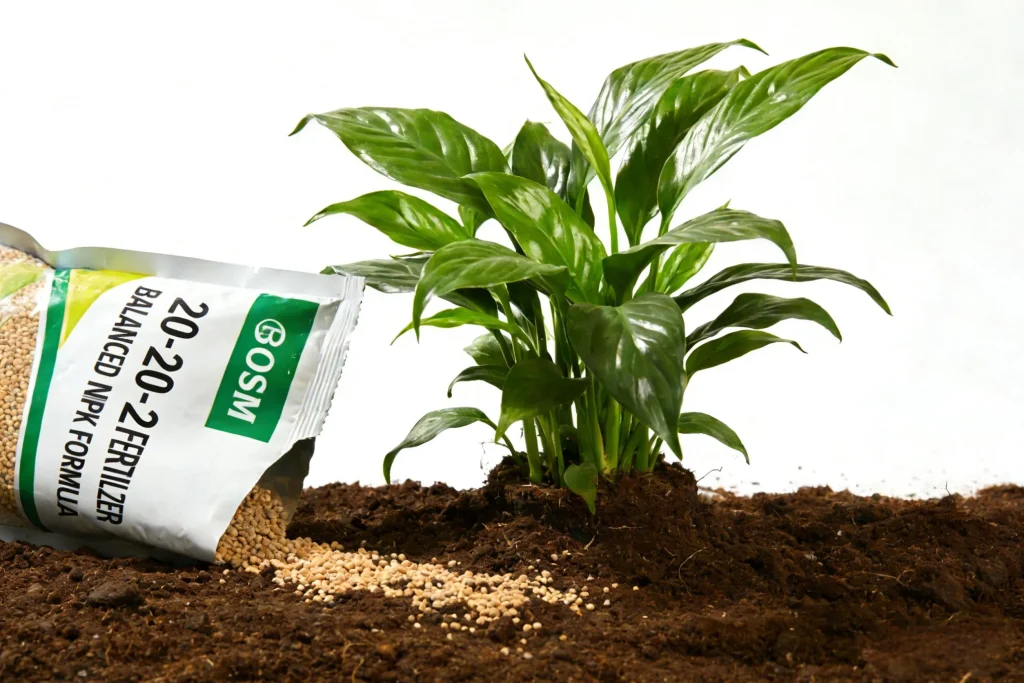
20-20-20 fertilizer is mainly used as an all-purpose fertilizer for active plant growth when balanced nutrition is needed. Because it supplies equal parts nitrogen, phosphorus, and potassium, it is commonly used for ornamentals, houseplant care, nursery crops, some garden uses, greenhouse feeding, and supplemental fertigation or foliar spray programs when applied at the label rate.
20-20-20 fertilizer
What does 20-20-20 mean in fertilizer?
What is 20-20-20 fertilizer used for in real growing programs?
Is 20-20-20 an all-purpose fertilizer for indoor and outdoor plants?
How does a balanced NPK ratio support plant growth?
When should growers use 20-20-20 in garden, greenhouse, and nursery settings?
Can 20-20-20 water soluble fertilizer be used as a foliar spray or drench?
How much 20-20-20 should you mix per gallon of water?
Is 20-20-20 good for lawn, turf, vegetables, and flowers?
What should distributors and OEM fertilizer buyers know about formulation and pricing?
How do you choose a reliable fertilizer manufacturer and exporter in China?
The numbers in 20-20-20 show the npk ratio. They represent the percentage by weight of the three primary nutrients: nitrogen, available phosphate (phosphorus source), and soluble potash (potassium source). A balanced product like this is often called a balanced formula because all three major nutrients are present in equal proportion. Iowa State Extension defines balanced products this same way and gives 20-20-20 as a common example.
This matters because each major nutrient supports a different part of plant growth. Nitrogen helps leafy growth and color. Phosphorus supports roots, energy transfer, and early establishment. Potassium helps with vigor, stress tolerance, and overall crop function. FAO materials identify nitrogen, phosphorus, and potassium as the three primary nutrients used in large quantities by plants.
That is why a 20 20 20 product is often chosen when the grower wants broad, even feeding rather than a formula that pushes only one direction. In plain terms, it is a flexible plant food designed for a wide range of uses.
In practice, 20-20-20 fertilizer is used when growers need quick, even feeding across many crops or ornamentals. It is common in greenhouse programs, container production, transplant support, retail gardening, and routine feeding of general foliage plants. Extension guidance for houseplants notes that balanced products with equal numbers, including 20-20-20, are adequate for many common plants.
It is especially useful where a water-soluble fertilizer is preferred. Because the product can dissolve fully, it can be applied through a watering can, stock tank, hose-end system, fertigation line, or as a carefully diluted foliar application depending on crop and label instructions. Florida IFAS notes that soluble fertilizers can be applied to the soil, through fertigation, or foliarly, but warns that applying too much readily soluble fertilizer at once can cause toxicity.
For distributors, importers, and OEM clients, this broad utility is a big commercial advantage. A single all-purpose 20-20-20 product can serve retail garden users, professional greenhouse operations, ornamental production, and some supplemental field uses. That makes it a strong SKU for private label and bulk programs.
Yes, in many situations it is used as an all-purpose fertilizer. Balanced products are commonly recommended for many indoor foliage plants and general-purpose feeding. UNH Extension says a balanced fertilizer such as 10-10-10 is suitable for most common houseplants, and UConn notes that equivalent numbers such as 20-20-20 can be adequate for many houseplants as well.
That does not mean it is perfect for every crop at every stage. Some flowering plants, fruiting crops, or specialized production systems may need a different formula with a different ratio. Illinois Extension, for example, notes that balanced ratios are good choices in some houseplant situations, while other stages may benefit from a different nutrient emphasis.
So the most accurate answer is this: 20-20-20 water soluble works well as a flexible purpose fertilizer for many indoor and outdoor plants, but growers should still match the product to crop stage, media conditions, and agronomic goals. That is how professionals protect both performance and value.
A balanced npk product supports the whole plant instead of emphasizing just one function. When a grower wants balanced nutrition, equal N, P, and K can be helpful for general feeding, recovery after stress, and steady development in container or greenhouse systems. Iowa State explains that balanced fertilizers contain similar levels of the three nutrients, and this is why they are widely recognized as broad-use formulations.
Here is a simple breakdown:
| Nutrient | Main role in the plant | Why it matters |
|---|---|---|
| Nitrogen | Leaf and shoot development | Supports color, vigor, and active growth |
| Phosphorus | Root growth and energy transfer | Important for establishment and metabolism |
| Potassium | Water balance and plant strength | Helps resilience and overall performance |
These roles are foundational and well recognized in agronomy sources. FAO identifies these three as the primary nutrients used by plants in large quantities.
A balanced product can also simplify inventory for commercial buyers. Instead of carrying many narrow-use blends, one fertilizer designed for general use can cover multiple categories. That matters for a grower, a distributor, and an OEM fertilizer brand alike.
The best timing depends on crop stage and production system. In many programs, 20-20-20 water-soluble feeding is used during active vegetative growth, general maintenance, transplant support, and ornamental production. Houseplant guidance from Clemson mentions 20-20-20 as a balanced choice for foliage plants, while Ohio State notes half-strength 20-20-20 can be used monthly for holiday cacti during active growth.
In a greenhouse or nursery, a balanced water-soluble formula is often attractive because it is easy to measure, quick to apply, and easy to adapt to irrigation routines. UConn specifically notes that water-soluble powders or liquid concentrates are appropriate where plants are fertilized on a weekly, biweekly, or monthly basis.
For garden fertilizer use, it is usually best as a supplemental feeding tool rather than a replacement for all soil-based nutrient planning. Minnesota Extension notes that most nutrient acquisition is through roots and that foliar spray products are helpful in some cases, not all cases. That is a good reminder: use fertilization as part of a program, not as a shortcut.

fertilizers
Yes, it often can, but the right rate and timing matter. Soluble fertilizers are commonly applied to the root zone as a drench, through irrigation, or as a foliar spray in some programs. Florida IFAS confirms these routes of application for soluble fertilizers, while Minnesota Extension notes foliar fertilizers may be helpful in some cases even though most nutrients are taken up through roots.
A foliar program can be useful when a grower wants quick visual response or supplemental feeding, but it should never ignore label direction, water quality, weather, and crop sensitivity. The key is to dilute properly and avoid excessive concentration. Soluble products work because they dissolve completely, but that same fast availability means mistakes can act fast too.
In commercial systems, a root-zone drench or fertigation feed is often the main method, while foliar spray is used more selectively. That is especially true for professional buyers serving greenhouse, ornamental, and nursery channels.
There is no single universal rate for every crop, every brand, or every stage. The safest answer is always: follow the product label and crop guidance. Different manufacturers formulate differently, even when the analysis is similar. Extension sources repeatedly recommend using balanced products according to label direction and avoiding stronger mixtures than recommended.
That said, end users often search for practical language like per gallon of water because they are mixing by hand. In these cases, labels usually provide a rate range for routine feeding, foliar spray, or stronger corrective applications. It is better to start light, observe the crop, and adjust within the label range than to assume more is better. UMass warns that water-soluble fertilizers are often applied in excess of plant needs if growers ignore volume and frequency.
For professional buyers, this is also a branding opportunity. A strong OEM product should include clear dilution directions, crop-use charts, and bilingual labels where needed. Good packaging reduces misuse and improves buyer confidence.
It can be useful, but not always as the primary seasonal recommendation. For lawn and turf, nutrient needs often depend on local soils, growth goals, and regional extension recommendations. Clemson’s calculator, for example, bases N-P-K recommendations on crop and production category rather than one generic answer for all users.
For vegetable and flower crops, a balanced product can help during transplant, early growth, or supplemental feeding, especially in container or intensive systems. But some crops need a different emphasis later. Minnesota Extension notes that certain starter ratios like 1:2:2 or 1:2:1 are especially well-suited for transplants. That means 20-20-20 is useful, but not automatically the best fit for every phase.
So where does it fit best?
Houseplant feeding
Ornamentals and ornamental foliage
Greenhouse crops
Nursery plants
Supplemental garden feeding
General-purpose professional stock
This is why many sellers position it as plant fertilizer or plant food for a broad category rather than a one-size-fits-all answer for every field crop.
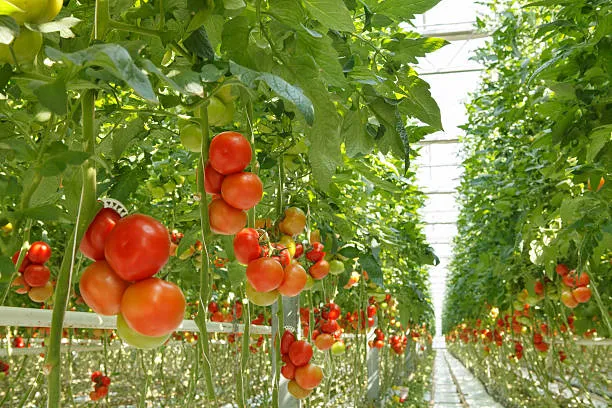
Commercial buyers should think beyond analysis alone. A good formulation includes more than the NPK number. It may also include a micronutrient package, essential micronutrients, and sometimes chelated micronutrients to improve availability in solution. Iowa State notes that balanced fertilizers often may include secondary nutrients and micronutrients, but not always.
That matters because buyers are comparing not only pricing, but also solubility, consistency, packaging, and positioning. A premium product with strong solubility and trace elements can win in greenhouse, nursery, and export channels, while a more basic product may fit price-sensitive markets better. For OEM clients, that means a brand strategy question, not just a cost question.
Here is a practical commercial checklist:
| Buying factor | Why it matters |
|---|---|
| Solubility | Clean mixing, less residue, easier application |
| Nutrient package | Supports broader crop use |
| Trace elements | Helps differentiate product |
| Label clarity | Reduces application mistakes |
| Packaging size | Fits retail, distributor, or farm use |
| Pricing | Affects channel competitiveness |
| Supply stability | Critical for seasonal sales |
As a leading manufacturer and exporter of high-quality fertilizer products in China, we see this every season: buyers who focus only on price often miss the bigger value drivers. Reliable production, export-ready packaging, OEM support, and stable quality usually matter more over time.
Start with quality systems and market fit. A reliable supplier should offer consistent analysis, good solubility, stable packaging, and the ability to formulate for different markets. That includes retail packs, distributor bulk supply, and customized OEM programs for fertilizer brand owners.
Second, check whether the factory understands your customer segment. Agricultural distributors, cooperatives, government projects, and OEM clients do not buy for the same reason. One may need low-cost volume. Another may need a premium export-grade water-soluble fertilizer with clear use instructions and a stronger micronutrient story.
Third, look for commercial support:
documentation for export
consistent lead time
flexible pack sizes
label customization
product traceability
responsive technical communication
This is where a Chinese manufacturer with export experience becomes valuable. We work with importers, commercial farms, cooperatives, and private-label clients that need dependable products and dependable execution. In real business, the right supplier should help you sell better, not just ship faster.
“Balanced does not mean universal. It means flexible.”
That is the best way to read this category. A balanced formula works well when the goal is general feeding and predictable response. It is especially attractive where crops are grown in controlled conditions, where frequent feeding is possible, or where a single product needs to cover a broad customer base.
Simple use guide
| Situation | Is 20-20-20 a good fit? | Why |
|---|---|---|
| General houseplant care | Yes | Balanced feeding is often suitable |
| Greenhouse ornamentals | Often yes | Easy to apply and adjust |
| Nursery stock | Often yes | Good for routine soluble feeding |
| Field crop base nutrition | Sometimes | Depends on soil test and crop stage |
| Turf and lawn | Sometimes | Should follow local nutrient guidance |
| Flowering boost | Not always | Some stages may need a different ratio |
What is 20-20-20 fertilizer best used for?
It is best used for general-purpose feeding where balanced N, P, and K are needed, especially in ornamentals, houseplants, greenhouse crops, nursery production, and some supplemental garden uses.
Is 20-20-20 a water soluble fertilizer?
It often is sold as a water soluble or fully water-soluble product, especially for greenhouse, nursery, and general plant feeding programs. Soluble fertilizers can be applied through irrigation, to soil, or foliarly depending on the product label.
Can I use 20-20-20 for indoor plants?
Yes. Balanced fertilizers with equal or near-equal numbers are commonly suitable for many indoor foliage plants when used at the recommended dilution.
Is 20-20-20 good for vegetables?
It can be used in some vegetable programs, especially for supplemental feeding or early growth, but it is not always the best formula for every crop stage. Starter and crop-specific needs may differ.
Can 20-20-20 be used as a foliar spray?
Yes, soluble fertilizers can be used as a foliar spray in some programs, but the label rate, water volume, and crop safety all matter.
Does 20-20-20 include micronutrients?
Some products do, and some do not. Balanced fertilizers may contain micronutrients, but buyers should confirm the exact specification on the product label or technical sheet.
20-20-20 fertilizer is mainly used as a balanced, general-purpose feeding product for many plants.
The three numbers represent equal parts nitrogen, phosphorus, and potassium.
It is often useful in greenhouse, nursery, ornamental, and indoor plant programs.
It can be applied as a root feed, fertigation product, drench, or sometimes a foliar spray, depending on the label.
More is not better. Over-application of soluble products can damage crops.
It is flexible, but not universal. Some crops and growth stages need different ratios.
For commercial buyers, product quality, solubility, micronutrients, packaging, and pricing all matter.