Avoid your inquiry is delay response, please enter your WhatsApp/Skype along with the message, so we can contact you at the very first time.
We will reply you within 24 hours. If for urgent case, please add WhatsApp/WeChat: ,. Or call directly.
You apply fertilizer, water the field, and wait—but nothing seems to change. Adding more can make the problem worse, not better. The key is understanding how fast each NPK fertilizer releases nutrients and how soil, moisture, temperature, crop stage, and fertilizer type control the response.
NPK fertilizer can begin making nutrients available soon after application when it dissolves in moist soil, but visible plant response usually takes several days or longer. Water-soluble and fast-release fertilizers act fastest, while granular, slow-release, and organic fertilizers may release nutrients over several weeks or months. Soil moisture, temperature, plant roots, nutrient form, and crop condition all affect how quickly fertilizer works.
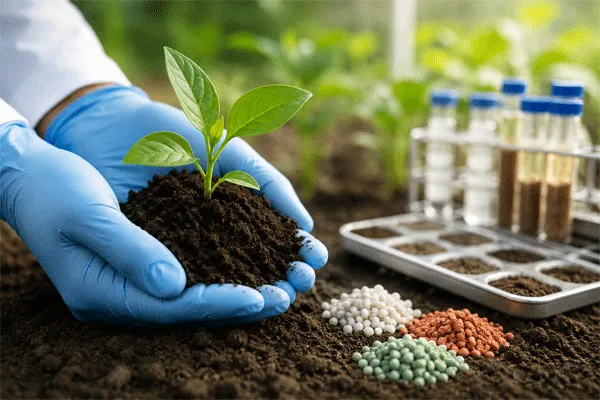
How Long Does NPK Fertilizer Take to Work? Understanding NPK Fertilizer for Maximum Plant Growth
For farmers, distributors, and agricultural project managers, this difference matters. A fertilizer that releases nutrients quickly may be ideal for correcting an immediate nutrient shortage. A slower product may fit long-term field nutrition better.
In this guide, I will explain how fertilizer works after application, what controls nutrient availability, how to recognize a crop response, and how to apply NPK fertilizer more effectively.
There is no single answer because fertilizer products behave differently.
A fully dissolved water-soluble fertilizer can make nutrients available rapidly once the solution reaches the root zone. Conventional fast-release mineral fertilizer also begins working after moisture dissolves the nutrient salts. Visible plant growth, greener leaves, or stronger new growth, however, usually requires more time because plants must absorb and use those nutrients.
A practical comparison looks like this:
| Fertilizer Type | Nutrient Availability | Typical Plant Response |
|---|---|---|
| Water-soluble NPK | Very fast after dissolution | Often visible within several days when deficiency exists |
| Fast-release granular NPK | Fast after adequate watering | Several days to around 1–2 weeks |
| Standard granular compound fertilizer | Gradual after granules dissolve | Usually days to several weeks |
| Slow-release fertilizers | Controlled over time | Several weeks to months |
| Organic fertilizer | Depends on microbial breakdown | Often weeks rather than days |
These are general ranges, not guaranteed deadlines. The same fertilizer can behave differently in wet warm soil than in cold, dry soil.
The University of Minnesota Extension explains that nutrient release depends on fertilizer type. Fast-release fertilizers become available relatively quickly, while manufactured slow-release materials and natural organic products release their nutrients over a longer period. You can read its guidance on fertilizer nutrient release.
For buyers who need fast nutrient delivery through irrigation or foliar programs, our NPK water-soluble fertilizer range includes formulas designed for complete dissolution and precision feeding.
To understand timing, it helps to understand what happens after fertilizer application.
An NPK product supplies three major plant nutrients:
But nutrients inside a bag are not useful simply because they are close to the plant.
The fertilizer must first reach a form that is available to plants. Water normally plays a major role. It dissolves soluble fertilizer salts and moves nutrient ions into the soil solution, where plant roots can absorb them.
This is one reason dry conditions can delay the effect of fertilizer.
When we explain fertilizer performance to agricultural buyers, I often separate two questions:
When are the nutrients available?
and
When can you actually see the crop respond?
They are not the same.
A nutrient can enter the root zone before the crop shows visible improvement. The plant then has to take up nutrients, transport them through its tissues, and use them in processes such as chlorophyll production, cell development, flowering, and fruit formation.
That biological process takes time.
If the main goal is speed, fully soluble mineral nutrients generally work faster than products that require long-term decomposition.
A water-soluble fertilizer dissolves into the irrigation solution before or during application. This makes it suitable for drip irrigation, fertigation, hydroponics, and some foliar programs.
For example, our NPK 19-19-19+TE water-soluble fertilizer contains nitrogen, phosphorus, potassium, and optional trace elements in a fully soluble formula designed for rapid nutrient delivery.
This type of product can be useful when:
Granular mineral fertilizers can also work quickly, but they normally need moisture to dissolve.
A farmer who spreads dry NPK fertilizer onto completely dry soil should not expect the same response as a field that receives suitable irrigation or rain after application.
Slow-release fertilizers deliberately supply nutrients over a longer period. They can reduce the need for frequent feeding and can support crops over extended growth periods.
That is useful when speed is not the only goal.
An organic fertilizer often depends more strongly on biological decomposition. Soil microorganisms convert nutrients into forms plants can absorb.
Oregon State University Extension notes that some organic nitrogen sources release nutrients over several weeks. For example, blood meal may release nitrogen over roughly two to six weeks. Its broader guidance on choosing fertilizer for gardens and crops shows why fertilizer source matters when planning feeding schedules.
So if you want to give your plants a quick nutrient correction, a soluble product may make more sense than expecting an organic material to behave immediately.
An NPK fertilizer does not behave as if all three nutrients move through the soil in exactly the same way.
Nitrogen is often associated with the fastest visible response, especially when a crop is nitrogen-deficient.
When sufficient nitrogen becomes available, pale plants may gradually develop greener leaves and stronger leafy growth. This can make nitrogen response easy to notice.
However, nitrogen is also mobile and can be lost through leaching, volatilization, denitrification, or crop removal depending on the form and conditions.
Products such as urea and other nitrogen fertilizer sources must still undergo chemical or biological transformations before all nitrogen becomes usable.
A product such as UAN 32 fertilizer, for example, behaves differently from a balanced granular NPK because it focuses on nitrogen rather than supplying all three primary nutrients.
Phosphorus moves less freely through many soils.
Its effect may therefore be less visually dramatic in the short term. Yet it remains important for energy transfer, establishment, root growth, and later reproductive development.
A phosphate fertilizer can be valuable when a soil test shows low phosphorus, but more is not always better.
Potassium supports plant water regulation, stress tolerance, enzyme activity, and crop quality.
A potassium fertilizer becomes especially important for many fruiting plants during later growth stages, although the ideal program varies by crop.
For example, our NPK 15-15-30 water-soluble fertilizer provides more potassium than nitrogen or phosphorus and is designed for crops with stronger potassium demand during fruit development and ripening.
The important lesson is simple: plants need nutrients in different amounts at different times.
The label tells you what the fertilizer contains. The soil determines much of what happens next.
Without enough water, fertilizer granules may sit on the surface or remain only partly dissolved.
Moisture helps move soluble nutrients toward roots. But too much water can create other problems, including nutrient movement below the root zone.
This means irrigation management and fertilizer management should work together.
Temperature also affects nutrient release.
Warm soil generally supports stronger microbial activity than cold soil. This matters especially for organic fertilizer and some controlled or slow-release products.
A fertilizer may therefore work differently in early spring than during warm summer conditions.
Soil pH changes nutrient availability.
Even when nutrients exist in the soil, an unsuitable pH can reduce how effectively certain nutrients remain available to plants.
This is why repeatedly adding more fertilizer may not correct a problem caused by pH.
Before you fertilize plants with another heavy dose, ask whether the real problem is nutrient shortage, water stress, root damage, disease, poor drainage, or unsuitable soil chemistry.
Penn State Extension describes a soil test as a tool for evaluating plant-available phosphorus, potassium, calcium, magnesium, and other nutrients while also measuring soil pH and helping determine lime and fertilizer needs. See its soil testing guidance.
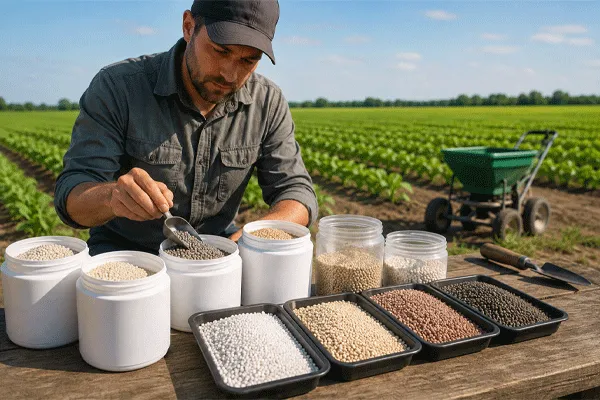
How Long Does NPK Fertilizer Take to Work? Understanding NPK Fertilizer for Maximum Plant Growth
The NPK ratio tells you the relative proportions of nitrogen, phosphate, and potash in a fertilizer. It does not directly tell you whether a fertilizer is fast-release or slow-release.
That distinction is important.
A 5-5-5 fertilizer and a 20-20-20 product may both have a balanced fertilizer ratio of 1:1:1, but the nutrient concentration is very different.
Likewise, two products with the same analysis may release nutrients differently if one is a coated control release fertilizer and the other is a conventional soluble formula.
Consider these examples:
| Formula | Main Nutritional Character | Possible Use |
|---|---|---|
| 5-5-5 | Low-strength balanced NPK | General low-rate feeding |
| 15-15-15 | Balanced NPK | General crop nutrition |
| 19-19-19 | Higher-concentration balanced NPK | Precision feeding/fertigation when soluble |
| 30-10-10 | High nitrogen | Vegetative development |
| 15-15-30 | Higher potassium | Flower, fruit, and ripening stages |
| 10-30-20 | Higher phosphorus and potassium | Rooting and reproductive stages |
So understanding NPK means reading more than the three numbers.
You must also check:
If you are trying to find the right NPK for a commercial crop program, match the formula with both crop demand and application system.
Timing can matter almost as much as formula.
Plants generally benefit most when nutrients are supplied close to the periods when they plants require them.
For many crops, these key growth stages may include:
A high-nitrogen product may help plants during vegetative development but may be less suitable when the goal changes to flower and fruit production.
Likewise, many flowering plants and plants such as tomatoes may require more potassium during reproductive stages than during early establishment.
This is why experienced growers do not simply use NPK fertilizer at the same formula and rate throughout the entire growth cycle.
Avoid fertilizing stressed crops during extreme heat, severe drought, or conditions that prevent roots from functioning normally.
In many field situations, it is better to apply fertilizer shortly before suitable irrigation or expected rainfall, depending on the fertilizer source and agronomic program.
Do not simply pile fertilizer around the base of young plants.
Instead, follow the recommended placement and rate and distribute fertilizer evenly where appropriate.
Correct placement helps reduce localized salt concentration and improves the chance that active roots can access the nutrients.
Before deciding how much fertilizer to apply, it helps to know what is already present.
A soil test can show whether important nutrients are below, within, or above the recommended range.
Penn State Extension specifically recommends starting fertilizer planning with soil testing because nutrient levels—especially phosphorus and potassium—can already be high enough that additional application is unnecessary. Its guide on tailoring fertilizer recommendations also explains how fertilizer grades can be matched with actual nutrient recommendations.
This matters for both small growers and commercial projects.
Suppose a soil test shows:
Applying a balanced NPK may unnecessarily add phosphorus and potassium.
A more targeted nitrogen fertilizer could be more efficient.
Now imagine the opposite:
A different formulation may fit better.
That is why choose a fertilizer should never mean choosing the biggest numbers on the fertilizer label.
The goal is to find the ratio for your plants, soil, climate, crop stage, and expected yield.
No.
This is one of the most important rules in crop nutrition.
Applying too much synthetic fertilizer does not guarantee better plant growth. It may increase salt concentration, damage roots, cause nutrient imbalance, waste money, or raise the risk of nutrient loss.
Excess fertilizer can be especially risky for:
Different plants have the nutrients requirements of their own. More nutrient is not automatically better nutrient management.
A plant may show leaf burn, weak roots, unusual leaf color, excessive vegetative growth, or poor flowering when fertilizer is misused.
For example, too much nitrogen can encourage leaves and stems while reducing the desired balance between vegetative development and reproduction in some crops.
So avoid the temptation to apply another dose simply because you cannot see a response after two or three days.
The fertilizer may already be working.
The plant simply needs time.
In most cases, soluble synthetic fertilizers provide nutrients faster than organic sources that depend on decomposition.
This does not mean one category is always better.
They serve different purposes.
Many inorganic fertilizers provide clearly defined nutrient concentrations. Growers can calculate how much nitrogen, phosphorus, or potassium they apply per hectare.
They can work well for precision nutrition.
However, small amounts of synthetic fertilizers should still be applied correctly. Using synthetic fertilizers to ensure rapid feeding does not remove the need for soil testing or crop planning.
The nutrients in organic fertilizers are often released as microorganisms break down organic matter.
That takes time.
This makes organic materials useful for longer-term fertility and soil management, but they may not correct an urgent nutrient deficiency as quickly as soluble mineral nutrients.
Many commercial programs combine nutrient sources according to farm objectives rather than treating the choice as either/or.
The aim is healthy plant growth, efficient nutrient use, and sustainable field productivity.
The right fertilizer is the one that matches the crop’s actual requirement—not simply the fastest product.
A fertilizer program should consider:
For example, an all-purpose fertilizer may work for general maintenance, while high-value commercial crops may benefit from stage-specific formulas.
During early development, a formula with enough nitrogen may support new growth.
At flowering, nutrition may shift.
Later, plants like tomatoes and other fruit crops may benefit from stronger potassium nutrition where supported by crop recommendations.
The nutrients that plants need do not remain perfectly constant from planting to harvest.
That is why a professional feeding plan changes with the crop.
If your business distributes different formulas to commercial farms, our NPK fertilizer supplier solutions cover compound NPK, water-soluble formulas, blending fertilizers, nitrogen products, and customized grades for different agricultural markets.
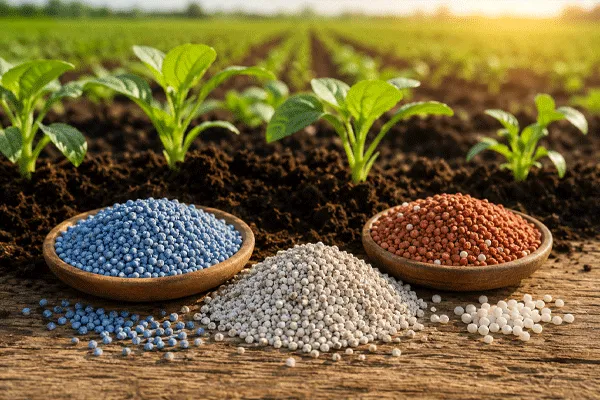
How Long Does NPK Fertilizer Take to Work? Understanding NPK Fertilizer for Maximum Plant Growth
For an agricultural importer, cooperative, or government project, fertilizer speed is only one part of the decision.
A professional fertilizer supplier should also provide stable specifications, production consistency, appropriate physical form, packaging support, documentation, and dependable shipment planning.
As a China-based fertilizer manufacturer and exporter, we work with:
For a distributor, the question may be:
Which formulas should we stock for our local crop market?
For a commercial farm:
Which product matches our soil, irrigation system, and key crop stages?
For an OEM customer:
Can the factory produce our formula and packaging consistently at commercial scale?
These are very different buying needs.
Our OEM fertilizer manufacturing service supports customized fertilizer ingredients, product color, packaging, branding, production, quality checking, and export supply.
When you contact us, providing the following information helps us evaluate the project faster:
| Requirement | Example |
|---|---|
| Fertilizer type | Compound NPK / water-soluble / BB fertilizer |
| Formula | 15-15-15, 19-19-19, 15-15-30, custom |
| Crop | Vegetables, maize, rice, fruit trees |
| Application | Broadcasting, basal, fertigation, foliar |
| Quantity | Trial order / container / annual volume |
| Packaging | 1 kg, 5 kg, 25 kg, 50 kg, OEM |
| Destination | Country and port |
| Branding | Neutral or private label |
A good NPK fertilizer wholesaler relationship should solve more than price.
It should help you supply the correct product reliably.
Imagine two farms apply the same NPK fertilizer on the same day.
The crop may begin showing a visible improvement within several days.
The same fertilizer may appear to “work slowly.”
But the problem is not necessarily product quality.
The conditions around the fertilizer are different.
This example shows why professional growers examine the entire soil and plant system rather than judging fertilizer only by how quickly leaves change color.
For a fertilizer to perform well, fertilizer must reach the active root zone, nutrients must become chemically available, and the crop must be able to absorb them.
When those conditions work together, plants thrive.
For many conventional granular fertilizers, suitable irrigation after application helps dissolve nutrients and move them toward the root zone. However, exact watering requirements depend on the product, soil, weather, and application method. Always follow the product instructions and local agronomic advice.
Some soluble nutrients can enter the soil solution quickly, but visible crop improvement usually takes longer. Plants must absorb and use the nutrient before you see changes in leaf color, new growth, rooting, flowering, or crop vigor.
Possible reasons include dry soil, cold temperatures, incorrect pH, damaged roots, nutrient imbalance, wrong fertilizer choice, incorrect application rate, excessive fertilizer, disease, or poor drainage. A soil test can help separate nutrient problems from other crop problems.
Usually, yes. A fully dissolved NPK solution does not need the same granule-dissolution step before nutrient delivery. This makes soluble products useful for fertigation and precision feeding. Our guide to using water-soluble fertilizer explains how dilution, water quality, timing, and application method affect performance.
There is no universal schedule. Frequency depends on the crop, growth stages, soil, formulation, application method, and release type. Some soluble feeding programs use frequent low-dose applications, while slow-release fertilizers may work for much longer periods.
Too much can increase soluble salts around roots, create nutrient imbalance, damage foliage or roots, and waste fertilizer. Avoid applying fertilizer beyond the recommended rate simply to get a faster response.
For fast-release mineral or water-soluble NPK, nutrient availability can begin quickly once the fertilizer dissolves and reaches an active root zone. A visible plant response may appear within several days when a real deficiency exists.
Standard granular products may require more time.
Slow-release fertilizers can feed crops for weeks or months.
Organic products often need microbial decomposition before much of their nutrient content becomes accessible.
More importantly, speed alone does not define fertilizer quality.
The best result comes when you:
That approach helps promote healthy plant growth while reducing unnecessary fertilizer use.
If you are sourcing NPK fertilizer for distribution, commercial agriculture, government projects, or your own fertilizer brand, send us your target NPK formula, crop, application method, order quantity, packaging requirement, and destination country. We can help evaluate the appropriate product type and build a more suitable bulk supply or OEM solution.