Avoid your inquiry is delay response, please enter your WhatsApp/Skype along with the message, so we can contact you at the very first time.
We will reply you within 24 hours. If for urgent case, please add WhatsApp/WeChat: ,. Or call directly.
Choosing the wrong fertilizer can waste money, reduce crop performance, and create nutrient imbalance in the soil. This problem becomes even bigger on commercial farms. Fortunately, NPK 15-15-15 offers a simple, balanced nutrient formula that can support many crops when it matches the soil and plant needs.
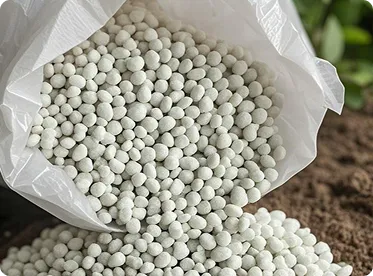
NPK 15-15-15 fertilizer is a balanced compound fertilizer containing 15% nitrogen, 15% phosphate and 15% potash by weight. It is commonly used for general crop nutrition, field crops, vegetables, fruit trees, lawns and ornamental plants when the soil requires a relatively balanced supply of the three major nutrients.
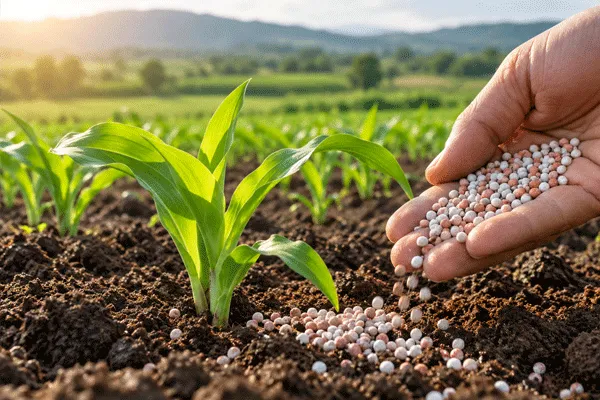
What Is NPK 15-15-15 Fertilizer Used For? NPK 15-15-15 vs Other Formulas
NPK 15-15-15 is a balanced fertilizer that supplies the three primary nutrients needed by most crops: nitrogen, phosphorus and potassium.
The numbers on an NPK fertilizer package show the guaranteed percentage of these major nutrients. In a typical 15 15 15 fertilizer, the formula provides equal proportions of the three nutrient components.
| Nutrient | Typical Grade | Main Role |
|---|---|---|
| Nitrogen | 15% | Supports leaves, stems and vegetative development |
| Phosphate | 15% | Supports roots, establishment and reproductive development |
| Potash | 15% | Supports plant strength, water regulation and stress tolerance |
The NPK ratio is therefore 1:1:1. In simple terms, it provides equal parts of the major nutrients rather than emphasizing only one nutrient.
However, this does not mean every field automatically needs equal nutrient inputs. Soil tests, crop history, irrigation, expected yield and local growing conditions all matter.
For example, agronomic guidance from Penn State Extension explains that a 15-15-15 formula has a 1:1:1 nutrient ratio and may not exactly match every nutrient recommendation. A grower should therefore calculate the required nutrient rate rather than choosing a formula only because it looks balanced.
For buyers seeking different grades, our NPK compound fertilizer solutions can be selected according to crop programs, regional markets and customer specifications.
The main use of NPK 15-15-15 is to provide general-purpose nutrition where crops require a relatively balanced nutrient supply.
It is often considered for:
The nitrogen portion encourages green vegetative development. Phosphorus contributes to early establishment and root activity. Potassium supports water regulation, crop strength and tolerance to environmental stress.
This combination makes 15-15-15 fertilizer especially useful where no single nutrient needs to dominate the fertilization program.
However, fertilizer application should still follow local soil and crop recommendations. Applying a balanced formula to soil that already contains high phosphorus or potassium may add nutrients that the plants do not currently need.
That is why professional gardeners and farmers increasingly combine fertilizer selection with soil testing and crop-specific nutrient planning.
Plants require nutrients for different biological functions. A good fertilizer program does more than simply make plants look greener.
Nitrogen contributes to chlorophyll formation and protein production. It is especially important during periods of rapid leaf and stem development.
A nitrogen shortage may result in weak development or pale foliage. Too much nitrogen, however, can create excessive vegetative growth in some crops.
Phosphorus plays an important role in energy transfer within plants and contributes to root development and reproductive processes.
Young crops often require adequate phosphorus during establishment, although actual availability depends strongly on soil chemistry.
Potassium contributes to water movement, enzyme activity and plant stress responses. Adequate potassium can be especially important where crops face drought, heat or other environmental pressure.
Together, these nutrients can support healthy plant growth and overall plant health when they are supplied at the correct rate.
This is the main benefit of NPK formulas: they combine several major nutrients into one practical product.
There is no single universal fertilizer for every crop, but balanced NPK products can fit a wide range of agricultural programs.
Depending on local agronomic recommendations, NPK 15 15 15 may be considered for maize, wheat, rice, vegetables, potatoes, orchard crops and other commercial crops.
It can also support many flower and ornamental applications.
The important point is to match the fertilizer with the growth stage.
For example, young crops may benefit from balanced nutrition during establishment. Later, some crops may require more potassium for quality or more nitrogen for vegetative development. Certain flowering plants may also require a different nutrient balance during flowering.
Tomatoes are a useful example. Tomato plants do not necessarily need a constant 1:1:1 feeding program throughout the entire production cycle. Nutrient demand can change as plants move from vegetative development to flowering and fruit filling.
So before you use NPK 15-15-15, ask:
These simple questions help prevent over-fertilization.
Correct application is just as important as choosing the product.
A granular fertilizer such as NPK 15-15-15 can often be applied before planting, during field preparation or as part of a crop nutrition program. The exact recommended application rate depends on local agronomic conditions.
Common application techniques include:
Avoid placing concentrated fertilizer directly against sensitive seeds or young roots unless the agronomic recommendation specifically allows it.
The amount of fertilizer required should also be calculated from the nutrient concentration.
For example, one metric ton of a 15% nitrogen formula contains approximately 150 kg of nitrogen. It also supplies nutrient components equivalent to the declared 15% phosphate and potash grades. Therefore, using more fertilizer does not automatically mean better results.
For gardens, recommendations such as applying every 4 to 6 weeks or several weeks during the growing season may appear on consumer instructions, but these intervals should never replace the label instructions or a proper crop-specific recommendation.
Commercial farms should calculate nutrient demand first and then apply NPK based on field conditions.

What Is NPK 15-15-15 Fertilizer Used For? NPK 15-15-15 vs Other Formulas
One common question from fertilizer buyers is NPK 15-15-15 vs NPK 20-20-20.
Both products have a balanced ratio of major nutrients, but their concentrations are different.
| Formula | Nitrogen | Phosphate | Potash | Typical Consideration |
|---|---|---|---|---|
| NPK 15-15-15 | 15% | 15% | 15% | Balanced general-purpose granular nutrition |
| NPK 20-20-20 | 20% | 20% | 20% | More concentrated balanced nutrition |
| NPK 12-12-17 | 12% | 12% | 17% | Greater emphasis on potassium |
NPK 20-20-20 contains a higher nutrient concentration per unit of product. Many 20-20-20 products are also sold as water-soluble formulas, although formulation varies by manufacturer.
This does not mean 20-20-20 is automatically better.
If your field requires a moderate nutrient supply, a lower concentration may fit your program more easily. Conversely, buyers may prefer more concentrated products where transportation efficiency or specific fertigation programs make sense.
The best NPK ratio is the one that matches the actual nutrient requirement.
You may also encounter an NPK 12-12-17 formula, high potassium formulas or a high phosphorous fertilizer designed for different agronomic objectives.
The best way to compare NPK products is therefore to compare:
The correct NPK is not simply the bag with the highest number.
NPK 15-15-15 can sometimes be used for an indoor plant, but caution is important.
Indoor pots contain a much smaller amount of soil than agricultural fields. Salts can accumulate more quickly, while roots have less room to escape areas with high nutrient concentration.
For this reason, whether the product is safe for indoor plants depends on the formulation, label instructions, dose and specific plant needs.
Many indoor growers prefer diluted liquid or soluble formulations because these products are easier to measure in small quantities.
If using granular NPK fertilizer in containers, do not guess the rate. Follow the manufacturer’s instructions and avoid applying concentrated granule material directly against roots or stems.
A professional gardener should also consider whether the plant needs active feeding at that time. Growth often slows during low-light or cool periods.
Choosing the right fertilizer begins below the surface.
Different soil types and plant combinations behave differently. Sandy soil may lose certain nutrients more quickly through leaching. Clay-rich soils often retain nutrients differently. Soil pH can also influence nutrient availability.
That means the same fertilizer may perform differently in two neighboring fields.
A basic soil test can provide information about:
The next step is to match the test with the plant type and soil condition.
If the field already has high potassium, a formula containing large amounts of potassium may not be the best choice. If phosphorus is already high, repeatedly adding a balanced fertilizer can create unnecessary accumulation.
This is why selecting the right fertilizer should be based on plant type, expected yield and existing fertility.
The goal is not merely to improve soil by adding more material. Good nutrient management aims to feed the soil and plant system efficiently.
In some programs, growers may also combine mineral fertilizer with compost or organic fertilizer to support long-term soil health. These products play different roles and should be evaluated according to the farm’s agronomic objectives.
A NPK compound fertilizer can be a practical choice when nitrogen, phosphorus and potassium are all required in similar proportions.
Compound fertilizer can also simplify handling because multiple nutrients are supplied through one product rather than several separate materials.
For agricultural distributors, commercial farms and government projects, this can help simplify:
A quality granule also helps distribute nutrients more evenly across the field compared with poorly mixed physical blends.
However, a balanced NPK is most useful when the recommended ratio of nitrogen, phosphorus and potassium is reasonably close to the formula being supplied.
If the agronomic recommendation requires much more nitrogen than potassium, another formulation may be more efficient.
For an importer or distributor, selecting fertilizer involves more than checking three numbers on a bag.
You are buying a product that must work across farms, climates, storage conditions and distribution channels.
Before placing a bulk order, evaluate the following.
Confirm the NPK formula and nutrient declaration required by your market.
Determine whether your buyers need granular, powder or water-soluble products.
Consistent particle size can influence spreading, storage and handling.
Poor storage stability can create serious problems during long-distance transport.
Importers often require different bag sizes, private labels and multilingual packaging.
A fertilizer for commercial field crops may require a different specification from a product sold to garden retailers.
Confirm the required product specifications, export documents and destination-country requirements before shipment.
This is especially important for Agricultural Distributors & Importers, commercial farm groups, government agricultural programs and fertilizer brand owners.
For buyers developing their own brand, our OEM fertilizer manufacturing services can support customized formulations, packaging and private-label requirements according to project specifications.
For B2B buyers, fertilizer quality is only one part of the purchasing decision. Supply stability matters too.
We are a China-based manufacturer and exporter of high-quality fertilizer products, serving agricultural importers, distributors, commercial farming customers, agricultural projects and OEM fertilizer brands.
When discussing a project with a buyer, we do not look only at the formula. We want to understand the target crop, market, packaging, application method and order plan.
That allows both sides to determine whether standard NPK 15-15-15 is suitable or whether another formulation would better match the market.
Our goal is to support long-term fertilizer sourcing through:
International trade events also show how global the fertilizer supply chain has become. The CAC 2025 exhibition in Shanghai brought together fertilizer and agricultural-input suppliers and professional buyers from international markets. Trade platforms such as the 137th Canton Fair also demonstrate the continuing importance of direct supplier-buyer communication in Chinese export trade.
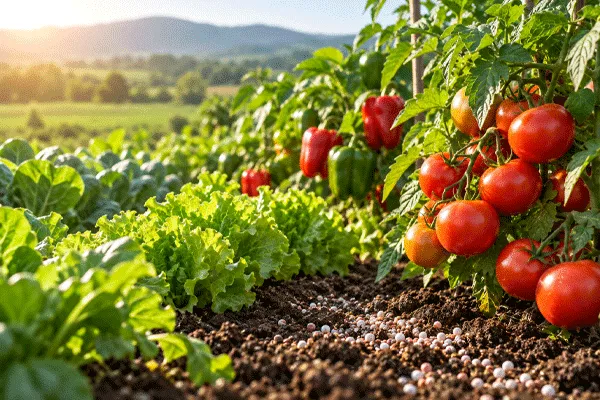
What Is NPK 15-15-15 Fertilizer Used For? NPK 15-15-15 vs Other Formulas
A low fertilizer price means little if the specification, packaging or shipment does not match your market.
Before confirming a commercial order, prepare a clear purchasing specification.
A practical inquiry should include:
| Purchasing Item | Information to Provide |
|---|---|
| Formula | NPK 15-15-15 or another grade |
| Product form | Granular, powder or soluble |
| Quantity | Trial order or container/bulk requirement |
| Packaging | Bag size and printing requirements |
| Market | Destination country |
| Branding | Neutral bag or OEM/private label |
| Application | Main crop or customer segment |
| Delivery | Target shipment schedule |
This makes communication faster and reduces misunderstandings.
For large distributors, one useful strategy is to begin with a clearly defined product specification instead of requesting only “your best fertilizer price.”
The price of fertilizer can vary with raw materials, nutrient concentration, packaging, quantity and logistics. Comparing two quotations without matching these variables may produce the wrong conclusion.
It means the fertilizer contains declared grades of 15% nitrogen, 15% phosphate and 15% potash. Because the three numbers are the same, it has a 1:1:1 nutrient ratio and is commonly described as a balanced fertilizer.
No. Many crops can use it, but not every field requires the same nutrient balance. Plants need different nutrient amounts depending on species, growth stage, yield target, soil fertility and climate. Soil testing and local agronomic recommendations should guide the final decision.
There is no universal rule to apply NPK 15-15-15 every fixed number of weeks. Frequency depends on the crop, soil, product instructions and nutrient program. Commercial growers should calculate total seasonal nutrient requirements rather than fertilizing according to a generic calendar.
Not necessarily. Both supply nitrogen, phosphorus and potassium in equal relative proportions, but 20-20-20 is more concentrated. The right fertilizer depends on nutrient requirements and the application system.
It can supply important crop nutrients, but mineral fertilizer alone does not automatically solve every soil health issue. Organic matter management, crop rotation, irrigation, erosion control, pH management and responsible nutrient application may also be needed to improve soil conditions.
For faster pricing, provide the required NPK grade, quantity, destination country, bag size, branding requirement and preferred delivery terms. If possible, also tell us the crop or market where the fertilizer will be sold. This helps us recommend the most appropriate product.
Fertilizer is crucial to modern crop production, but successful fertilization is not about applying the highest possible nutrient concentration.
NPK 15-15-15 is useful because it offers a simple balanced ratio of nitrogen, phosphorus and potassium. That balance can be essential for healthy plant growth where all three major nutrients are required in similar amounts.
For a small gardener, the main question is whether the formula matches the plants and soil.
For a commercial crop producer, the question becomes more technical: how many kilograms of each nutrient does the crop require?
For an importer or distributor, there is another layer: whether the specification, physical quality, packaging and supply arrangement fit the local market.
That is why good fertilizer procurement begins with the application—not merely the price.
If you are sourcing NPK 15-15-15 or other compound fertilizers for distribution, commercial farming, government agricultural projects or your own fertilizer brand, send us your required formula, annual or trial quantity, packaging specification and destination market. We can evaluate the requirement and recommend a suitable supply solution.