Avoid your inquiry is delay response, please enter your WhatsApp/Skype along with the message, so we can contact you at the very first time.
We will reply you within 24 hours. If for urgent case, please add WhatsApp/WeChat: ,. Or call directly.
Applying NPK fertilizer too many times can waste money and damage roots. Applying it only once may leave crops short of nutrients later. Instead of following a fixed calendar, divide the total seasonal fertilizer requirement into applications that match the crop’s growth stages, soil, irrigation system, and fertilizer type.
Most crops do not need one universal number of NPK fertilizer applications. A seasonal program may use 2–4 split applications for soil-grown crops, while fertigation systems can use smaller doses much more often. Slow-release products need fewer applications. The correct number depends on total nutrient demand, fertilizer concentration, soil conditions, weather, and crop growth stage.
How Many Times Should You Use NPK Fertilizer? A Split-Application Guide for Gardeners and Commercial Growers
A common question we hear is, “How many times should I use NPK fertilizer?” It sounds simple. In practice, however, the answer depends on much more than the calendar.
Different plants need different amounts of nitrogen, phosphorus, and potassium. A fast-growing vegetable crop may take up nutrients rapidly, while a perennial plant can have a much slower nutrient demand. Container plants also behave differently from crops growing in a large field.
The type of fertilizer matters too. A water-soluble fertilizer can make nutrients available to plants quickly. A granular fertilizer may release nutrients more gradually. A slow-release fertilizer can continue feeding the crop for weeks or months.
This means that two growers using the same NPK ratio may need very different application schedules.
A useful way to think about fertilizer basics is:
| Factor | Why It Changes Application Frequency |
|---|---|
| Crop type | Different plants have different nutrient demands |
| Growth stage | Young, flowering, and fruiting plants need nutrients at different times |
| Soil | Soil texture and fertility affect nutrient storage and loss |
| NPK ratio | Higher nutrient concentration changes how much fertilizer is needed |
| Fertilizer form | Liquid, granular, and slow-release products behave differently |
| Irrigation | Fertigation allows smaller and more frequent doses |
| Weather | Rain can increase nutrient movement and nitrogen loss |
| Yield target | Higher production may require a larger seasonal nutrient program |
That is why a good fertilizer plan starts with total plant needs, not with “once every four weeks.”
For commercial growers, the better question is:
How should I divide the total fertilizer requirement across the crop cycle?
That question leads to a much better nutrient management plan.
For many soil-grown crops, two to four main fertilizer applications per growing season can be a practical starting structure. This is not a universal recommendation. It is a way to divide a total seasonal nutrient requirement into smaller doses.
A basic program might look like this:
| Application | Typical Timing | Main Purpose |
|---|---|---|
| 1 | Before or at planting | Establish basic soil fertility |
| 2 | Early active growth | Support leaves, stems, and roots |
| 3 | Pre-flowering or flowering | Match increasing crop demand |
| 4 | Fruit development or yield formation | Support crop quality and final production |
High-demand crops may require additional applications. Fertigation systems may divide the same seasonal nutrient total into weekly or even more frequent low-dose treatments.
Washington State University notes that high-nitrogen-demand plants such as corn and potatoes can benefit from split applications. Its guidance describes applying part of the annual nitrogen requirement early and dividing the remainder into additional applications during the growing season.
The important word is split.
If a crop requires 200 units of fertilizer during a season, four applications do not necessarily mean applying 200 units four times. It may mean dividing the planned total into four smaller portions.
That distinction prevents one of the most common fertilizer mistakes: confusing application frequency with total fertilizer rate.
Plants do not use all their nutrients on the day they are planted.
Plant needs usually increase as roots, leaves, stems, flowers, and fruit develop. If you apply the entire seasonal fertilizer amount at the beginning, part of those nutrients may remain in the soil long before the crop can use them.
That creates several risks.
Nitrogen is especially important because some forms are mobile in the soil. Rainfall or heavy irrigation can move nitrate below the active root zone. Other nitrogen may also be lost through different soil processes.
Split fertilizer application tries to match nutrient availability with crop demand.
The University of California Agriculture and Natural Resources explains that synchronizing fertilizer release with plant demand can improve fertilizer efficiency, and split nitrogen applications are useful across many field and tree crops.
A simplified comparison looks like this:
| One Heavy Application | Split Applications |
|---|---|
| Large nutrient supply at one time | Nutrients supplied in stages |
| Higher risk of unused nutrients | Better match with plant demand |
| Less flexibility after weather changes | Later applications can be adjusted |
| Greater salt concentration near roots | Smaller individual fertilizer doses |
| Harder to react to crop condition | Easier in-season management |
Split application does not mean “more fertilizer.”
It means better timing of the same planned seasonal nutrient supply.
For a commercial farm, this can also improve purchasing and inventory planning because the farm can calculate how much fertilizer is required for basal application, top dressing, flowering, and finishing stages before the season begins.
You should never set fertilizer frequency without first checking what type of fertilizer you are using.
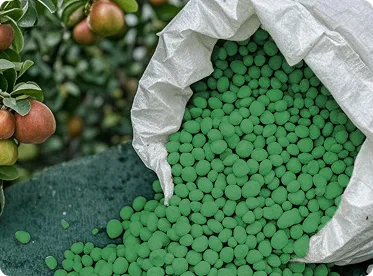
A conventional granular fertilizer is commonly applied to soil before planting, during cultivation, or as a side dressing. Depending on the crop and product, the total amount may be split into several applications.
A balanced product such as NPK 10-10-10 compound fertilizer supplies equal percentages of nitrogen, phosphorus, and potassium. However, the N-P-K ratio tells you nutrient concentration. It does not automatically tell you how many times to apply it.
Water-soluble fertilizer works differently.
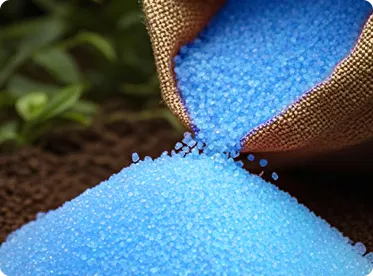
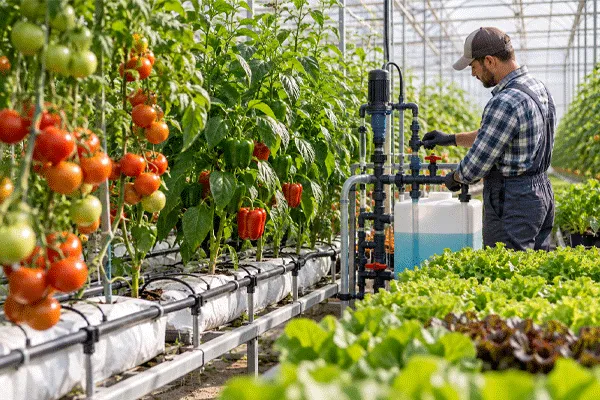
Because the fertilizer dissolves in irrigation water, commercial farms can use small amounts during many irrigation events. Greenhouses, orchards, and high-value vegetable operations may therefore use a much more frequent feeding schedule.
LVFENG’s water-soluble NPK fertilizer range includes balanced, high-phosphorus, and high-potassium formulas that can fit different stages of a fertigation program.
A high-potassium formula such as NPK 12-12-36+TE water-soluble fertilizer may fit later crop stages when fruit development and potassium demand become more important, subject to crop and soil requirements.
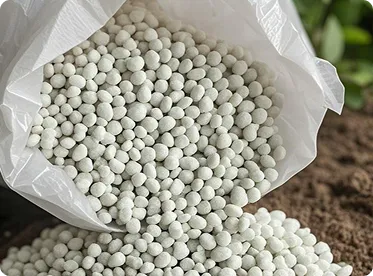
Slow-release fertilizer is designed to supply nutrients over a longer period. That means fewer applications may be needed.
Applying another full dose too early can lead to excessive nutrient supply.
University of Florida IFAS notes that crop nutrient demand changes during the season and that conventional quick-release fertilizers can be more vulnerable to nutrient loss than fertilizer programs using properly timed split applications.
So before you fertilize your plants, ask:
How long is this fertilizer designed to feed the crop?
That answer may matter more than the date on your calendar.
How Many Times Should You Use NPK Fertilizer? A Split-Application Guide for Gardeners and Commercial Growers
Plants do not require the same nutrient balance from planting to harvest.
During early growth, plants build roots, leaves, and stems. Later, many crops shift toward flowering, fruiting, grain filling, tuber development, or other reproductive growth.
A fertilizer program should follow that change.
Young plants need enough nutrients to build a healthy root system without excessive fertilizer salts near delicate roots.
Phosphorus supports important plant energy processes and is associated with early root development. Nitrogen supports leaf and shoot growth, while potassium helps regulate many plant functions.
During strong vegetative growth, nitrogen demand can rise sharply in many crops.
A fertilizer high in nitrogen may be useful where crop requirements and soil analysis support it. However, the rate still matters. Applying too much can create excessive vegetative growth and waste nutrients.
Flowering plants still need nitrogen, but the balance often changes. Depending on the specific plant and soil condition, phosphorus and potassium may take on greater importance.
Fruiting plants can have strong potassium demand. Growers may move toward a fertilizer with a higher potassium analysis where agronomic recommendations support that change.
A high-potassium NPK compound formula is therefore different from an all-purpose fertilizer. The correct product depends on the crop stage.
Extra fertilizer late in the season does not always improve yield.
University of Florida Extension recommends matching fertilizer timing to the crop growth pattern and notes that additional fertilizer near harvest often does not provide extra yield or quality.
This is why a commercial fertilizer program may use different formulas during different applications, rather than repeating the same bag of fertilizer from planting to harvest.
NPK stands for three primary nutrients required by plants in relatively large quantities:
N — Nitrogen
Nitrogen helps plants make proteins and supports chlorophyll, leaves, and vegetative growth. Nitrogen is often the nutrient most commonly divided into several applications because its availability can change quickly in agricultural soil.
P — Phosphorus
Phosphorus supports energy transfer, plant establishment, and root development. It behaves differently from nitrogen in soil and often requires careful placement and soil-test-based management.
K — Potassium
Potassium strengthens plants by supporting water regulation, enzyme activity, crop quality, and stress response.
Because the nutrients behave differently, a farm does not always need to apply the same N-P-K ratio at every stage.
For example:
| Crop Stage | Typical Nutritional Focus |
|---|---|
| Establishment | Balanced nutrition and root support |
| Vegetative growth | Stronger nitrogen demand in many crops |
| Pre-flowering | Balanced supply based on crop requirements |
| Flowering | Avoid unnecessary excess nitrogen |
| Fruiting | Potassium demand often becomes more important |
| Ripening | Adjust feeding according to crop and yield target |
*This table is a general planning framework, not a crop-specific fertilizer recommendation.
For example, a grower might use a balanced NPK compound fertilizer early and later move toward a high-potassium fertilizer when the crop enters reproductive growth.
Commercial buyers can compare different formulations in LVFENG’s NPK compound fertilizer range.
The same fertilizer schedule does not work equally well in every field.
Sandy soils usually have lower water and nutrient-holding capacity than heavier soils. Mobile nutrients can move through the root zone more easily under heavy irrigation or rainfall.
Smaller split applications can therefore be useful in high-leaching-risk conditions.
University of Minnesota research notes that split nitrogen application is especially useful in sandy soils with low nutrient- and water-holding capacity, although the benefits vary with soil and weather conditions.
Clay-rich soils behave differently. They often retain more water and certain nutrients, although drainage and soil structure can create other challenges.
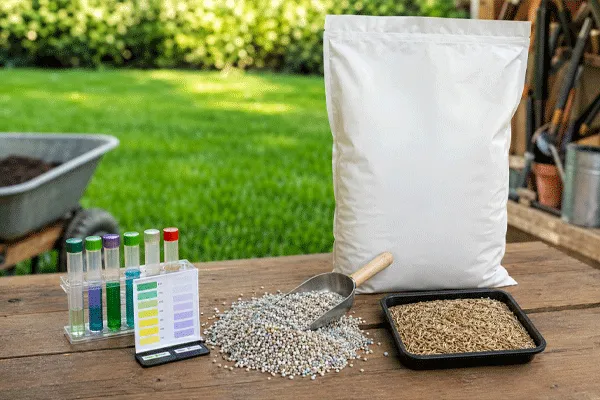
A soil test should guide the fertilizer analysis and application rate.
Do not treat heavy rain as free irrigation after applying fertilizer.
Strong rainfall can increase runoff or move mobile nutrients away from the active root zone. The risk depends on fertilizer source, placement, soil, field slope, and rainfall intensity.
Fertigation changes the whole schedule.
Instead of applying a large amount of fertilizer three times during a season, a farm might divide the seasonal requirement into many small applications through the drip system.
This lets growers adjust the fertilizer mix as the crop develops.
The FAO also notes that nitrogen is often best supplied several times during the growing season so nutrient supply can better match critical crop stages.
That is one reason water-soluble fertilizer has become important for commercial greenhouses, vegetable production, orchards, and precision irrigation systems.
Instead of asking only, “How many times should I fertilize?”, commercial growers should begin with the total seasonal nutrient requirement.
Consider a simplified example.
Suppose an agronomic recommendation calls for a total of 120 kg of K₂O per hectare during a particular crop cycle.
If you select a fertilizer containing 36% K₂O, the amount of fertilizer required to supply that potassium target would be approximately:
120 ÷ 0.36 = 333 kg fertilizer/ha
This calculation only evaluates potassium. You must also calculate how much nitrogen and phosphate the same 333 kg supplies before finalizing the program.
If the fertilizer is 12-12-36:
You then compare all three numbers against the actual crop recommendation.
Do not simply divide 333 kg into weekly doses without agronomic reason.
Instead, decide when the crop needs each nutrient.
| Stage | Share of Planned Seasonal Application |
|---|---|
| Establishment | 25% |
| Active growth | 30% |
| Pre-flowering | 20% |
| Fruit development | 25% |
| Total | 100% |
These percentages are only an example showing how a fertilizer plan can be divided. Actual percentages must come from crop requirements, soil analysis, yield targets, local climate, and professional recommendations.
For tomatoes, for example, University of Minnesota Extension provides an example in which a recommended nitrogen amount is divided between pre-plant application and a later application when fruit begins to form.
This approach is far more useful than saying, “Apply fertilizer every four weeks.”
For agricultural cooperatives and commercial farms, it also makes annual purchasing easier because total fertilizer requirements can be calculated by hectare, crop, and application stage.
More fertilizer does not guarantee faster plant growth.
Applying too much fertilizer can increase soluble salts around roots, disturb nutrient balance, increase production costs, and create unnecessary nutrient losses.
Possible warning signs include:
However, these symptoms can also have other causes.
A plant may look weak because of poor drainage, root disease, soil pH, heat stress, cold temperatures, irrigation problems, or pests. Adding another fertilizer application without diagnosis can make the problem worse.
This is where a soil test becomes valuable.
A fertilizer recommendation should consider nutrients already present in the soil, nutrients supplied by manure or compost, and nutrients left from previous crops.
Penn State Extension recommends accounting for residual soil nitrogen, manure, previous legumes, and other nitrogen sources before calculating the amount of additional fertilizer required.
For home gardeners, the same principle applies on a smaller scale:
Do not fertilize simply because the plant looks unhappy. Find the cause first.
How Many Times Should You Use NPK Fertilizer? A Split-Application Guide for Gardeners and Commercial Growers
For agricultural distributors, importers, cooperatives, commercial farms, government projects, and fertilizer brand owners, the question is bigger than “How often should I apply fertilizer?”
The real purchasing questions are:
Which fertilizer should be used at each stage? How much will the farm need per hectare? How many applications will be made? And which product form fits the local farming system?
A distributor serving rain-fed grain farms may need granular fertilizer for basal and top-dress applications.
A distributor serving greenhouse vegetable growers may require fully water-soluble products for frequent fertigation.
A fertilizer brand may want several products in one seasonal program:
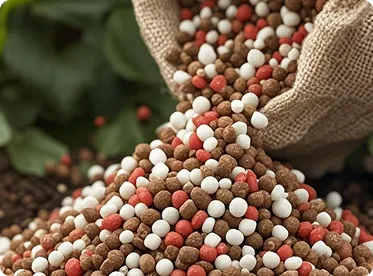
Bulk blending provides another option because ratios can be adjusted for regional crops and soil requirements. LVFENG supplies customizable NPK bulk blending and BB fertilizers for agricultural distributors and professional buyers.
| Purchasing Question | Why It Matters |
|---|---|
| What crops will use the product? | Determines nutrient demand |
| What is the soil analysis? | Prevents unnecessary nutrient supply |
| How many applications are planned? | Affects concentration and total volume |
| Is fertilizer broadcast or fertigated? | Determines product form |
| What NPK ratios are needed by stage? | Helps build the product portfolio |
| Is water solubility required? | Essential for drip and foliar systems |
| Is OEM packaging needed? | Important for private-label distribution |
| What is the annual volume? | Supports production and shipping planning |
As a China-based fertilizer manufacturer and exporter, Shandong Lvfeng Fertilizer Co., Ltd. produces compound fertilizers, water-soluble fertilizers, BB fertilizers, and nitrogen fertilizers for international B2B markets.
We can also develop formulations based on regional soil nutrient conditions and customer requirements. Buyers who need private-label formulas, packaging, or regional product portfolios can review our OEM fertilizer manufacturing service.
The aim is not to sell the largest amount of fertilizer.
The aim is to match the fertilizer product, rate, timing, and placement to the way crops actually use nutrients.
That approach is better for farms—and better for long-term fertilizer distribution businesses.
There is no universal number. Many soil-grown crops may use two to four main split applications, while fertigation programs may use many smaller applications. The total seasonal nutrient requirement should determine the program, not a fixed calendar.
Some water-soluble fertilizer programs use weekly or even more frequent low-dose feeding. However, applying a full-strength granular or quick-release fertilizer every week could supply much more fertilizer than plants need. Always follow crop recommendations and the fertilizer label.
For many crops and especially nitrogen management, split fertilizer applications can better match nutrient supply with plant demand. The advantage depends on soil, weather, irrigation, crop type, and fertilizer source.
Water-soluble fertilizer can be applied more frequently than many granular products because growers can use small nutrient doses through fertigation. The actual frequency and concentration depend on crop demand, irrigation frequency, water quality, growth stage, and the product instructions.
Not necessarily. Plant needs change during the season. A crop may require stronger nitrogen support during vegetative growth and more potassium support during flowering, fruit development, or ripening. Soil and tissue testing should guide formula changes.
Yes. Applying too much fertilizer can increase salts around roots, cause nutrient imbalance, damage plants, waste money, and increase nutrient loss. Always consider both application frequency and total nutrient rate.
Need an NPK fertilizer program for your local agricultural market? LVFENG works with agricultural distributors, importers, commercial farms, cooperatives, project buyers, and private-label fertilizer brands to develop suitable compound, water-soluble, BB, and customized NPK products for different crop stages and application systems.