Avoid your inquiry is delay response, please enter your WhatsApp/Skype along with the message, so we can contact you at the very first time.
We will reply you within 24 hours. If for urgent case, please add WhatsApp/WeChat: ,. Or call directly.
Too much nitrogen can turn a healthy garden into a mass of green leaves with few flowers or fruits. Some plants need very little extra nitrogen, while others become stressed when they receive it at the wrong time. Understanding these differences helps gardeners choose the right fertilizer and avoid wasted nutrients.
Most plants need nitrogen to grow, but some plants are sensitive to excessive nitrogen. Legumes such as beans and peas can obtain nitrogen through root bacteria, while succulents and many native plants need only light feeding. Fruiting crops and flowering plants also need careful nitrogen management to prevent excessive leaf growth and delayed production.
Which Plants Don’t Like Nitrogen? How to Fertilize Your Garden with the Right Fertilizer
Nitrogen is an essential nutrient for almost all plants. It supports chlorophyll production, protein formation, and the development of new leaves and stems. Without enough nitrogen, plants may become pale, grow slowly, and produce fewer leaves.
However, more nitrogen does not always mean better plant growth. When plants receive too much, they may produce excessive green leaves and long stems instead of flowers, roots, or fruit. This is especially important for crops grown for their flowers, seeds, or edible produce.
The real issue is not whether a plant dislikes nitrogen. It is whether the amount, timing, and form of nitrogen match its needs.
A good fertilizer program should consider:
For gardeners and commercial growers, the goal is simple: supply enough nitrogen to support healthy growth without pushing unnecessary leaf development.
Some plants naturally grow well with lower nutrient inputs. Others can obtain part of their nitrogen from the environment or are easily affected by excessive feeding.
The following groups deserve special attention when planning a garden fertilizer program.
| Plant Type | Why Extra Nitrogen Should Be Limited | Recommended Approach |
|---|---|---|
| Beans and peas | Can fix atmospheric nitrogen through root bacteria | Check soil nitrogen before adding fertilizer |
| Native plants | Many are adapted to naturally low-nutrient soils | Use little or no fertilizer after establishment |
| Cacti and succulents | Have relatively low nutrient requirements | Apply diluted, low-nitrogen fertilizer during active growth |
| Fruiting crops | Excess nitrogen can encourage leaves and vines instead of fruit | Adjust feeding during flowering and fruit development |
| Flowering ornamentals | Excess nitrogen may favor foliage over flowers | Use moderate, balanced nutrition |
| Established perennial plants | Often need less feeding than young, actively growing plants | Base applications on soil conditions and plant performance |
Native plants deserve particular attention. Many species have adapted to the nutrient levels of their natural environment. Adding large amounts of fertilizer can encourage soft, excessive growth and make them less suited to local conditions.
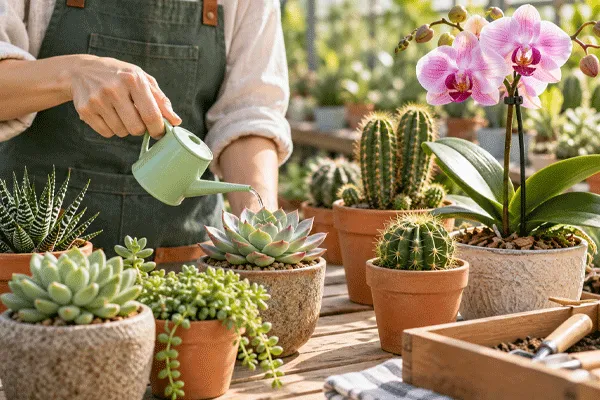
Cacti and succulents also need a different approach. They do not require the same amount of fertilizer as fast-growing vegetables. A low-nitrogen formula, used at a diluted rate, is often more suitable.
According to Colorado State University Extension, many native plants grow well without fertilizer when planted in suitable native soils. Light feeding may be appropriate in some garden settings, but high-nitrogen applications should be avoided.
Nitrogen mainly supports vegetative growth. It helps plants develop leaves, stems, and green plant tissue. This is useful during early growth, but the same effect can become a problem when a plant should be producing flowers or fruit.
When nitrogen is excessive, plants may continue investing energy in new shoots and leaves. Flower development and fruit production can become delayed. In some crops, the plants may look very healthy while their harvest remains disappointing.
For example, a cucumber plant with too much nitrogen may produce long vines and dense foliage but fewer fruits than expected. Similar problems can occur in pumpkins, squash, and other fruiting vegetables.
The timing of fertilizer application matters just as much as the amount.
| Growth Stage | Nitrogen Management | Main Goal |
|---|---|---|
| Seedling stage | Supply a suitable starter amount if needed | Support early development |
| Vegetative stage | Provide nitrogen according to crop demand | Develop healthy leaves and stems |
| Flowering stage | Avoid unnecessary high-nitrogen applications | Maintain balanced growth |
| Fruit development | Adjust nitrogen according to soil and crop requirements | Support fruit growth and quality |
| Late season | Avoid excess nitrogen unless testing indicates a need | Reduce unnecessary late growth |
The University of Minnesota Extension explains that too much nitrogen late in the growing season can reduce or delay fruiting.
Which Plants Don’t Like Nitrogen? How to Fertilize Your Garden with the Right Fertilizer
Beans and peas are good examples of plants that may need less additional nitrogen than many other garden crops.
These plants belong to the legume family. Their roots can form small structures called nodules, which contain beneficial bacteria known as rhizobia. These bacteria convert nitrogen from the air into forms that the plant can use.
This process is called biological nitrogen fixation.
As a result, established and properly nodulated legumes can obtain much of their nitrogen without relying on synthetic nitrogen fertilizer. This can reduce the need for additional nitrogen inputs.
However, this does not mean beans and peas never need nitrogen. Young plants may still benefit from suitable soil fertility, and poor nodulation, unsuitable soil pH, or low phosphorus levels can affect nitrogen fixation.
For better results:
For agricultural distributors and commercial farms, this is an important distinction. A fertilizer recommendation designed for corn or leafy vegetables may not be suitable for legumes.
Utah State University Extension explains that established alfalfa can meet its nitrogen needs through biological fixation when the root-bacteria relationship is working properly.
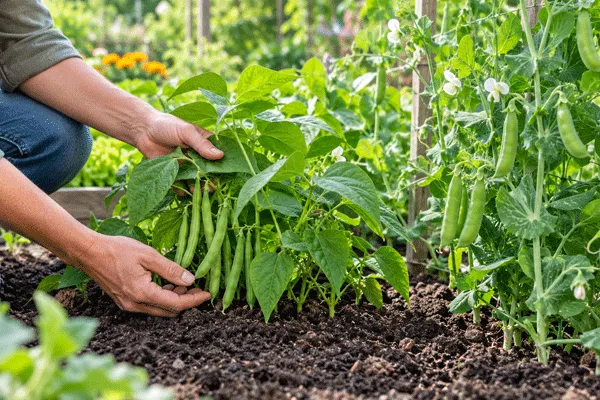
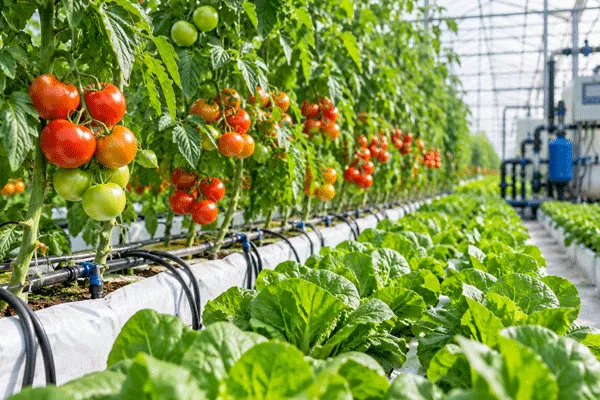
Tomatoes, cucumbers, pumpkins, peppers, and many other fruiting plants need nitrogen. However, they also need a balanced supply of phosphorus and potassium throughout their growing cycle.
The challenge is avoiding excessive vegetative growth.
For example, if tomato plants receive too much nitrogen, they may develop thick stems and large, dark-green leaves while flowering and fruit production slow down. The plant looks vigorous, but the harvest may not meet expectations.
This is why choosing a tomato fertilizer should involve more than selecting a product with a high nutrient concentration.
A practical approach includes:
Before planting: Use a soil test to understand existing nutrient levels. Apply a suitable starter fertilizer if the soil requires additional nutrients.
During early growth: Provide enough nitrogen to establish a healthy plant structure.
During flowering and fruit set: Avoid excessive nitrogen. Adjust the fertilizer program according to crop condition and soil or tissue test results.
During fruit development: Maintain a balanced supply of potassium, nitrogen, and other required nutrients.
Strawberries and raspberries also need careful nitrogen management. Excess nitrogen can encourage leaf and runner growth at the expense of fruit quality and production. Late-season growth can also interfere with winter preparation in some climates.
For commercial farms, split fertilizer applications may help match nutrient supply to crop demand. This is especially useful when using readily available nitrogen sources.
The University of Minnesota Extension provides detailed guidance on strawberry nutrient management and raspberry irrigation and nutrient management.
Flowering plants need nitrogen for healthy leaves and stems, but excessive nitrogen can shift growth toward foliage instead of flowers.
This is a common problem in ornamental gardens. A plant may look green and full, yet produce fewer flowers than expected.
Roses are a good example. They need a steady supply of plant nutrients to support new shoots, leaves, and blooms. However, excessive feeding can encourage soft growth and create an unbalanced plant structure.
When choosing rose fertilizer, gardeners should consider:
The same principle applies to flowering perennials, garden shrubs, and ornamental plants.
One common mistake is assuming that every flowering plant needs a fertilizer with very high phosphorus. This is not always true. Extra phosphorus does not automatically produce more flowers when the soil already contains enough.
Instead, maintain suitable nitrogen levels and correct actual nutrient deficiencies.
For established perennial plants, regular feeding may not be necessary. Some plants can grow well with compost, organic matter, and good soil management alone.
The best fertilizer is the one that meets the plant’s real needs, not simply the one with the largest numbers on its label.
Some ornamental plants have relatively low nutrient requirements or grow slowly for much of the year. These plants usually need a lighter feeding program than vegetables or fast-growing foliage plants.
Orchids
Many orchids grow in bark-based or other soilless media. Their fertilizer requirements depend on the species, growing medium, water quality, and active growth stage.
An orchid fertilizer is often applied as a diluted solution rather than at a strong concentration. Regular flushing with plain water can also help prevent excess salts from building up around the roots.
Cacti
Cacti naturally grow in environments where nutrient availability may be limited. They generally require less fertilizer than many common houseplants.
A diluted formula with relatively low nitrogen is often suitable during active growth. Avoid unnecessary feeding during dormancy.
Succulents
Succulents also have modest nutrient requirements. Excessive nitrogen may encourage weak, soft growth that is less suitable for their natural growth habit.
A low-nitrogen fertilizer, applied sparingly during spring or summer, is often appropriate.
| Plant | Feeding Requirement | Fertilizer Guidance |
|---|---|---|
| Orchids | Light, controlled feeding | Diluted fertilizer suited to the growing medium |
| Cacti | Low nutrient demand | Low-nitrogen formula at a diluted rate |
| Succulents | Modest nutrient demand | Light feeding during active growth |
| Fast-growing foliage plants | Often higher nitrogen demand | Regular feeding according to growth and label directions |
For additional guidance, on strawberry nutrient management and raspberry irrigation and nutrient management.
Organic fertilizer is often viewed as a gentler option than synthetic fertilizer. Materials such as compost and manure can improve soil structure, increase organic matter, and support beneficial soil organisms.
However, organic does not automatically mean low in nitrogen.
For example, some manure products contain significant amounts of nitrogen. Their nutrient content depends on the animal source, bedding material, storage, and composting process.
Compost usually releases nutrients more slowly than many readily soluble mineral fertilizers, but its nutrient content can vary widely.
Synthetic fertilizer offers another approach. It provides a more defined nutrient analysis and allows growers to supply specific amounts of nitrogen, phosphorus, and potassium.
Both options have a place in garden and agricultural management.
| Fertilizer Type | Main Characteristics | Important Consideration |
|---|---|---|
| Compost | Adds organic matter and nutrients | Nutrient content varies |
| Manure | Supplies organic nutrients | Nitrogen levels depend on source and treatment |
| Organic fertilizer | Often releases nutrients gradually | Check the actual nutrient analysis |
| Synthetic fertilizer | Provides defined nutrient concentrations | Application rate and timing are important |
| Low-nitrogen NPK | Supplies relatively less nitrogen | Confirm that other nutrients meet crop needs |
For many growers, combining organic matter management with carefully selected mineral fertilizer offers a practical way to support long-term soil health and crop nutrition.
A soil test is one of the most useful tools for preventing unnecessary fertilizer applications.
It helps identify nutrient levels and soil conditions before a gardener or farmer decides how much fertilizer to apply.
A useful soil test may include:
These results help determine whether a plant actually needs additional nitrogen.
For example, a vegetable garden with high residual nitrogen may not need another nitrogen-rich fertilizer. Adding more could encourage excessive foliage instead of improving crop performance.
Sandy soil also requires attention because nitrate nitrogen can move through it more easily with water. In such conditions, smaller, well-timed applications may be more efficient than one large application.
A soil test should be combined with crop observations. Yellow leaves, poor growth, and weak flowering do not always indicate nitrogen deficiency. Other nutrient problems, root damage, poor drainage, and unsuitable soil pH can create similar symptoms.
Before applying a fertilizer, ask:
This approach helps gardeners avoid excess fertilizer while giving plants the nutrients they need.
Which Plants Don’t Like Nitrogen? How to Fertilize Your Garden with the Right Fertilizer
Choosing a fertilizer is not only a gardening decision. For agricultural distributors, importers, commercial farms, and fertilizer brands, product selection also affects purchasing costs, inventory planning, and customer satisfaction.
Different markets have different crop structures and soil conditions. A high-nitrogen fertilizer may be suitable for leafy vegetables or certain field crops, but less suitable for a customer growing legumes, succulents, or fruiting crops during sensitive growth stages.
When purchasing fertilizer in bulk, buyers should consider several factors.
1. Guaranteed Nutrient Analysis
Check the exact nitrogen, phosphorus, and potassium content. Also review secondary nutrients and micronutrient specifications where applicable.
2. Nitrogen Source
Different nitrogen sources behave differently in soil. Urea, ammonium, and nitrate forms have different properties, application considerations, and nutrient-release behavior.
3. Product Form
Granular, crystalline, and water-soluble fertilizers serve different application systems.
4. Quality and Consistency
Check particle size, moisture, solubility, product stability, and batch quality documents.
5. Market Requirements
Confirm local fertilizer registration, labeling, packaging, and import requirements before ordering.
At LVFENG, we understand that different agricultural markets require different fertilizer formulations. As a fertilizer manufacturer and exporter based in Zibo, Shandong, China, we provide NPK compound fertilizers, water-soluble fertilizers, nitrogen fertilizers, and customized products for international B2B customers.
Our product range includes NPK Compound Fertilizer, Water Soluble NPK Fertilizer, and Nitrogen Fertilizer.
For buyers who specifically require a nitrogen and sulfur source, our Ammonium Sulphate 20.5-0-0+23S is one available product option. It is designed for crops and soil conditions that require these nutrients, rather than as a universal fertilizer for every plant.
We also support OEM and private-label fertilizer development. Buyers can discuss nutrient analysis, raw materials, product form, packaging, and regional requirements through our OEM Fertilizer Manufacturing Service.
Our goal is to help distributors, commercial farms, agricultural cooperatives, government projects, and fertilizer brand owners obtain products that match their markets and customers’ needs.
Legumes, many native plants, cacti, and succulents often need less additional nitrogen than fast-growing vegetables. However, their actual requirements depend on species, soil conditions, and growth stage.
Tomatoes still need nitrogen, but excessive amounts can encourage leaf and stem growth while delaying flowering and fruit production. Choose a suitable tomato fertilizer based on soil conditions and crop stage.
No. Nitrogen is essential for healthy plant growth. However, excessive nitrogen can encourage vegetative growth at the expense of flowering in some plants.
Not necessarily. Compost contains varying amounts of nitrogen and other nutrients depending on its ingredients and production process. Check its nutrient analysis before using it as a fertilizer.
Not in every case. Some crops still require nitrogen during flowering and fruit development. The correct amount depends on the crop, soil fertility, and production system.
It is generally better to use different feeding programs. Vegetables often need more nutrients during active growth, while succulents usually require lighter and less frequent feeding.
Looking for a reliable fertilizer manufacturer in China? Shandong Lvfeng Fertilizer Co., Ltd. supplies NPK, nitrogen, water-soluble, and customized fertilizer products for global distributors, importers, commercial farms, and private-label brands.
Contact our team through the LVFENG Contact Page to discuss your fertilizer requirements, bulk orders, and OEM solutions.