Avoid your inquiry is delay response, please enter your WhatsApp/Skype along with the message, so we can contact you at the very first time.
We will reply you within 24 hours. If for urgent case, please add WhatsApp/WeChat: ,. Or call directly.
Choosing the wrong fertilizer can waste money, unbalance soil nutrients, and limit crop performance. The problem gets worse when buyers select products only by price or package claims. Understanding nitrogen, phosphorus, potassium, soil conditions, and crop stage makes it much easier to choose the right formula.
The top three fertilizer nutrient categories are nitrogen (N), phosphorus/phosphate (P), and potassium/potash (K). A balanced NPK fertilizer combines all three. There is no single best fertilizer for every garden or farm: the right fertilizer depends on soil testing, crop type, growth stage, climate, and nutrient requirements.
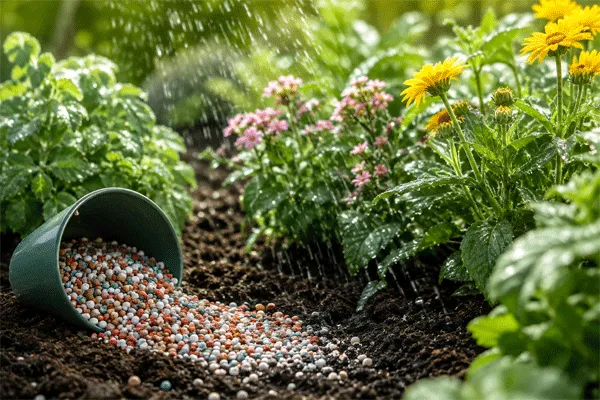
What Are the Top 3 Fertilizers? NPK Garden Fertilizer Guide for Better Plant Growth
For agricultural distributors, commercial farms, cooperatives, government projects, and fertilizer brand owners, this distinction matters even more. You are not choosing one bag for one garden. You may be selecting hundreds or thousands of tons for different crops, regions, and customers.
As a China-based manufacturer and exporter of fertilizer products, we see a simple pattern: successful fertilizer sourcing starts with plant needs, not with a fashionable formula.
When people ask about the “top three fertilizers,” they usually mean the three primary plant nutrients used in fertilizer programs:
These nutrients are commonly grouped as N-P-K. Iowa State University Extension explains that the three numbers on fertilizer packaging represent nitrogen, phosphate expressed as P₂O₅, and potash expressed as K₂O by weight.
| Nutrient | Main Role in Crop Nutrition | Common Fertilizer Strategy |
|---|---|---|
| Nitrogen (N) | Supports vegetative growth and chlorophyll-related functions | High-N or balanced formulas |
| Phosphorus (P) | Important in energy transfer, roots and reproductive development | Higher-P formulas when soil/crop demand requires it |
| Potassium (K) | Supports water regulation, enzyme activity and general crop function | Higher-K formulas during high-demand stages |
| N + P + K | Broad nutrient supply | Balanced or crop-specific NPK |
A complete fertilizer can contain all three. For importers and large farm buyers, custom NPK compound fertilizer is often more practical than purchasing each nutrient separately because the ratio can be matched to the target crop and market.
But “top three” does not mean every field needs equal amounts of all three. A soil already high in phosphorus, for example, may not need a high-phosphate formula.
That is why the next step matters.
Understanding fertilizers becomes much easier once you understand the label.
The three numbers on fertilizer bags show the guaranteed percentages of nitrogen, phosphate and potash. A 10-10-10 product contains 10% N, 10% P₂O₅ and 10% K₂O by weight. Virginia Tech notes that fertilizer labels technically report N-P₂O₅-K₂O rather than elemental N-P-K.
So, a 100 kg bag of 15-15-15 contains:
| Analysis | Amount in 100 kg |
|---|---|
| Nitrogen | 15 kg |
| Phosphate, P₂O₅ | 15 kg |
| Potash, K₂O | 15 kg |
| Remaining material | 55 kg |
The remaining weight is not necessarily “waste.” A fertilizer may also contain secondary nutrients, micronutrients, carriers, conditioners, coatings, and other formulation components.
These three numbers on fertilizer are especially useful for distributors because they allow different products to be organized by crop stage and customer need. For example, a balanced NPK 19-19-19 water-soluble fertilizer provides equal declared percentages of the three primary nutrients and may suit programs that require a broad, balanced nutrient supply.
A high-potassium formula has a different purpose. It should not be marketed simply as “stronger fertilizer.” It is a different fertilizer for a different nutrient program.
Nitrogen is one of the nutrients plants require in relatively large quantities. It is closely involved in chlorophyll, proteins, enzymes, and vegetative plant growth.
When nitrogen supply is too low, plants can become pale and growth may slow. But more nitrogen is not automatically better. Excess application can cause unwanted vegetative growth, nutrient imbalance, environmental losses, or weaker crop performance.
For commercial buyers, nitrogen fertilizer for professional agriculture may include ammonium sulphate, calcium ammonium nitrate, high-N NPK formulas, and other sources. The right source depends on crop, soil pH, sulfur demand, irrigation method, regulations, and fertilizer program.
One example is ammonium sulphate fertilizer with nitrogen and sulfur, which combines two nutrients in one fertilizer material. This can be relevant where both nitrogen and sulfur are required.
A distributor should therefore ask:
Does the market need a nitrogen product, or does it need a nitrogen plus secondary nutrient solution?
That small change in thinking often leads to a better product portfolio.
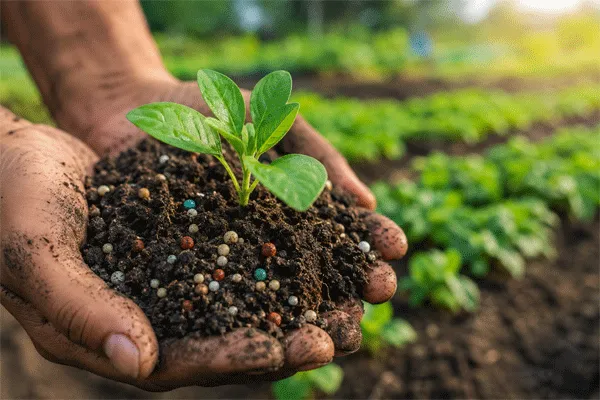
What Are the Top 3 Fertilizers? NPK Garden Fertilizer Guide for Better Plant Growth
Phosphorus and potassium serve different roles from nitrogen.
Phosphorus is involved in energy transfer, root development, and reproductive processes. Potassium supports many physiological functions, including water regulation and enzyme activity. Plants need all three primary nutrients, but the required ratio changes according to crop, soil and growth stage.
A high-phosphorus NPK 12-36-12 water-soluble fertilizer may be considered where the nutrient program calls for more phosphate. A high-potassium formula such as NPK 13-3-43+TE water-soluble fertilizer takes a very different approach, supplying a much higher declared potash level.
This demonstrates why fertilizer choice should be based on a nutrition plan rather than a simple ranking.
A grower may use one ratio during early development and a different ratio later. Likewise, a fertilizer importer may need several formulations to serve vegetable production, orchards, field crops, greenhouse operations, and specialty crops.
The “best” product is the one that supplies the required nutrients at the appropriate rate—not necessarily the fertilizer with the highest numbers.
If you want to choose the right fertilizer, start with the soil.
University of Maryland Extension recommends basing fertilizer decisions on soil-test results and plant requirements, warning that excess fertilizer can contribute to plant problems and nutrient pollution.
The same principle applies from a small yard and garden plot to a commercial vegetable operation.
A practical decision process is:
Soil Test → Crop Requirement → Growth Stage → Nutrient Ratio → Fertilizer Form → Application Method
First, understand your soil type, pH, nutrient reserves, and organic matter. Then consider the type of plant and expected yield.
A leafy vegetable may have a different nutrient program from a fruiting crop. A greenhouse operation may prefer soluble fertilizers, while a broad-acre grower may choose granular products for basal application.
For B2B buyers, this creates opportunities to build a range of fertilizers rather than trying to sell one universal product.
As a manufacturer, we can discuss custom formulations according to regional soil information, target crop, application method, and buyer requirements. This is especially useful for agricultural distributors and OEM brands that want products developed for a specific market rather than generic formulas.
Both can play useful roles.
An organic fertilizer comes from plant, animal, or other naturally derived materials. Examples may include composted materials and manure. Organic inputs can also add organic matter, which can support long-term soil properties.
Inorganic fertilizers are manufactured mineral or synthetic nutrient products that provide nutrients in defined concentrations. Texas A&M AgriLife Extension explains that fertilizers may be organic or inorganic and notes that inorganic products generally contain higher nutrient concentrations.
| Feature | Organic Fertilizer | Inorganic Fertilizer |
|---|---|---|
| Nutrient concentration | Often lower or more variable | Usually more precisely defined |
| Release | Often depends on decomposition | Can be rapid or controlled |
| Organic matter | May contribute it | Generally does not |
| Formula precision | More variable | High |
| Bulk commercial blending | Product-dependent | Common |
| Fertigation | Limited by product | Water-soluble grades available |
The debate over organic and inorganic fertilizers is often too simple. Commercial farming may use organic inputs to improve soil while also applying precise mineral nutrition according to crop demand.
Likewise, organic and synthetic fertilizers should not be judged solely by the word on the package.
The key questions are nutrient analysis, release behavior, application rate, quality, regulatory compliance, and whether the product fits the production system.
Consumers may search for best organic products or brands such as Jobe’s Organics All Purpose Fertilizer. B2B distributors, however, should evaluate composition, local registration rules, supply stability, packaging, and market positioning rather than simply copying a consumer product.
The nutrient ratio is only part of the decision. The physical form also changes how a fertilizer is stored, distributed, applied, and marketed.
A granular fertilizer can suit basal application, top dressing, and broad field distribution. A slow-release fertilizer or controlled-release formula is designed to extend nutrient release over time, although release mechanisms vary by technology.
A liquid fertilizer is already in solution or suspension, while a water-soluble powder or crystal is dissolved before use. NPK water-soluble fertilizer formulas are particularly useful for fertigation, drip irrigation, hydroponics, and some foliar programs.
Other market forms include:
The best format depends on the user.
A commercial greenhouse may value rapid solubility and precise injection. A farm cooperative may prefer bulk granules that can be spread efficiently. Retail garden centers may sell smaller packaged products designed to feed plants conveniently.
For distributors, product form affects another critical factor: logistics. Granule strength, moisture sensitivity, caking, bag size, pallet configuration and container loading can influence the real cost of imported fertilizer products.
Searches for the 8 best fertilizers or best garden fertilizers often suggest that there is a fixed ranking. In practice, fertilizer selection is more complex.
A useful list of eight fertilizer categories might include:
But these are categories, not a universal winner list.
The best overall choice for one crop may be the wrong choice for another. Likewise, the best for vegetables depends on whether the crop is leafy, fruiting, rooted, greenhouse-grown, open-field grown, or under another management system.
A productive vegetable garden also depends on water, light, soil structure, pH, pest management and temperature. Fertilizer cannot correct every growing problem. Texas A&M notes that poorly growing plants will not necessarily improve from fertilizer when the actual cause is drainage, shade, or another non-nutrient factor.
So if you are looking for the best fertilizer for your garden, first ask:
What nutrient is actually limiting plant performance?
That question is far more useful than a generic top-eight ranking.
Balanced NPK fertilizers contain similar or equal proportions of the three primary nutrients.
Common commercial examples may include 15-15-15, 18-18-18, 19-19-19, or 20-20-20, although suitability depends on local conditions.
A balanced fertilizer is attractive because one application can deliver nitrogen, phosphate and potash together. It can simplify distribution and inventory, especially where buyers need a broad-purpose product.
But balanced does not mean universally correct.
Suppose a soil test shows high phosphorus. Adding equal N, P and K could supply much fertilizer that the crop does not need. University of Maryland Extension specifically recommends avoiding unnecessary nutrients when soil tests show adequate phosphorus or potassium.
For wholesalers and fertilizer brands, a stronger portfolio may therefore include:
| Market Need | Example Formula Direction |
|---|---|
| General nutrition | Balanced NPK |
| Vegetative stage | Higher nitrogen |
| Root/early stage | Higher phosphorus where required |
| Fruit development | Higher potassium where required |
| Fertigation | Fully water-soluble NPK |
| Special soil need | NPK + secondary/micronutrients |
This gives dealers more ways to match plant needs instead of promoting one bag for every crop.
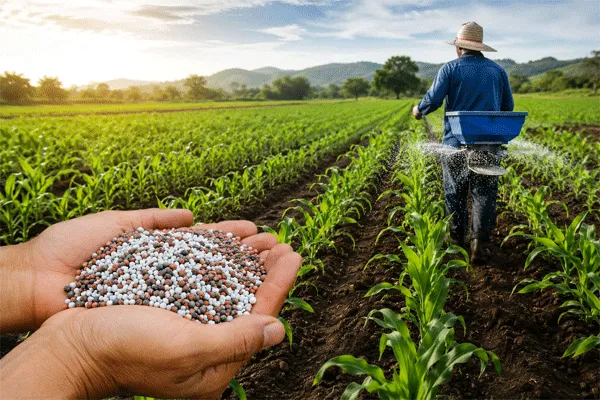
What Are the Top 3 Fertilizers? NPK Garden Fertilizer Guide for Better Plant Growth
There is no safe universal answer.
The correct amount of fertilizer depends on nutrient concentration, crop requirement, soil analysis, expected yield, timing, application method, and local recommendations.
A 20-20-20 product is twice as concentrated in each listed nutrient as a 10-10-10 product. That means applying the same weight would deliver twice as much declared N, phosphate and potash. Mississippi State University Extension emphasizes that fertilizer grade and required nutrient amount should be considered together.
Before you apply fertilizer:
Excess fertilizer application can waste money and increase nutrient losses. Too little can leave crop demand unmet.
The goal is not maximum fertilizer use. It is efficient fertilizer use.
That difference matters greatly for government agricultural projects and commercial farm cooperatives, where even a small error in rate becomes expensive across thousands of hectares.
Retail gardeners ask, “Which bag should I buy?”
An importer should ask a much longer set of questions.
Start with the market:
Which crops dominate the region? What soil limitations are common? What application equipment is used? Which fertilizer grades are already familiar to farmers? What registration and labeling rules apply?
Then evaluate the supplier.
For bulk B2B purchasing, review:
| Procurement Factor | What to Confirm |
|---|---|
| Formula | Guaranteed nutrient analysis |
| Raw materials | Specification and consistency |
| Physical form | Granular, soluble powder, crystal, etc. |
| Packaging | Retail bags, neutral bags, jumbo bags |
| OEM | Private label and artwork capability |
| Quality | Inspection and batch control |
| Volume | Production and repeat supply capability |
| Export | Pallets, loading and shipping coordination |
| Documents | Required commercial/technical documentation |
| Customization | Crop- or market-specific formula capability |
As a China-based manufacturer and exporter, we work with agricultural distributors, importers, commercial farms, cooperatives, government/NGO projects and OEM fertilizer brands.
For these buyers, choosing fertilizers is both an agronomic and commercial decision.
A fertilizer can work well agronomically but still fail commercially if the package size is wrong, the granules cake during shipping, the formula does not fit local farmer habits, or supply cannot remain stable across seasons.
Consider an importer supplying vegetable growers in several regions.
The initial request is simple:
“We need the best vegetable fertilizer.”
That is not enough information to select a formula.
The manufacturer first asks about crops, soil-test results, irrigation system, growth stages, target package size, annual quantity, and existing fertilizer practices.
After reviewing the market, the buyer decides not to import one universal formula. Instead, the product range is divided into:
Balanced formula — general crop nutrition
Higher-N formula — selected vegetative stages
Higher-P formula — where crop and soil programs justify it
Higher-K formula — high potassium demand periods
Water-soluble range — greenhouse and fertigation customers
The distributor now has products with clear roles instead of several bags competing with each other.
That makes farmer education easier. It also gives the OEM brand a more logical product architecture.
This example is illustrative, but the sourcing principle is real:
Define the agronomic problem before defining the fertilizer product.
The three main fertilizer nutrient categories are nitrogen, phosphate/phosphorus and potash/potassium fertilizers. They correspond to the N-P-K system shown on most complete fertilizer labels.
A 10-10-10 garden fertilizer provides equal declared percentages of N, phosphate and potash. It can be useful in some situations, but it is not automatically the right fertilizer for every soil or crop. A soil test should guide the decision.
There is no single formula that makes all vegetables grow best. Leafy, root and fruiting vegetables can have different nutrient demands, and soil nutrient levels also matter. Select the ratio according to soil testing, crop stage and local agronomic guidance.
Some organic inputs can add organic matter and support soil health, but performance depends on the material, nutrient concentration, decomposition rate, soil and crop. Organic fertilizer and mineral fertilizer can also be used within the same overall fertility strategy.
An NPK fertilizer contains declared nitrogen, phosphate and potash. A nitrogen-focused fertilizer primarily supplies nitrogen and may also contain secondary nutrients. Different products serve different nutrient requirements.
Yes. For B2B programs, formulas, nutrient ratios, trace-element options, packaging and private-label presentation can be discussed according to target markets and production feasibility. Soil data, crop information and annual purchase volume help make customization more useful.