Avoid your inquiry is delay response, please enter your WhatsApp/Skype along with the message, so we can contact you at the very first time.
We will reply you within 24 hours. If for urgent case, please add WhatsApp/WeChat: ,. Or call directly.
Wrong mixing can waste money, overload soil with phosphorus, and still leave a crop short of potassium. The result may be weak roots, poor flowering, or lower yield. The answer is not simply “mix” or “do not mix.” It is to build a measured feeding plan.
Yes, DAP fertilizer can be combined with NPK fertilizer when the final nutrient analysis matches the soil test, crop needs, and growth stage. DAP supplies concentrated nitrogen and phosphorus but no potassium. A suitable NPK grade can complete the program. Random mixing, however, may overapply phosphorus or nitrogen, create nutrient imbalances, and increase production costs.
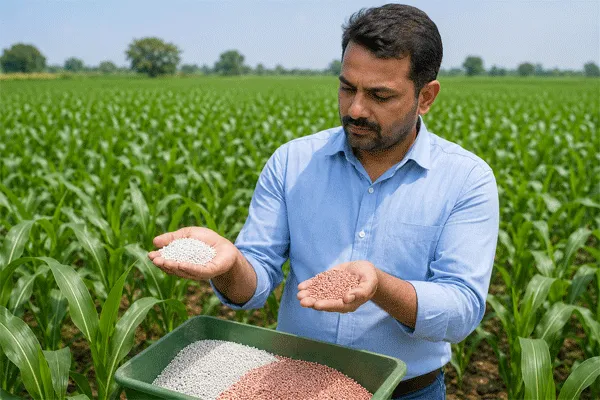
Can DAP Fertilizer Be Combined with NPK Fertilizer to Improve Crop Yield?
DAP means diammonium phosphate. Its standard agricultural grade is normally 18-46-0: 18% nitrogen, 46% phosphate expressed as P₂O₅, and 0% potassium. It dissolves quickly in moist soil and gives young plants an early supply of phosphorus and ammonium nitrogen. This supports root development and early plant growth.
The USDA-linked technical sheet identifies 18-46-0 as the standard grade and warns against placing high concentrations close to germinating seed.
An NPK fertilizer supplies the three primary nutrients: nitrogen, phosphorus, and potassium. The label numbers always follow that order. For example, 15-15-15 contains equal percentages, while 12-6-22 contains more potassium. Some grades also include sulfur, calcium, magnesium, or trace elements.
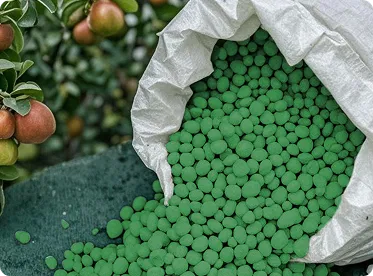
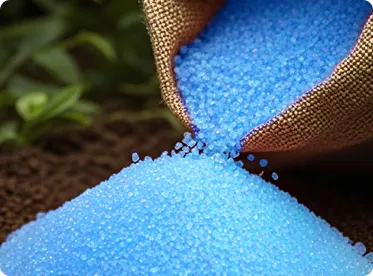
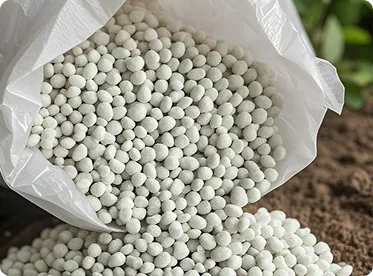
Both products belong to widely used types of fertilizers. In this article, chemical fertilizers means manufactured mineral products that supply measured plant nutrition. Buyers can compare standard and custom NPK compound fertilizer formulas for different crops, soil types, and markets.
| Nutrient | Main job in plant nutrition | Possible shortage sign |
|---|---|---|
| Nitrogen | Chlorophyll, leafy growth, and vegetative growth | Pale older leaves and slow growth |
| Phosphorus | Energy transfer, root growth, establishment, and flowering | Weak roots and delayed maturity |
| Potassium | Water balance, plant health, fruit quality, and disease resistance | Weak stems and poor fruit fill |
Yes. DAP fertilizer can be combined with a complete NPK grade when the blend is designed around a real nutrient target. The phosphate source provides a high phosphorus content plus nitrogen. The complete grade adds potassium and may add more N and P.
Used correctly, a DAP and NPK fertilizer program can support root establishment, vegetative development, later flowering, and crop yield. The aim of fertilizer applications is not to apply the largest quantity. It is to provide a balanced nutrient supply at the time roots can use it.
However, compatibility does not mean you can mix any two bags. Many complete formulas already contain enough P. Adding 18-46-0 may raise phosphorus far above crop needs without improving growth and yield.
University of Minnesota guidance recommends basing phosphate fertilizer use on soil-test levels and using suitable placement to control cost and environmental loss.
For commercial programs, first ask what final grade is required. A professionally produced NPK blending fertilizer gives better control of nutrient content, granule size, uniformity, and spreading than a field mixture made by eye.
The main difference between DAP and a complete NPK grade is nutrient range. DAP is one concentrated source of nitrogen and phosphorus. It contains no K. NPK fertilizer is a broad family of formulas that may be balanced, nitrogen-rich, phosphate-rich, or potassium-rich.
Use 18-46-0 when soil analysis shows a clear need for a supply of phosphorus, especially near root establishment. Use a complete blend when the field needs all three primary nutrients.
A balanced NPK 19-19-19 water-soluble fertilizer can support even feeding through fertigation. Its rate must still reflect water quality, soil fertility, nutrient levels, and crop stage.
| Decision point | DAP 18-46-0 | Complete NPK |
|---|---|---|
| Main purpose | Concentrated N and P | Broad or stage-specific feeding |
| Potassium supply | None | Included |
| Formula choice | Usually fixed | Many ratios available |
| Common fit | Low-P soil; base or starter fertilizer | Full-season or targeted program |
| Main overuse risk | Excess P and seed-zone injury | Excess of whichever element is too high |
There is no universal best fertilizer. The right fertilizer fills the measured gap without creating a new one.
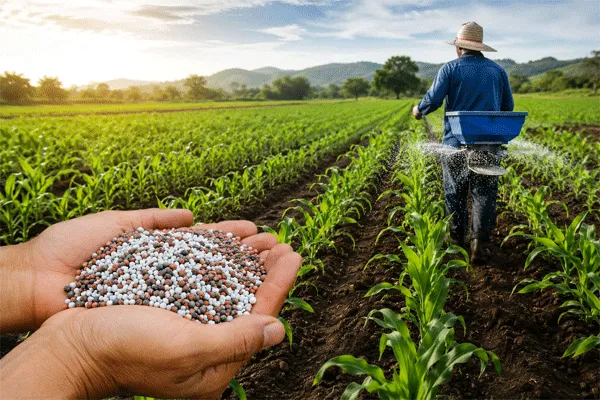
Can DAP Fertilizer Be Combined with NPK Fertilizer to Improve Crop Yield?
A field may need both when available P is low, while the full-season plan also requires K and extra N. The first input may support root establishment at planting. A later formula can support vegetative growth, flower formation, fruit filling, and resistance to environmental stress.
Demand changes throughout the growing season. Early stages of plant growth often place more emphasis on phosphorus. Leafy crops need enough nitrogen for vegetative growth. Fruit and flower crops usually need more K during flowering and fruiting.
A well-planned program throughout the growing season may therefore use different ratios rather than one fixed formula. It should also maintain the right balance of phosphorus and potassium instead of focusing only on one element.
Relative nutrient emphasis by stage

Root establishment     N ███   P █████   K ██
Vegetative stage       N █████ P ███     K ███
Flowering and fruiting  N ███   P ███     K █████
This chart is a planning guide, not a rate recommendation. USDA guidance explains that soil testing can identify pH, plant-available P and K, and the amounts needed for a realistic yield goal.
Read both labels, and then calculate each contribution by weight. Never assume a 1:1 mixture becomes balanced.
Final nutrient percentage = kilograms of the nutrient ÷ total blend weight × 100
Consider this illustrative one-tonne blend:
| Material | Weight | N | P₂O₅ | K₂O |
|---|---|---|---|---|
| DAP 18-46-0 | 500 kg | 90 kg | 230 kg | 0 kg |
| NPK 15-15-15 | 500 kg | 75 kg | 75 kg | 75 kg |
| Total | 1,000 kg | 165 kg | 305 kg | 75 kg |
| Final grade | 16.5% | 30.5% | 7.5% |
The result is 16.5-30.5-7.5. It is much higher in P than K. It may suit a low-P establishment program, but it may be wrong for fruiting stages or soil that already has strong phosphorus levels.
All sources must be counted. DAP contributes N as well as P. Urea supplies N. Potash supplies K. Ammonium sulfate supplies N and sulfur. If you ignore the overlapping nutrients, the final NPK ratio will not match the plan.
Penn State advises calculating the amount of each element supplied by every material and then adjusting the combination to avoid excess.
For a custom formula, provide:
You can apply DAP before planting, band it, or incorporate it into the soil. Placement is important. As the granule dissolves, it can create a short-lived alkaline zone and release ammonia.
A high rate touching seed may injure seedlings and plant roots, especially in higher-pH conditions. Follow local recommendations for seed-row placement, application rate, and spacing. Young plants need accessible nutrition, but they also need protection from concentrated salts and ammonia.
A complete grade may be used as base dressing, side-dress, top-dress, or fertigation, depending on its form. Granules require even spreading and enough soil moisture. Water soluble products require clean water and a suitable concentration.
A high-phosphorus NPK 15-30-15 formula may fit early root development, while a high-K grade may better fit later fruiting stages.
A simple sequence is:
This staged approach can improve nutrient uptake and fertilizer use efficiency because roots receive each essential nutrient nearer the time of demand.
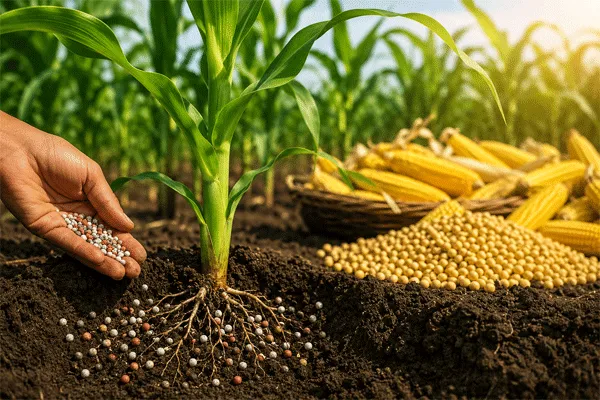
Can DAP Fertilizer Be Combined with NPK Fertilizer to Improve Crop Yield?
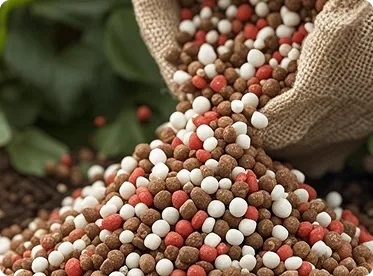
Dry blending can work when materials are chemically and physically compatible. Particle size, density, moisture, hardness, and coating affect quality. If one granule is much larger or denser than another, the materials may separate during transport and spreading.
The Fertilizer Canada bulk-blend manual notes that DAP with coarse potassium chloride can segregate badly, while closer particle-size matching improves uniformity.
Separate application gives more control when needs change by stage. You might use the phosphate source at planting and a different complete grade later. This can reduce storage caking and prevent an early excess of N or K.
Tank mixing requires the most care. Do not combine phosphate inputs with concentrated calcium nitrate in the same stock tank unless a qualified formulation has proven compatibility. Calcium and phosphate may form insoluble solids, block emitters, and reduce nutrient absorption.
Check water pH and bicarbonate, follow product labels, and perform a jar test.
The first mistake is mixing by bag count instead of nutrient weight. The second is forgetting the N supplied by 18-46-0. Adding a full urea rate afterward can create too much N, causing excessive leafy growth and delaying flower or fruit development.
The third mistake is applying P without testing the soil. Choosing a product with a higher phosphorus number does not automatically produce better results. Soil pH, existing nutrient levels, root activity, and expected removal all affect the response.
FAO’s latest global cropland balance release found large nutrient surpluses in some regions and deficits in others. That pattern shows why local budgets matter. Too much input increases loss and pollution risk, while too little can reduce soil fertility and high yields.
Other errors include:
The goal is balanced feeding, not the largest possible application.
Cereals may benefit from starter P in a low-testing field, followed by split N. Vegetables grow fast and may need frequent, measured feeding. Root and tuber crops need enough K for quality.
Fruit and flower crops need careful N control so leafy growth does not replace flowering and fruiting. Soil type, rainfall, temperature, irrigation, harvest timing, and the target market also affect the right program.
| Crop situation | Possible direction | Main caution |
|---|---|---|
| Low-P field at planting | DAP or a P-rich starter | Keep away from seed |
| Strong leafy-growth demand | N-led program with required P and K | Avoid excess N |
| Flower and fruit stage | Formula with adequate K | Do not keep using a high-P starter |
| Greenhouse fertigation | Fully water soluble, stage-specific NPK | Check tank compatibility |
| High soil P | Reduce or omit phosphate | Supply only missing elements |
| Low soil K | Use a K-bearing grade or potash | DAP cannot correct the shortage |
To choose the right fertilizer, answer three questions:
These answers create a practical program that protects plant health while supporting consistent production.
Agricultural distributors, importers, commercial farms, cooperatives, government projects, NGOs, and OEM brand owners need more than an attractive analysis. They need consistent batches, reliable packaging, clear documents, and dependable export support.
A product that cakes, segregates, varies between bags, or fails registration can damage field performance and brand trust. Procurement teams should therefore evaluate both agronomic value and supply-chain reliability.
Ask for:
As a China-based manufacturer and exporter, we help buyers compare DAP or NPK, select a practical formula, and prepare bulk or private-label supply.
Review our capabilities as a fertilizer manufacturer and OEM supplier in China. Send the destination country, crop, target grade, volume, packaging, and required documents to receive a focused recommendation and quotation.
Yes, after calculation. An equal-weight mixture produces about 16.5-30.5-7.5. That is not balanced. Use it only when the soil and plant plan call for much more P than K.
It can appear with urea in professionally designed dry blends. Count the N from both sources, match particle sizes, control moisture, and avoid long storage unless stability has been tested.
DAP is useful when concentrated N and P are needed. A complete grade is useful when plants need all three major elements. The best choice depends on the test result, growth stage, and application system.
Only when both labels permit it and a jar test stays clear. Keep concentrated phosphate and calcium sources in separate stock tanks unless a proven formulation says otherwise.
Apply DAP near planting when soil P is low and root establishment is important. Avoid high concentrations beside seed. Follow local rate and placement advice.
Yes. A qualified factory can use DAP as one raw material and then add N, K, sulfur, or trace elements to reach a target grade. The specification should also define moisture, granule size, packaging, and local compliance.