Avoid your inquiry is delay response, please enter your WhatsApp/Skype along with the message, so we can contact you at the very first time.
We will reply you within 24 hours. If for urgent case, please add WhatsApp/WeChat: ,. Or call directly.
Yellow leaves, weak roots, and poor fruit set often look like a simple feeding problem. Yet adding the wrong fertilizer can waste money and make the imbalance worse. The safer solution is to match the product to the crop, the soil, and the growth stage.
The top three choices are balanced NPK fertilizer, high-nitrogen fertilizer, and organic fertilizer. Balanced NPK supports overall development, high-nitrogen products encourage leafy growth, and organic options release nutrients more gradually while adding organic matter. The right choice for your garden depends on a soil test, plant needs, and the speed of nutrient release required.
What Are the Top 3 Fertilizers? How to Choose the Best Fertilizer for Your Garden
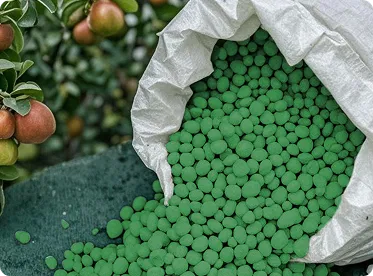
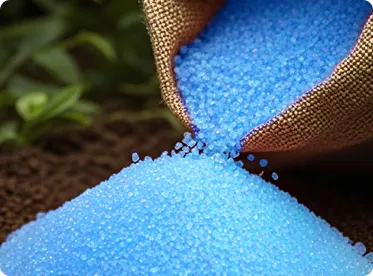
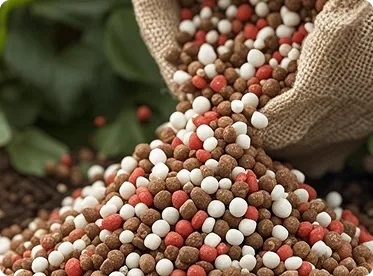
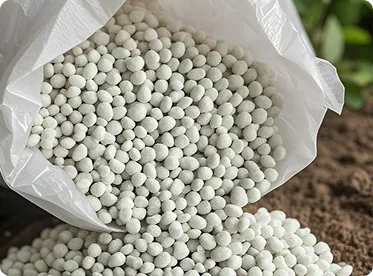
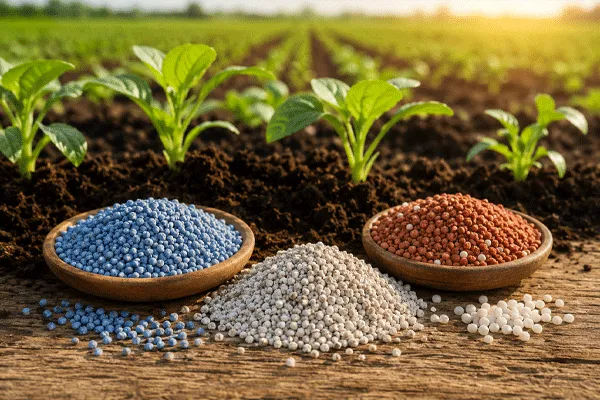
For most gardens and farms, the leading choices are balanced NPK formulas, high nitrogen, and organic fertilizers. Each type of fertilizer has a clear role. A balanced blend supports leaves, roots, flowering, and fruit. A nitrogen-rich formula supports fast green growth. Organic products often feed plants more slowly and may also improve soil structure.
| Type | Main purpose | Key advantage | Common use |
|---|---|---|---|
| Balanced NPK formulas | General plant nutrition | Supplies the three primary macronutrients together | Garden beds, field crops, and mixed planting |
| High-nitrogen formula | Leaf and stem development | Supports vigorous leafy growth | Leafy vegetables, cereals, and forage |
| Natural and organic blend | Gradual feeding | Adds nutrients and organic matter | Organic gardening and long-term soil care |
There is no universal winner. A product that helps spinach may not be the right choice for tomatoes, flowers, or root crops. University of Minnesota Extension recommends comparing a soil test with the NPK ratio on the label instead of choosing by habit.
As a leading China-based manufacturer and exporter, we serve agricultural distributors, commercial farms, cooperatives, government and NGO projects, and OEM fertilizer brand owners. We adapt formulas, packaging, documents, and supply plans to each market.
The label code means N, P, and K. These are the three major nutrients shown on most commercial labels, and together they shape plant growth. Nitrogen supports green leaves and stems. Phosphorus supports energy transfer, flowering, harvest formation, and root growth. Potassium helps water regulation, plant strength, crop quality, and disease resistance.
A simple memory guide is:
Plants need nutrients beyond the primary three. Calcium, magnesium, sulfur, zinc, boron, iron, manganese, copper, and other micronutrient elements may also matter. However, a micronutrient should be added only when the crop, soil, or plant tissue analysis shows a need.
FAO guidance supports integrated nutrient management. This approach combines mineral inputs with compost, manure, crop residues, biological resources, and other organic materials. It helps growers meet crop demand while improving the efficiency of each nutrient source.
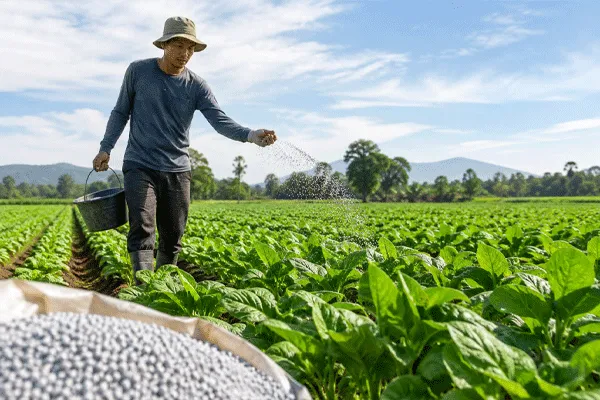
What Are the Top 3 Fertilizers? How to Choose the Best Fertilizer for Your Garden
The ideal formula for a vegetable garden depends on what you grow. Lettuce, spinach, cabbage, and similar crops need enough nitrogen to build harvestable leaves. Tomatoes, peppers, cucumbers, and melons need controlled nitrogen plus adequate P and K for flowering and crop development.
A balanced formula such as 10-10-10 or 15-15-15 may work as a garden fertilizer when a test shows that all three primary nutrients are needed. But “balanced” does not always mean “correct.” Garden soil may already contain enough P or K. Penn State Extension notes that soil testing can prevent growers from adding phosphate or potash when levels are already above the optimum range.
| Crop group | Main focus | Practical approach |
|---|---|---|
| Leafy vegetables | Nitrogen content | Use moderate, timely feeding for steady leaf production |
| Root crops | Balanced growth | Avoid excess nitrogen that favors tops over roots |
| Fruiting crops | P and K | Support flowering, crop set, and filling |
| Legumes | Overall balance | Avoid unnecessary high nitrogen where fixation is active |
For the best results, build the program around crop stage. Young plants may need gentle, balanced feeding. Fruiting plants often need a different ratio later. A vegetable garden’s demands change through the season, so one bag cannot solve every plant need. Choosing the right fertilizer means matching the formula to each stage.
Organic fertilizers come from plant, animal, or naturally occurring mineral sources. Examples include compost, manure, bone meal, plant meals, and other organic materials. Each organic compound releases at a different pace. Many release their nutrient content gradually because soil organisms must break down the material first.
Inorganic fertilizers supply a known analysis, often act faster, and simplify large-area calculations. This consistency helps commercial farms, distributors, and public agricultural projects.
The better question is not simply “organic or inorganic?” Organic inputs can support soil quality, while mineral products can correct a precise shortage. FAO supports combining them when this improves efficiency and long-term productivity.
| Factor | Organic options | Inorganic options |
|---|---|---|
| Release speed | Usually slower | Often faster |
| Analysis | Can vary | Usually precise |
| Organic matter | Often added | Usually little or none |
| Application volume | Often higher | Often lower |
| Best use | Soil-building and gradual feeding | Precise crop nutrition and rapid correction |
Buyers choosing fertilizers from the many fertilizers on the market should compare organic and inorganic fertilizers and also check moisture, particle size, solubility, caking resistance, and batch uniformity.
A soil test may report soil pH, available phosphorus, available potassium, organic matter, and crop-specific guidance. USDA explains that testing helps determine nutrient levels, lime needs, and suitable rates.
One handful is not enough. Collect several cores from a uniform area, mix them, and send a representative composite sample. USDA guidance commonly recommends around 15 to 20 subsamples, taken at the correct depth for the crop and laboratory method.
Use this six-step process:
Soil pH deserves special attention because it controls access to many nutrients that plants need. A nutrient can be present but less available when pH is unsuitable. In some cases, adjusting pH or adding organic matter will improve plant health more than simply adding more plant food.
The three numbers on a label show the percentage by weight of nitrogen, phosphate expressed as P₂O₅, and potash expressed as K₂O. A 15-15-15 product contains 15% N, 15% phosphate, and 15% potash by weight. This is a fertilizer for plants that need all three nutrients.
A 50 kg bag of 15-15-15 contains:
This shows why buyers must compare ratio and concentration. A 20-10-10 formula supplies twice as much N per kilogram as 10-10-10 and requires accurate calibration.
FAO procurement specifications may also cover moisture, particle size, minimum analysis, packaging, and marking—details that affect storage, spreading, and export performance.
When reviewing balanced NPK fertilizer products, request a certificate of analysis, physical specifications, packaging information, and batch-control details.
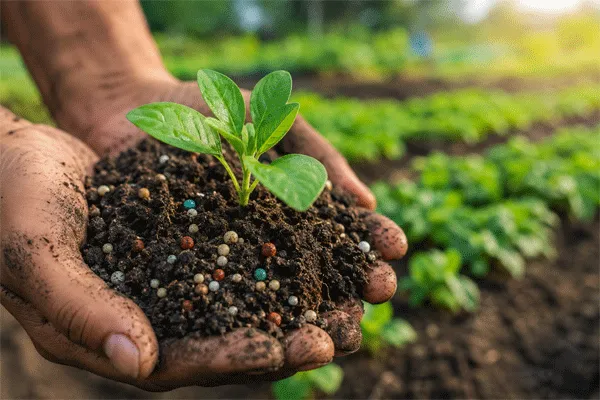
What Are the Top 3 Fertilizers? How to Choose the Best Fertilizer for Your Garden
Liquid fertilizers are useful for fertigation, foliar feeding, nurseries, and quick correction. They can move into the root zone rapidly, but the response may be shorter. Water quality, dilution, compatibility, and application equipment must be controlled.
Slow-release fertilizers supply nutrients over a longer period. Release may depend on coatings, granule design, moisture, temperature, or microbial activity. These products can reduce labor and support steadier feeding in containers, ornamental plants, outdoor plants, and garden beds.
A practical selection chart looks like this:
Many growers combine formats. A slow-release base can cover general demand, while a liquid product corrects a short-term shortage during the growing season. Buyers can compare formulas for broadcasting, fertigation, and foliar use before choosing the final package.
The correct amount depends on the recommended rate, product analysis, area, crop, and timing. Start with the amount of actual nutrient needed, not the total bag weight.
Use this formula:
Product required = Nutrient required ÷ Nutrient percentage as a decimal
If a crop needs 10 kg of N and the product contains 20% N:
10 ÷ 0.20 = 50 kg of product
Planning may also consider irrigation, previous crops, amendment history, yield target, and texture. Clay soils and sandy land behave differently, so split applications often work better than one heavy dose.
Too much fertilizer can damage roots, burn foliage, reduce germination, raise salinity, and increase production cost. Penn State and University of Minnesota both recommend using test results to avoid applying nutrients that are not needed.
For a large project, ask the supplier to convert the recommended NPK rate into product quantity. Our team helps farms and distributors match formula, pack size, and application method. Buyers can request a crop-specific product quotation for their market.
Good fertilizer use follows four ideas: the right source, right rate, right time, and right place. A soil test provides the starting point. Organic inputs may improve soil structure, while a measured mineral input can correct a specific shortage.
Excess P can build up and increase water-pollution risk. Excess N may leach, volatilize, or move with runoff, depending on weather, soil type, and application method. University of Minnesota Extension warns that repeated overapplication of N and P can create environmental problems.
Use these practical steps:
This approach can improve soil, support root growth, stabilize crop yields, and reduce waste. It also protects the long-term value of the land.
Commercial buyers need more than a low price. Distributors value stable analysis and export readiness; farms need repeatable performance; public projects may require inspection and uniform bags; OEM clients need private labels and confidentiality.
| Buying factor | What to verify |
|---|---|
| Analysis | Guaranteed analysis and any secondary or micronutrient content |
| Physical quality | Granule size, hardness, moisture, solubility, and caking resistance |
| Documents | Certificate of analysis, safety data, origin, and export paperwork |
| Packaging | Retail bags, 25 kg or 50 kg bags, jumbo bags, and multilingual printing |
| Customization | Balanced NPK, high-nitrogen, crop-specific, water-soluble, or slow-release formulas |
| Capacity | Batch size, lead time, seasonal planning, and container loading |
| Quality control | Raw-material inspection, process checks, and final testing |
| OEM service | Formula support, private-label design, and market positioning |
As a China-based manufacturer and exporter, we support formulas for horticultural, orchard, field crop, flowering plants, and general-purpose use, with custom ratios, granule size, trace elements, bags, and export documents.
A distributor may start with balanced NPK fertilizers, one nitrogen-focused option, and one organic line. Farms may prefer a few high-volume formulas, while project and brand buyers focus on specifications, delivery, packaging, and privacy.
Consider a cooperative growing leafy greens, tomatoes, and root crops. It first used one high-nitrogen product across every field. The greens looked strong, but tomatoes flowered unevenly and some root crops produced too much top growth.
The cooperative then separated fields by crop and test result. Greens received smaller N applications, tomatoes received controlled N with adequate P and K, and root crops received moderate N. Compost was added where organic matter was low.
The improvement did not come from a magic earth fertilizer. It came from choosing the right fertilizer for your garden or farm, applying the correct rate, and matching the program to plant needs. That same logic helps commercial buyers build a focused range instead of stocking too many overlapping products.
A balanced formula product is a practical starting point when the soil needs all three major nutrients. The final choice should reflect soil pH, crop type, existing levels, and growth stage.
It can be useful as a purpose fertilizer for general feeding, but it is not always correct. If the soil already has enough phosphorus and potassium, another formula may be safer.
It encourages green leaves and stems. It can help leafy crops and early growth, but too much may delay flowering or reduce harvest production.
Compost adds organic matter and some nutrients, but its analysis and release rate vary. High-yield crops may still need a measured formula to meet full demand.
Apply fertilizer when roots are active and the crop can use the nutrients. Avoid application before heavy rain. Split feeding often gives better control than one large dose.
USDA guidance suggests every three to five years in many situations, with more frequent testing when organic amendments are used or major nutrient and pH changes are planned. Intensive systems may need a shorter interval.