Avoid your inquiry is delay response, please enter your WhatsApp/Skype along with the message, so we can contact you at the very first time.
We will reply you within 24 hours. If for urgent case, please add WhatsApp/WeChat: ,. Or call directly.
Tomato plants can grow tall and green yet produce very little fruit. This often happens when the fertilizer supplies too much nitrogen or does not match the growth stage. A soil-based NPK plan helps turn leafy plants into healthy, productive crops.
There is no single best NPK ratio for every tomato plant. As a general guide, use moderate, balanced nutrition during early growth and shift toward a fertilizer with more potassium than nitrogen during flowering and fruiting. Examples may include 5-10-10 at transplanting or tomato fertilizer formulas such as 8-12-20, but soil testing should guide the final choice.
What NPK Ratio Is Best for Tomatoes? A Complete Tomato Fertilizer Guide by Growth Stage
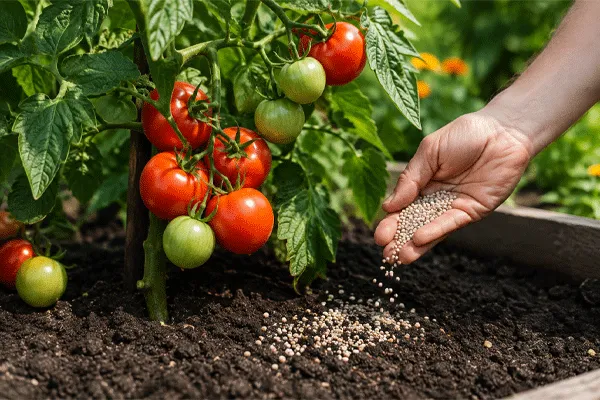
The NPK ratio appears as three numbers on a fertilizer label, such as 5-10-10, 10-10-10, or 8-12-20. The numbers show the percentage by weight of three major plant nutrients:
On most fertilizer labels, phosphorus is expressed as phosphate, or P₂O₅, while potassium is expressed as potash, or K₂O. A 50-kilogram bag of 10-10-10 fertilizer therefore contains 5 kilograms of nitrogen, 5 kilograms of phosphate, and 5 kilograms of potash.
A tomato plant needs all three nutrients, but it does not need them in the same amount at every stage. A young tomato needs enough nitrogen to form healthy foliage. Once flower and fruit development begins, the nutrient focus changes. Potassium demand becomes increasingly important, while excessive nitrogen can encourage leaves at the expense of fruit production.
The University of Minnesota advises growers to select fertilizer according to both soil-test results and plant needs rather than relying on the product name alone.
Commercial farms and agricultural distributors can explore our custom NPK fertilizer solutions for open-field, greenhouse, drip-irrigated, and container tomato production.
The best NPK for tomatoes is usually a formula with moderate nitrogen and relatively higher potassium, especially after flowering starts. However, no ratio can be called the best fertilizer for every field because soil fertility, irrigation water, tomato cultivars, climate, yield target, and production system all affect plant needs.
Common fertilizer ratios used in tomato production include:
| NPK ratio | Possible use | Important note |
|---|---|---|
| 5-10-10 | Transplanting or soils needing P and K | Do not add extra phosphorus if the soil already has enough |
| 10-10-10 | General balanced fertilizer | May supply more phosphorus than some soils require |
| 8-12-20 | Flowering and fruit development | Higher potassium supports heavy fruit demand |
| 15-5-30 | Fertigation during fruit filling | Concentrated formula; professional rate control is essential |
| 17-18-28 | Complete tomato food example | Supplies more potassium than nitrogen |
| 4-6-8 | Mild feeding for gardens and containers | Check the product label for application frequency |
These are examples, not universal prescriptions. University of Georgia Extension gives 5-10-10 or 5-10-5 as examples of dilute starter fertilizer for tomato transplants. The University of Minnesota also uses a 17-18-28 tomato fertilizer label as an example of a product with more potassium than nitrogen.
The best NPK fertilizer should fill a measured nutrient gap. If a soil test shows high phosphorus, using 5-10-10 simply because it says “tomato fertilizer” may add nutrient that the crop does not need. University of Minnesota Extension recommends a low- or no-phosphorus fertilizer unless the soil-test report calls for more phosphorus.
Practical rule: Use the soil test to choose the formula, the growth stage to choose the timing, and the product analysis to calculate the rate.
Tomato nutrient demand changes from the seedling stage through harvest. Adjusting the NPK ratio helps avoid weak seedlings, excessive vegetative growth, poor flower formation, and low fruit quality.
The following chart shows the relative nutrient focus, not an exact fertilizer application rate:
Relative Nutrient Focus by Growth Stage

Seedling            N ███     P ███     K ██
Vegetative growth   N ████    P ██      K ███
Flower initiation   N ██      P ███     K ████
Fruit set           N ██      P ██      K █████
Fruit filling       N ██      P ██      K █████
A seedling needs gentle nutrition. A strong fertilizer application can damage tender roots or create soft, stretched growth. Growers often use a diluted balanced liquid fertilizer or a mild starter formula that supplies nitrogen and phosphorus without creating excessive salt around the root zone.
Phosphorus can support early root development, especially in cool soil, but it should not be added blindly. If the growing medium already contains sufficient phosphorus, extra application offers little value.
What NPK Ratio Is Best for Tomatoes? A Complete Tomato Fertilizer Guide by Growth Stage
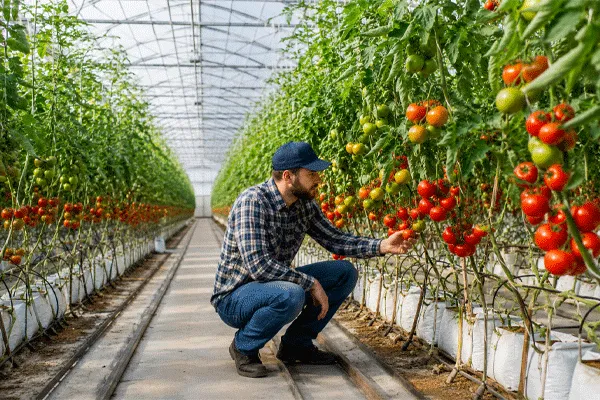
During early growth, the tomato plant builds leaves, stems, roots, and the structure needed to carry future fruit. Moderate nitrogen supports this process. The goal is a compact, healthy tomato plant—not a plant with long, weak stems and dark, oversized foliage.
A balanced fertilizer or a formula with a modest nitrogen advantage may work at this stage. The exact choice depends on the growing medium and soil test.
Once flower clusters appear, the nutrition plan should place greater emphasis on potassium. Nitrogen remains necessary, but too much can delay flower and fruit development.
During fruit set and enlargement, tomatoes need a steady nutrient supply. Penn State Extension notes that tomato crops require high levels of potassium during fruit production. Potassium management is also closely connected with tomato quality and several fruit disorders.
Growers who need stage-specific products can compare our tomato fertilizer formulations for seedlings, flowering plants, fruit set, and commercial harvest production.
Nitrogen drives vegetative growth. It helps a tomato plant form chlorophyll, leaves, enzymes, and proteins. Without enough nitrogen, older foliage may become pale or yellow, stems may remain thin, and growth can slow.
Yet more nitrogen does not always mean a better crop.
Too much nitrogen fertilizer may produce:
A tomato plant with abundant leaves may look healthy at first. But if the crop produces few flowers and little fruit, the grower has invested in foliage rather than yield.
The University of Maryland identifies excessive nitrogen as one possible cause of tall, lush tomato plants that fail to flower or fruit well. Penn State Extension similarly explains that a tomato setting fruit needs less emphasis on nitrogen because plant energy must shift from vegetative growth toward fruit set.
This does not mean growers should stop nitrogen completely. Tomato production continues to require nitrogen through the season. The goal is to provide enough for healthy growth without creating an imbalance. Split fertilizer application is often more efficient than applying one large dose.
For drip-irrigated commercial tomato systems, UF/IFAS recommends applying part of the nitrogen and potassium before planting and supplying the remainder through the drip system according to crop growth. This approach connects fertilizer application with actual demand.
Phosphorus supports energy movement, root development, flowering, and early fruit formation. A true phosphorus deficiency may cause slow growth, poor root activity, delayed maturity, or dark green to purplish foliage.
However, phosphorus can remain in the soil for a long time. Repeated use of a high-phosphorus fertilizer may cause unnecessary buildup. That is why a soil test is more valuable than choosing a fertilizer only by its front-label claims.
Potassium has a particularly important role once the tomato plant moves into flower and fruit production. It helps regulate water movement, activate enzymes, transport sugars, and support fruit filling. Adequate potassium is associated with better color development, firmness, uniform ripening, flavor, and overall fruit quality.
University of Maryland field observations found fewer fruit-ripening problems in tomato fields with adequate leaf-tissue potassium than in fields with lower potassium levels. The same source notes that fruit quality also depends on disease control and other nutrients, including nitrogen, phosphorus, and boron.
A high-potassium fertilizer can be useful during fruiting, but application should remain balanced. Potassium cannot compensate for poor irrigation, damaged roots, incorrect pH, disease, heat stress, or inadequate calcium movement.
| Nutrient | Main tomato function | Possible shortage sign | Risk of excess |
|---|---|---|---|
| Nitrogen | Leaves, stems, proteins | Older leaves yellow; slow growth | Excess foliage and weak fruit set |
| Phosphorus | Roots, energy, flowers | Stunting or purplish foliage | Nutrient imbalance and unnecessary buildup |
| Potassium | Fruit filling and plant water balance | Leaf-edge damage or uneven fruit color | Competition with other nutrients |
| Calcium | Cell walls and fruit tissue | Blossom-end rot risk | May interfere with magnesium when poorly balanced |
| Magnesium | Chlorophyll production | Interveinal yellowing | Nutrient competition |
| Boron | Flower and growing-point development | Poor growth or flower problems | Narrow safety range |
A 10-10-10 fertilizer supplies equal percentages of nitrogen, phosphate, and potash. It is a common fertilizer, and it can support tomato growth when the soil needs all three nutrients.
But 10-10-10 is not automatically the best NPK for tomatoes.
If the soil already contains high phosphorus, regular application of 10-10-10 can add more phosphorus than the crop removes. If the tomato plant has entered heavy fruit production, an equal ratio may also provide less potassium relative to crop demand than a tomato-specific high-potassium fertilizer.
Use 10-10-10 when:
Avoid routine use when:
Using a fertilizer correctly matters more than choosing a familiar ratio. Read the guaranteed analysis, calculate the actual nutrient amount, and follow local recommendations.
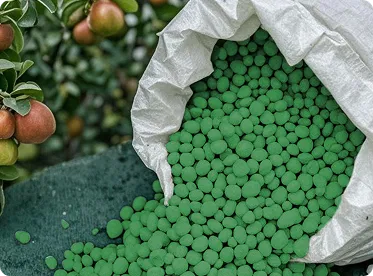
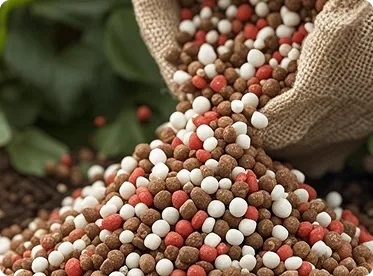
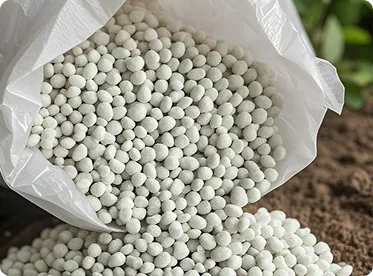
Granular fertilizer works well for pre-plant incorporation, banding, side-dressing, and broad field application. It is easy to store and transport, making it suitable for agricultural distributors, commercial farms, cooperatives, and government procurement projects.
Granules may be fast-release, controlled-release, or slow-release. Product performance depends on solubility, granule size, moisture, soil conditions, and placement.
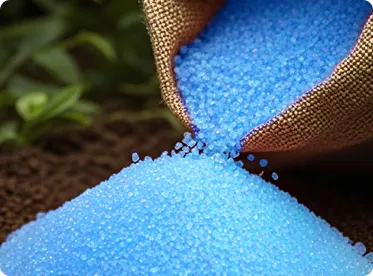
Liquid fertilizer and water-soluble fertilizer suit fertigation, nursery production, containers, greenhouses, and rapid nutrient correction. These products allow growers to divide the total fertilizer rate into many small applications.
| Fertilizer form | Main advantages | Best-use situations | Key control point |
|---|---|---|---|
| Granular fertilizer | Easy handling and broad application | Open fields and pre-plant use | Uniform spreading |
| Water-soluble fertilizer | Precise fertigation and fast availability | Greenhouse and drip irrigation | Water quality and injector calibration |
| Liquid fertilizer | Easy mixing and rapid delivery | Containers and intensive production | Correct dilution |
| Slow-release fertilizer | Longer feeding period | Containers and nurseries | Release rate under local temperature |
| Foliar fertilizer | Fast supplemental delivery | Confirmed micronutrient correction | Leaf safety and spray concentration |
UF/IFAS links nutrient efficiency closely with irrigation management. Excess irrigation can move nitrogen and potassium below the active root zone, causing nutrient loss and possible deficiency.
Commercial greenhouse growers can review our water-soluble NPK fertilizer options for drip irrigation, stock-tank mixing, and stage-based tomato nutrition.
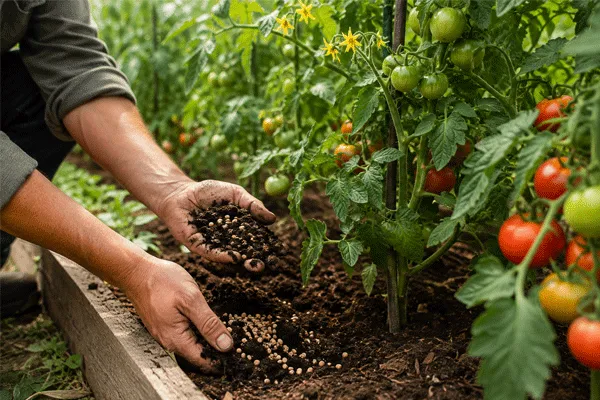
What NPK Ratio Is Best for Tomatoes? A Complete Tomato Fertilizer Guide by Growth Stage
Organic fertilizer can support tomato production by adding nutrients through plant, animal, or naturally sourced materials. Common choices include composted manure, fish emulsion, plant meals, bone meal, and formulated organic NPK products.
Organic materials may release nutrients slowly because microorganisms must first break them down. This gradual release can support soil structure and biological activity, but it can also make nutrient timing less predictable.
Fish emulsion may supply readily available nitrogen during early growth. Compost can add organic matter and a range of nutrients. Bone meal contains phosphorus, but it should not be added when the soil already contains enough P.
An organic tomato program should still rely on:
“Organic” does not mean unlimited. Too much manure or compost can add excessive phosphorus, salts, or nitrogen. A natural source can still create a nutrient imbalance.
Many commercial farms use an integrated system. They combine organic matter for long-term soil improvement with a targeted NPK fertilizer for predictable crop nutrition. Buyers interested in this approach can explore our organic and mineral fertilizer solutions.
Before planting tomatoes, collect representative soil samples and request a laboratory analysis. The report should guide pH correction and determine whether phosphorus and potassium are needed.
For high-value greenhouse tomato production, soil or growing-medium tests can be combined with irrigation-water analysis and foliar tissue testing. University of Minnesota Extension recommends soil testing as the foundation of nutrient planning and notes that repeated foliar testing may be helpful for high-value, long-season tomato crops.
For a simple calculation:
Fertilizer required = Required nutrient ÷ Nutrient concentration
If a crop requires 20 kilograms of nitrogen and the selected product contains 10% N:
20 ÷ 0.10 = 200 kilograms of fertilizer
This calculation covers nitrogen only. The grower must also check how much phosphorus and potassium the same 200 kilograms will supply.
Never apply fertilizer simply by copying a rate from another farm. Soil texture, irrigation, plant population, expected crop yield, local climate, and the guaranteed analysis all affect the correct amount per plant or per hectare.
Not every tomato problem comes from a lack of fertilizer. Heat, drought, irregular watering, root disease, poor pollination, unsuitable pH, salinity, and pest damage can produce symptoms that look like nutrient shortages.
Common nutrition-related warning signs include:
| Symptom | Possible cause | What to check first |
|---|---|---|
| Older leaves become evenly yellow | Nitrogen shortage | Soil or tissue N and root condition |
| Very dark foliage with few flowers | Excess nitrogen | N rate, manure, and irrigation |
| Purple or dark leaves | Low P availability or cool roots | Soil temperature, pH, and P test |
| Yellow or brown leaf margins | Possible potassium shortage | Tissue K, root health, and salinity |
| Uneven fruit color | Potassium or environmental issue | Tissue test, heat, water, and disease |
| Blossom-end rot | Poor calcium movement, often linked to uneven moisture | Irrigation and root-zone conditions |
| Flower drop | Heat, water stress, or excessive nitrogen | Temperature, irrigation, and N rate |
Blossom-end rot deserves special attention. Adding more calcium fertilizer does not always solve it. The disorder often develops when rapidly growing fruit cannot receive enough calcium because soil moisture changes sharply or roots are damaged.
University of Georgia Extension advises growers to avoid both drought stress and waterlogging during early tomato fruit development. It also notes that calcium applied to foliage may not move effectively into the fruit.
A professional fertilizer guide should therefore connect nutrition with irrigation, pH, root health, and crop protection. Healthy tomato production depends on a complete system.
To increase tomato yield, growers need more than a high fertilizer rate. They need the right nutrient source, rate, time, and placement.
A practical commercial program includes:
Tomatoes are heavy feeders, but heavy feeding without measurement can reduce fertilizer efficiency. The most productive program supplies nutrients in line with crop uptake rather than applying one large dose early in the season.
Consider a greenhouse tomato operation using one balanced fertilizer from transplanting through harvest. Early plant growth appears strong, but the crop later develops dense foliage, uneven fruit filling, and variable quality.
The grower reviews the water, growing medium, and leaf analysis. The data shows that the early program supplied enough nitrogen, while potassium delivery did not keep pace with the fruit load.
The revised program uses:
The key lesson is not that one ratio can significantly increase tomato yield everywhere. The lesson is that adjusting the NPK ratio according to evidence and different tomato growth stages can improve nutrient efficiency and crop consistency.
Agricultural distributors and importers need products that remain stable during storage, transport, and local distribution. Commercial farms need reliable nutrient analysis. Government and NGO agricultural projects require clear specifications and traceable documents. Fertilizer brand owners need flexible OEM support.
When sourcing fertilizer for tomatoes, buyers should evaluate:
| Buying factor | Questions to ask |
|---|---|
| Guaranteed analysis | Does every batch meet the required NPK specification? |
| Raw materials | Are the nutrient sources suitable for the target market? |
| Solubility | Will the product dissolve correctly for fertigation? |
| Physical quality | Are granule size, hardness, moisture, and dust controlled? |
| Micronutrients | Are calcium, magnesium, boron, zinc, or iron required? |
| Packaging | Are retail bags, 25 kg, 50 kg, and jumbo bags available? |
| OEM service | Can the supplier produce custom labels and private packaging? |
| Documentation | Are certificates of analysis and export documents available? |
| Capacity | Can the factory meet seasonal delivery schedules? |
| Technical support | Can the formula be adjusted for crop and growth stage? |
As a leading manufacturer and exporter of high-quality fertilizer products based in China, we work with agricultural distributors, commercial farm owners, cooperatives, public agricultural projects, and OEM fertilizer brands.
We can support:
Fertilizer brand owners can learn more about our private-label and OEM fertilizer manufacturing. For formula selection, packaging, trial orders, and export quotations, contact our fertilizer supply team.
There is no universal best NPK ratio. Young plants need balanced, mild nutrition, while flowering and fruiting crops often benefit from a formula containing more potassium than nitrogen. Ratios such as 5-10-10 or 8-12-20 may be suitable in certain conditions, but a soil test should guide the final selection.
It can be suitable when the soil needs nitrogen, phosphorus, and potassium in similar proportions. It may not be the right fertilizer if soil phosphorus is already high or if fruiting plants need more potassium relative to nitrogen.
Apply starter nutrition at or after transplanting when needed. Continue with controlled feeding during early growth, then adjust the program when flowers and fruit appear. Commercial growers often split fertilizer application through drip irrigation according to crop growth.
Tomatoes need both, but potassium demand becomes especially important during fruit set, enlargement, and ripening. Phosphorus should be supplied according to soil-test results because many soils already contain enough.
Excess nitrogen can encourage excessive vegetative growth and delay or reduce flower and fruit development. Do not remove nitrogen completely; instead, balance it with the plant’s growth stage and expected fruit load.
Neither form is always better. Liquid and water-soluble fertilizers offer precise, frequent feeding in greenhouses and containers. Granular fertilizer is convenient for field preparation, banding, and side-dressing. The best choice depends on the production system.
Fish emulsion can provide mild nitrogen during early growth, but its nutrient analysis varies by product. Dilute and apply it according to the label. Avoid combining it with other nitrogen sources without calculating the total amount.
Maintain even soil moisture, avoid excess nitrogen, provide adequate potassium, protect roots, monitor pH, and test plant tissue when managing high-value crops. Nutrition works best when irrigation and crop protection are also well managed.