Avoid your inquiry is delay response, please enter your WhatsApp/Skype along with the message, so we can contact you at the very first time.
We will reply you within 24 hours. If for urgent case, please add WhatsApp/WeChat: ,. Or call directly.
Many buyers see “46-0-0” on a urea fertilizer bag but do not know what the numbers mean. This confusion can cause poor nutrient planning, crop damage, and wasted money. Understanding the NPK grade helps you apply urea safely and combine it with other fertilizer products correctly.
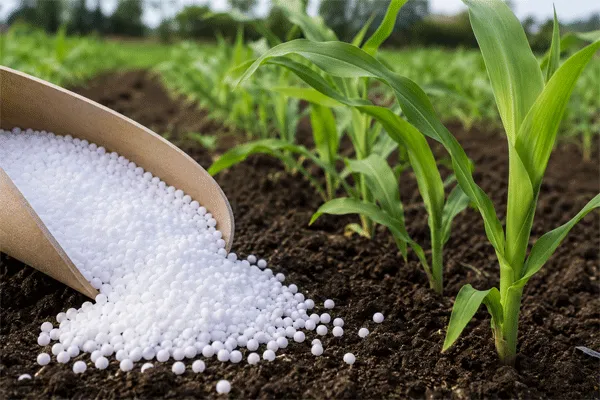
The NPK ratio of standard agricultural urea is 46-0-0. It contains about 46% nitrogen, with no phosphorus or potassium. Urea is therefore a high-nitrogen fertilizer rather than a complete NPK fertilizer. Farmers normally use it to correct nitrogen needs and combine it with phosphate, potassium, or compound fertilizer when crops require balanced nutrition.
What Is the NPK Ratio of Urea Fertilizer? Understanding 46-0-0 Nitrogen Fertilizer
The three numbers on a fertilizer label represent nitrogen, phosphate, and potash in that order. Standard agricultural urea carries a fertilizer grade of 46-0-0:
| Label number | Nutrient represented | Content in standard urea |
|---|---|---|
| First number | Total nitrogen, N | 46% |
| Second number | Available phosphate, P₂O₅ | 0% |
| Third number | Soluble potash, K₂O | 0% |
This means that 100 kilograms of urea fertilizer contains approximately 46 kilograms of total nitrogen. It does not supply phosphorus or potassium. The FAO fertilizer specifications list a minimum total nitrogen content of 46% on a dry basis for both free-flowing and granular urea.
Although people often call 46-0-0 the “NPK ratio,” it is more precisely the fertilizer grade or guaranteed analysis. As a mathematical ratio, 46:0:0 could be simplified to 1:0:0. However, fertilizer manufacturers, distributors, farmers, and agronomists normally use the standard grade 46-0-0.
Urea is therefore a straight nitrogen fertilizer. It is not a complete NPK fertilizer because it contains no phosphate or potassium. When the soil also lacks phosphorus and potassium, growers must add other fertilizer materials or use a balanced compound product.
Commercial buyers can review our high-analysis granular urea fertilizer for bulk agricultural supply, customized packaging, and export applications.
The chemical formula of urea is CO(NH₂)₂. Its small urea molecule contains two nitrogen atoms, which gives solid urea a very high nitrogen concentration. Standard agricultural material contains 46% nitrogen by weight.
The University of Minnesota describes urea as a white crystalline solid containing 46% nitrogen. Utah State University also notes that this high analysis can reduce freight, storage, and handling costs per unit of nitrogen compared with lower-analysis products such as ammonium nitrate or ammonium sulfate.
This concentration makes urea attractive for:
Consider a shipment of 1,000 metric tons. At 46% nitrogen, it contains about 460 metric tons of fertilizer nitrogen. A lower-analysis nitrogen fertilizer would require more product weight to deliver the same supply of nitrogen.
That does not mean urea is always the best fertilizer for every situation. High concentration also means that application errors can become expensive. Applying too much fertilizer may burn plants, increase nitrogen loss, or create excessive vegetative growth.
Plants do not absorb most solid urea directly. After urea is applied to the soil, it dissolves in water and begins a process called urea hydrolysis. A naturally occurring enzyme called urease helps drive this reaction.
During hydrolysis, urea first forms ammonium carbonate. This material then changes into ammonium, carbon dioxide, and related compounds. The soil can hold part of the ammonium on clay and organic matter. Soil microorganisms can later convert ammonium nitrogen into nitrate nitrogen through nitrification.
A simplified pathway looks like this:
Urea → ammonium carbonate → ammonium → nitrate
Both ammonium and nitrate are useful forms of nitrogen. Plant roots can absorb nitrogen in these forms to support leaf formation, protein production, chlorophyll development, and general growth and development.
However, each form behaves differently:
| Form of nitrogen | Behavior in soil |
|---|---|
| Urea nitrogen | Soluble and quickly transformed by urease |
| Ammonium nitrogen | Positively charged ion that can attach to soil particles |
| Nitrate nitrogen | Highly mobile and more likely to leach with excess water |
| Ammonia | Gaseous form that may escape from the soil surface |
The conversion process is one reason the application of urea needs careful timing. If farmers leave solid urea on a warm, moist soil surface, part of the nitrogen may convert to ammonia and escape into the air before rain, irrigation, or cultivation moves it into the soil.
Urea is a nitrogen fertilizer, not a complete NPK fertilizer. Its grade is 46-0-0, so it supplies nitrogen without phosphorus and potassium.
A true NPK fertilizer supplies all three primary crop nutrients. Common examples include 15-15-15, 17-17-17, 20-10-10, and 12-12-17. These products help farmers provide multiple nutrients in one application.
| Fertilizer | N | P₂O₅ | K₂O | Main role |
|---|---|---|---|---|
| Urea | 46 | 0 | 0 | Concentrated nitrogen supply |
| NPK 15-15-15 | 15 | 15 | 15 | Balanced crop nutrition |
| DAP | 18 | 46 | 0 | Nitrogen and phosphate |
| Ammonium sulfate | About 21 | 0 | 0 | Nitrogen and sulfur |
| Potassium chloride | 0 | 0 | About 60 | Potassium supply |
Urea can still become part of an NPK program. Fertilizer plants may use it as a nitrogen source when manufacturing or blending compound products. Farmers may also apply urea separately from phosphate and potassium fertilizer.
For example, a field may receive phosphate and potassium before planting, followed by urea as a top dressing during rapid vegetative growth. This split approach allows the farmer to match each nutrient with the crop’s stage of development.
Buyers needing all three nutrients can compare our crop-specific NPK fertilizer formulations with straight urea before selecting a product.
The choice between urea and NPK fertilizer depends on what the soil and crop need. Urea is suitable when nitrogen is the main limiting nutrient. NPK fertilizer is more useful when the crop needs nitrogen, phosphorus, and potassium together.
The correct choice is often not “urea fertilizer versus NPK fertilizer.” A better question is: How should urea and NPK fertilizers work together in the complete nutrient plan?
In our experience as a China-based fertilizer manufacturer and exporter, distributors often need both. They may stock urea for nitrogen-demanding field crops and several NPK grades for planting, fruit development, vegetable production, and general farm use.
What Is the NPK Ratio of Urea Fertilizer? Understanding 46-0-0 Nitrogen Fertilizer
Most crops need nitrogen, but the required rate varies widely. Cereals, forage crops, vegetables, fruit trees, lawns, and industrial crops may all benefit from urea when the soil does not supply enough available nitrogen.
Common applications include:
A wheat plant, for example, needs nitrogen to develop leaves, stems, tillers, grain protein, and yield potential. Leafy vegetables also need an adequate nitrogen supply because farmers harvest their green vegetative parts.
Yet crop response depends on soil fertility, climate, variety, planting density, irrigation, previous crops, and yield target. Legumes may obtain part of their nitrogen through biological fixation, while fields following a strong legume cover crop may need less additional N fertilizer.
West Virginia University Extension recommends accounting for nitrogen supplied by cover crops and other soil sources before calculating additional urea. It also notes that splitting nitrogen between preplant and active growth periods can improve crop access because nitrogen is not stable in soil.
Urea should not be selected only because a crop “likes nitrogen.” Farmers must first ask:
The correct rate of urea starts with the recommended nitrogen rate. Because standard urea contains 46% nitrogen, farmers can use this formula:
Urea required = nitrogen required ÷ 0.46
For example, if an agronomist recommends 100 kilograms of nitrogen per hectare:
100 ÷ 0.46 = 217.4 kg of urea per hectare
| Target nitrogen rate | Approximate urea required |
|---|---|
| 50 kg N/ha | 109 kg urea/ha |
| 75 kg N/ha | 163 kg urea/ha |
| 100 kg N/ha | 217 kg urea/ha |
| 120 kg N/ha | 261 kg urea/ha |
| 150 kg N/ha | 326 kg urea/ha |
| 200 kg N/ha | 435 kg urea/ha |
These calculations show the amount needed to supply the target total nitrogen. They do not replace a soil test or local crop recommendation.
The final rate of urea should account for:
Applying urea in two or more smaller doses can sometimes match crop uptake better than one large application. For example, part may be applied near planting and the remaining nitrogen when the crop enters rapid growth.
Do not use larger amounts simply because the crop looks pale. Yellow leaves may also result from poor drainage, root damage, disease, sulfur deficiency, high soil pH, low soil pH, or other nutrient problems.
Nitrogen loss can occur through several pathways. The most discussed risk with surface-applied urea is ammonia volatilization.
When urea undergoes hydrolysis, the reaction temporarily increases pH around the fertilizer granule. Under suitable conditions, part of the ammonium may convert to ammonia gas and escape. Warm temperatures, moisture, crop residue, wind, and alkaline surface conditions can increase the risk.
The University of Wisconsin explains that soil texture, pH, cation exchange capacity, soil moisture, humidity, wind, residue, and temperature can all affect ammonia loss from urea-based fertilizer.
Other loss pathways include:
Fertilizer loss is both an economic and environmental concern. It reduces the amount available for plant growth and may increase nutrient movement into air or water.
Good management can greatly improve the value of each kilogram of nitrogen applied. The basic goal is to move urea into the soil and place the release of nitrogen close to the period of crop demand.
Useful practices include:
University extension guidance recommends tilling or watering urea into the soil to limit volatilization. Research summaries also show that incorporation can sharply reduce ammonia loss compared with leaving urea on the surface.
The well-known “4R” principle provides a useful guide:
Right source + right rate + right time + right place
This simple framework helps reduce nitrogen waste while protecting crop yield and soil health.
Urea can be used with many other fertilizer materials, but compatibility, moisture, storage time, and application timing matter.
Common fertilizer programs may combine urea with:
A physical blend allows farmers to provide nitrogen, phosphorus, and potassium in one field pass. However, some blends may absorb moisture, cake, separate during transport, or change in physical quality during long storage.
For this reason, buyers should evaluate:
Urea and ammonium nitrate are also used together in liquid UAN fertilizer. A mix of urea and ammonium nitrate supplies nitrogen as urea, ammonium, and nitrate. It is not the same product as solid granular urea and requires suitable liquid handling equipment.
Ammonium sulfate may be selected when a crop needs both nitrogen and sulfur. Buyers can review our nitrogen and sulfur ammonium sulfate fertilizer when comparing different fertilizer sources.
Always conduct a professional compatibility test before producing or storing a new bulk blend.
What Is the NPK Ratio of Urea Fertilizer? Understanding 46-0-0 Nitrogen Fertilizer
Choosing the right fertilizer requires more than checking nitrogen content. Farmers must also consider sulfur needs, soil conditions, application equipment, availability, safety, and expected nitrogen efficiency.
| Fertilizer source | Typical grade | Main characteristics |
|---|---|---|
| Urea | 46-0-0 | Highest analysis among common solid nitrogen products |
| Ammonium nitrate | About 34-0-0 | Contains ammonium and nitrate nitrogen |
| Ammonium sulfate | About 21-0-0 plus sulfur | Supplies nitrogen and sulfate sulfur |
| UAN solution | Commonly 28-0-0 or 32-0-0 | Liquid mix of urea and ammonium nitrate |
| Calcium ammonium nitrate | Often 26-0-0 or 27-0-0 | Contains nitrate, ammonium, and calcium compounds |
Urea usually transports more nitrogen per metric ton. Ammonium sulfate supplies less nitrogen but adds sulfur. Ammonium nitrate contains nitrate nitrogen that plants can access quickly, but it may face stricter storage, transport, and regulatory controls in some markets.
Water-soluble urea may also appear in fertigation and carefully designed foliar programs. However, a foliar application must use an appropriate concentration to avoid leaf injury. Technical-grade, low-biuret, or application-specific products may be required for sensitive foliar uses.
Nano urea is a different product category. Urea and nano formulations should not be treated as equal products or applied at the same rate. Users must follow the registered label and local agronomic guidance for any nano product.
For irrigation-based nutrition programs, commercial growers can explore our water-soluble fertilizer solutions for fertigation.
Price per ton is important, but it should not be the only purchasing factor. Poor physical quality can cause dust, caking, uneven spreading, bag damage, and customer complaints.
Agricultural distributors and importers should confirm:
| Quality point | Why it matters |
|---|---|
| Total nitrogen | Confirms the nutrient value |
| Moisture | High moisture may increase caking |
| Biuret | Important for product quality and sensitive applications |
| Particle size | Affects spreading and blending |
| Crushing strength | Influences handling durability |
| Appearance | Supports market acceptance |
| Packaging strength | Protects the product during export |
| Net weight | Supports compliance and customer trust |
| Batch documentation | Improves traceability |
| Loading method | Reduces transit damage and moisture entry |
Granular urea generally offers larger, harder particles than small prills. This can make granular fertilizer more suitable for mechanical spreading and some bulk blends. Prills may still meet the needs of many markets when buyers prefer their size, price, or traditional product format.
Government and NGO agricultural projects may also require:
FAO reference specifications distinguish between free-flowing and granular forms and include criteria for total nitrogen, moisture, biuret, particle size, packing, and bag marking. Individual purchase contracts may use different requirements, so buyers should confirm the final specification before ordering.
A fertilizer brand rarely needs only one product. A practical range can combine high-analysis urea with NPK, phosphate, potassium, sulfur, and water-soluble products.
For example, an agricultural distributor may build the following portfolio:
This range gives dealers a clearer answer for different crops and growth stages. It also reduces the risk of presenting urea as a complete plant food when it supplies only nitrogen.
As a leading manufacturer and exporter of high-quality fertilizer products based in China, we work with agricultural distributors, commercial farms, cooperatives, government projects, NGOs, and private-label brands. We help buyers evaluate nutrient grades, physical form, packaging, labeling, shipment planning, and market positioning.
Our OEM and private-label fertilizer manufacturing service can support customized bags, buyer branding, multilingual labels, selected formulations, and export coordination.
Consider a commercial wheat farm with an agronomic recommendation of 120 kilograms of nitrogen per hectare. Soil testing shows that phosphate and potassium are already adequate, so the farm does not need a balanced NPK fertilizer at this stage.
The theoretical urea requirement is:
120 kg N ÷ 0.46 = 261 kg urea per hectare
For a 500-hectare project:
261 kg × 500 hectares = 130,500 kg
The project would therefore need about 130.5 metric tons of urea, before allowing for final field adjustments or operational planning.
Instead of applying the full amount at once, the farm might divide it between early crop establishment and active spring growth. The actual schedule must reflect local weather, soil type, crop condition, and agronomic advice.
This example shows why understanding the 46-0-0 grade matters. The buyer does not simply order “some urea.” The buyer converts the crop’s nitrogen need into a precise product quantity.
Standard agricultural-grade urea is normally labeled 46-0-0 because it contains approximately 46% nitrogen and no phosphate or potassium. Specialized urea-based fertilizer products may contain coatings, inhibitors, sulfur, or other nutrients, so their guaranteed analysis may differ.
No. Standard urea supplies nitrogen only. If a soil test shows a need for phosphorus and potassium, farmers should add suitable phosphate and potash products or use an NPK fertilizer.
Granular urea is normally applied to the soil, not placed directly against leaves, seeds, stems, or roots. It should be distributed evenly and incorporated with suitable rainfall, irrigation, or cultivation. Foliar urea requires careful dilution and an application-specific product.
Most crops require nitrogen, but not every crop needs the same amount. Legumes, young seedlings, fruiting crops, and fields with high residual nitrogen may need lower rates or different timing. Always base the application on crop requirements and soil conditions.
Urea is soluble and begins transforming after it contacts soil moisture and urease. Temperature, moisture, soil pH, and microbial activity affect the release of nitrogen. Plants access much of it after conversion to ammonium and nitrate.
Yes. Excess urea can cause salt injury, ammonia damage, excessive leafy growth, weak flowering, lodging, poor crop quality, and increased nitrogen losses. Accurate calibration and rate calculation are essential.
Urea 46-0-0 is simple in composition but powerful in practice. Used correctly, it can supply nitrogen efficiently across many crop production systems. Used carelessly, it can lose value before plants absorb it.
For bulk supply, customized bags, distributor programs, government tenders, or private-label fertilizer production, contact our fertilizer export team with your required grade, particle form, packaging, order quantity, and destination market.