Avoid your inquiry is delay response, please enter your WhatsApp/Skype along with the message, so we can contact you at the very first time.
We will reply you within 24 hours. If for urgent case, please add WhatsApp/WeChat: ,. Or call directly.
Plants may grow slowly, produce pale leaves, form weak roots, or fail to flower when their nutrition is out of balance. Adding more fertilizer is not always the answer. The better solution is to understand what 20-20-20 fertilizer provides, when plants need it, and how to use it correctly.
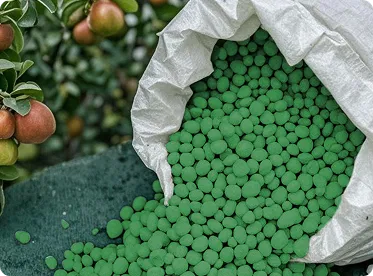
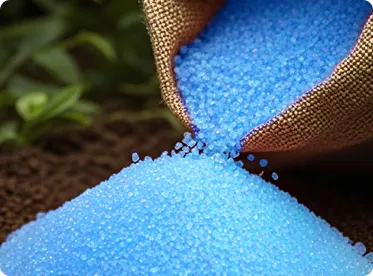
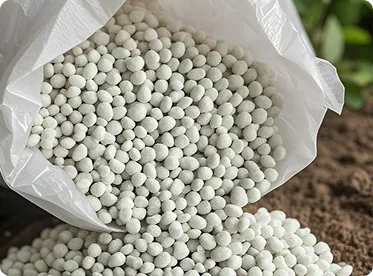
20-20-20 fertilizer is a balanced NPK plant food containing 20% nitrogen, 20% phosphate (P₂O₅), and 20% potash (K₂O) by weight. It is commonly used for general plant nutrition during active growth and may support leafy growth, roots, flowering, and overall plant health. Water-soluble formulas can be applied through irrigation, fertigation, root feeding, or foliar application when the product label permits.
The three NPK numbers describe the guaranteed analysis of the three primary macronutrients. In a 20 20 20 formula, the first number represents nitrogen, the second phosphate expressed as P₂O₅, and the third potash expressed as K₂O.
This means that 100 kg of product contains:
| Guaranteed nutrient | Percentage | Amount in 100 kg |
|---|---|---|
| Nitrogen (N) | 20% | 20 kg |
| Phosphate (P₂O₅) | 20% | 20 kg |
| Potash (K₂O) | 20% | 20 kg |
| Other components | 40% | 40 kg |
An important technical point is often missed. The numbers do not mean 20% elemental phosphorus and 20% elemental potassium. UMass Extension explains that a 20-20-20 analysis corresponds to about 8.7% elemental phosphorus and 16.7% elemental potassium after conversion from P₂O₅ and K₂O.
That distinction matters to commercial growers, agronomists, agricultural distributors, and government procurement teams comparing nutrient specifications.
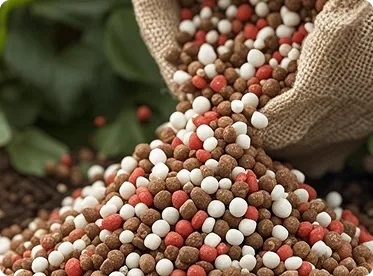
For buyers who need more formula options, our custom NPK compound fertilizer range includes balanced and crop-specific nutrient ratios for different soils and production programs.
A balanced fertilizer such as 20-20-20 is mainly used when plants need nitrogen, phosphorus, and potassium at similar relative levels. It works especially well as a general-purpose feeding option when soil or growing media does not already contain excessive amounts of one of these nutrients.
Common applications include:
Because the formula supplies equal parts nitrogen, phosphate, and potash, many growers consider it an all-purpose fertilizer. That does not mean it is automatically the best choice for every crop or every growth stage.
A leafy crop with a strong nitrogen demand may perform better with a higher-N formula. A fruiting crop may need more potassium later in its production cycle. This is why we tell commercial customers to treat a balanced formula as a useful tool—not a universal prescription.
Our guide to whether NPK can be used for all plants explains why crop type, soil analysis, climate, and growth stage should influence the final formula.
Each primary nutrient performs a different job inside the plant.
Nitrogen supports chlorophyll, leaves, stems, proteins, and vegetative development. Plants with insufficient nitrogen may become pale and grow slowly. Too much, however, can produce excessive soft green growth.
Phosphorus is involved in energy transfer, root activity, reproductive development, and many metabolic processes. Good phosphorus management can support early establishment and strong root systems, but adding more phosphorus does not automatically create more flowers.
Potassium supports water regulation, enzyme activity, carbohydrate movement, stress response, and crop quality. It becomes particularly important in many flowering and fruiting programs.
A simple way to understand the relationship is:
Relative focus of a balanced 20-20-20 formula

Nitrogen       ██████████ 20
Phosphate      ██████████ 20
Potash         ██████████ 20
This balanced ratio of nitrogen, phosphate, and potash makes the formula easy to position for general plant nutrition.
Mississippi State University Extension also notes that the three numbers on a product label represent percentages by weight. Therefore, a more concentrated product delivers more actual nutrient per kilogram than a lower-analysis product applied at the same weight.
The main benefits of NPK 20-20-20 fertilizer come from its simple and perfectly balanced primary nutrient ratio.
When it matches the crop and soil requirements, the formula can support:
A high-quality water-soluble formula also allows growers to deliver nutrients quickly through a properly managed irrigation system. Instead of spreading dry material across an entire field, a commercial grower can supply a measured nutrient concentration directly with irrigation water.
For agricultural distributors, this is also an easy product to explain to customers. The balanced formula has a clear 1:1:1 ratio and can serve a wide range of plants. That makes it useful for businesses managing multiple plant types or selling into mixed agricultural markets.
For precision agriculture and greenhouse programs, buyers can also compare our broader water-soluble NPK fertilizer portfolio, including balanced, high-phosphorus, and high-potassium grades.
A balanced 20-20-20 product may be useful across a wide range of plants when soil conditions and crop needs support equal N-P-K feeding.
Many ornamental growers use soluble feeds during the active growing season. A balanced formula may support leaves, roots, and flower production before nutrient needs shift.
Container plants have a limited root zone. Frequent irrigation can also move soluble nutrients out of the growing medium. Carefully controlled feeding can help replace nutrients as the crop uses them.
A houseplant may benefit from diluted feeding during active growth, especially in spring and summer. However, fertilizer use should normally decrease when indoor growth slows.
An orchid can use balanced nutrition in some production programs, but orchid species, growing substrate, water quality, and root condition matter. A sensitive plant should never receive a strong concentration simply because the product is labeled general-purpose fertilizer.
Vegetable seedlings and young crops may respond well to balanced feeding under suitable conditions. Later, growers often change the nutrient ratio according to the growth stage.
For example, tomatoes usually need a different nutrient emphasis once heavy fruit development begins. Our crop-stage guide explains how NPK ratios can change from establishment through fruit filling.
What Is 20-20-20 Fertilizer Used For? A Complete NPK Plant Food Guide
Timing matters almost as much as formula choice.
The best time to use plant food is usually when the crop is actively growing and can absorb nutrients. During strong vegetative growth, roots actively take up water and minerals, making properly managed feeding more effective.
For many garden and greenhouse plants, the growing season includes spring and summer. But the calendar alone should never determine the program.
Consider four questions first:
A stressed plant may show a weak plant response even when more nutrition is added. In extreme heat or dry conditions, increasing soluble salts around roots may make the problem worse.
This is why our summer feeding guidance recommends adjusting nutrient concentration, irrigation, and timing instead of simply applying more product.
The lesson is simple: feed healthy, actively growing plants according to measured needs. Do not use fertilizer to force a severely stressed crop to grow.
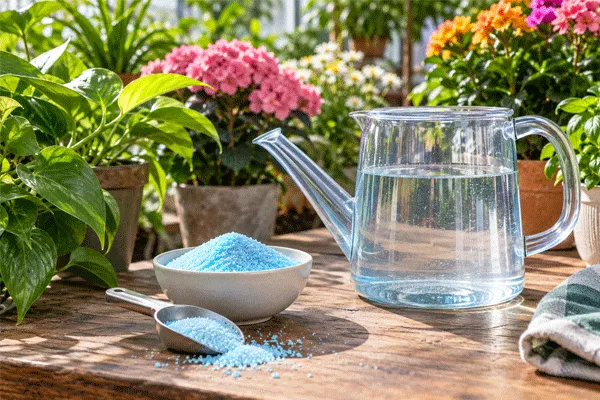
A 20-20-20 water-soluble product can be useful because nutrients dissolve into the irrigation solution and become available for root uptake.
Application methods may include:
| Method | Typical use | Main advantage |
|---|---|---|
| Root drench | Pots, nursery plants, garden crops | Direct delivery to root zone |
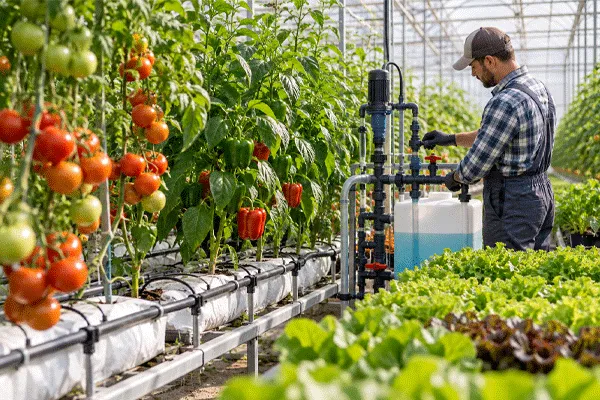
| Fertigation | Greenhouse and commercial fields | Precise, repeatable feeding |
| Drip irrigation | Vegetables, orchards, protected crops | Efficient nutrient placement |
| Foliar application | Selected crops and deficiencies | Fast leaf contact |
| Hand watering | Small-scale growing | Simple application |
However, there is no universal mixing rate for every 20-20-20 product.
You may see consumer instructions such as 1 tablespoon per gallon or one tablespoon per gallon of water, but this should never be treated as a general industry rule. Product concentration, crop sensitivity, water quality, application frequency, and target ppm all affect the correct rate.
For commercial projects, we recommend working from the guaranteed analysis and desired nutrient concentration rather than copying a household recipe.
A soluble plant fertilizer used in fertigation may need much more accurate ppm calculations than plant food used by home gardeners.
Virginia Tech and UMass Extension both provide fertilizer concentration calculations for greenhouse crops because correct feeding depends on product analysis, injector ratio, and target nutrient level.
Neither method is always better.
Root application supplies nutrients through the normal nutrient uptake pathway. A properly designed irrigation system or fertigation program can distribute dissolved minerals consistently throughout a commercial crop.
This method works well for routine nutrition because roots can absorb a broad range of essential elements from the soil solution.
A foliar spray places diluted nutrients on leaf surfaces. Foliar feeding can complement root nutrition, especially when rapid correction of certain nutrient problems is required.
However, foliar treatment should not automatically replace a complete root-feeding program.
Strong solutions can damage leaves, especially during hot weather. Spray concentration, crop species, humidity, temperature, leaf age, and water quality all matter.
For this reason, commercial farms should perform a small compatibility or crop-safety test before applying a new foliar formulation across a large field.
The goal is not to use the highest concentration possible. It is to deliver enough nutrient for effective uptake without causing leaf injury or unnecessary waste.
Yes. Even a perfectly balanced NPK product can damage plants when it is applied incorrectly.
The main risks include:
More is not always better.
If the soil already contains high phosphorus and potassium, continuing to use equal N-P-K feeding may waste money and create nutrient imbalance. A soil test helps protect both plant health and soil health.
This is also why comparing mineral formulas with organic fertilizer requires care. People sometimes search for organic 20-20-20 or 20-20-20 organic fertilizer, but buyers should verify the actual guaranteed analysis, ingredient sources, and certification rather than relying on marketing words.
Similarly, some products may claim that the formula contains organic kelp extract or promote “kelp extract and no harmful additives.” Those claims describe added ingredients; they do not prove that every 20-20-20 formula is organic or suitable for every market.
Good plant care begins with the label, crop requirements, and measurable nutrient needs.

What Is 20-20-20 Fertilizer Used For? A Complete NPK Plant Food Guide
For a home gardener buying one bag, the decision may be simple. For an importer or commercial farm ordering pallets or containers, it is very different.
As a leading manufacturer and exporter of high-quality fertilizer products based in China, we work with agricultural distributors and importers, commercial farm owners and cooperatives, government and NGO agricultural projects, and fertilizer brand owners that require OEM supply.
From our manufacturing experience, professional buyers should evaluate more than the NPK number.
| Purchasing factor | Why it matters |
|---|---|
| Guaranteed N-P-K analysis | Confirms actual formulation |
| Solubility | Important for fertigation and drip systems |
| Micronutrient options | Helps build market-specific formulas |
| Raw material quality | Influences consistency and handling |
| Batch quality control | Reduces shipment-to-shipment variation |
| Packaging options | Important for retail and wholesale markets |
| OEM/private label | Supports fertilizer brand owners |
| Formula customization | Matches local crops and soils |
| Export experience | Reduces documentation and shipping problems |
| Production capacity | Supports stable bulk supply |
For some markets, a premium 20-20-20 formula may also include micronutrient elements such as iron, manganese, zinc, copper, or boron. These elements are required in smaller amounts than N-P-K but remain important to complete plant nutrition.
For comparison, our 19-19-19+TE water-soluble product combines a balanced nutrient profile with added trace elements and is designed for drip irrigation, fertigation, and foliar use.
For OEM clients, the real question is not simply, “Can you supply 20-20-20?”
A better question is:
Can the manufacturer provide the formula, micronutrient package, solubility, packaging, documentation, and production consistency required by my target market?
That is the discussion we prefer to have with professional buyers.
The concentration matters.
A 20-20-20 formula contains twice as much of each declared primary nutrient per unit weight as a 10-10-10 formula.
For example:
| Formula | N | P₂O₅ | K₂O | Relative concentration |
|---|---|---|---|---|
| 10-10-10 | 10% | 10% | 10% | Lower |
| 15-15-15 | 15% | 15% | 15% | Medium |
| 19-19-19 | 19% | 19% | 19% | High |
| 20-20-20 | 20% | 20% | 20% | High |
This does not make 20-20-20 automatically “better.” It simply means less product is required to supply the same amount of N-P-K compared with a lower-analysis formulation.
Our guide to 10-10-10 balanced plant nutrition provides another useful comparison for distributors building a broader general-purpose product portfolio. and production goals.
Yes. It has equal guaranteed percentages of nitrogen, phosphate, and potash, so it is commonly described as a balanced NPK formula. It provides broad nutrition when a plant needs all three macronutrients in similar proportions.
It can support a flower crop during general growth, but flowering plants do not always need equal N-P-K throughout their whole production cycle. Some crops require less nitrogen and more potassium during flowering or fruit development. Soil tests and crop recommendations should guide the final program.
Yes, some indoor plants can use a diluted water-soluble plant food during active growth. Apply it cautiously to sensitive plants and reduce feeding when growth slows. Always follow the actual product label rather than assuming every houseplant needs the same strength.
The fertilizer can be used during several stages for suitable crops, but it is not automatically ideal for every stage of plant growth. Seedlings may need gentler feeding, while flowering or fruiting crops may benefit from another nutrient ratio.
GS Plant Foods 20-20-20 fertilizer is a branded commercial product, not a general definition of the 20-20-20 grade. Search phrases such as “plant foods 20-20-20 all purpose” or “foods 20-20-20 all purpose fertilizer” may refer to specific retail products. Their ingredients should not be assumed to represent all 20-20-20 formulas.
No. The three NPK numbers only describe nitrogen, phosphate, and potash. A product may include a micronutrient package, magnesium, sulfur, or other elements, but those ingredients must be confirmed on the guaranteed analysis.
For importers and OEM customers, we can discuss a high-quality NPK formula with optional trace elements based on crop needs, regulatory requirements, packaging format, and target market.
20-20-20 remains popular because it is simple, concentrated, and versatile. Its balanced profile can support healthier plants when the soil, crop, water, and growth conditions actually require equal N-P-K feeding.
But professional agriculture needs more than a familiar number on a bag.
Commercial farms need reliable nutrient performance. Distributors need products that fit local demand. Government and NGO projects need consistent specifications. Fertilizer brand owners need dependable OEM manufacturing, packaging, and repeatable quality.
As a China-based fertilizer manufacturer and exporter, we can support buyers that need balanced formulas, water-soluble products, customized NPK levels, trace-element options, and private-label supply.
The best results start by matching the formula to the real agricultural problem.