Avoid your inquiry is delay response, please enter your WhatsApp/Skype along with the message, so we can contact you at the very first time.
We will reply you within 24 hours. If for urgent case, please add WhatsApp/WeChat: ,. Or call directly.
Fertilizer that loses its power can reduce crop performance, waste investment, and create uncertainty for growers. Many farmers and distributors ask whether fertilizer goes bad and how long it remains effective. As a professional fertilizer manufacturer and exporter in China, we help global agricultural partners choose reliable products with stable quality and proper storage guidance.
Does fertilizer expire? Most fertilizer does not technically expire like food, but its effectiveness can decrease over time if it is exposed to moisture, heat, or poor storage conditions. Granular fertilizer can last for many years when stored properly, while liquid fertilizer usually has a shorter shelf life because its nutrient stability depends on formulation and storage conditions.
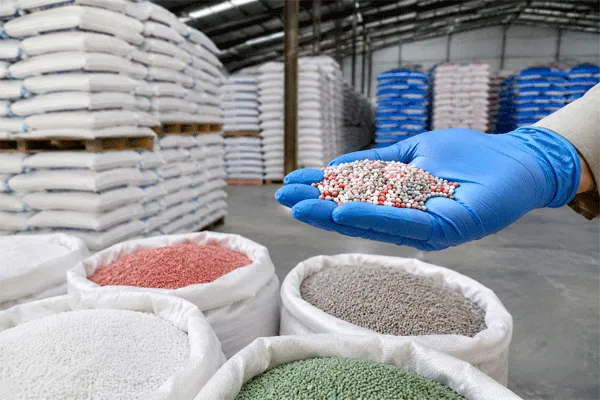
Does Fertilizer Expire? Understanding Fertilizer Shelf Life, NPK Performance, and Storage Tips
Fertilizer is different from many household products because mineral nutrients do not spoil in the same way as organic materials. When customers ask us, “Does fertilizer expire?” we explain that fertilizer normally does not become harmful simply because it reaches a certain date. However, its quality and nutrient availability can change depending on storage.
For agricultural distributors, importers, and commercial farms, understanding fertilizer shelf life is important for inventory planning. A well-formulated fertilizer product with stable fertilizer composition can maintain its nutrient value for years when stored correctly.
The main factors that influence whether fertilizer goes bad include:
As a fertilizer supplier, we focus not only on production quality but also on packaging solutions that help customers keep fertilizers stable during international transportation and long-term storage.
Many growers ask, “How long does fertilizer last?” The answer depends on the type of fertilizer. In general, dry fertilizers have a longer shelf life than liquid products because they are less affected by environmental changes.
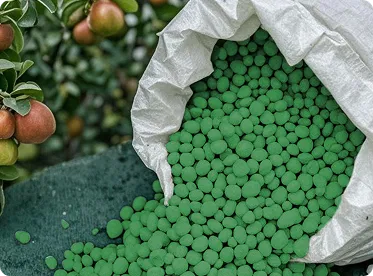
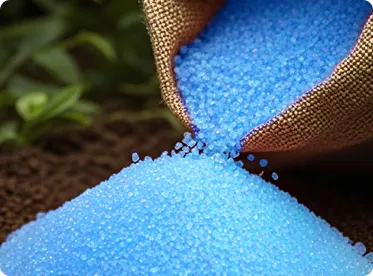
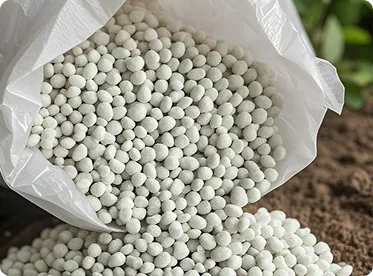
Granular fertilizer can often remain effective for several years if it is kept dry and protected from contamination. Many commercial farms store large quantities of granular products because they are easy to transport and maintain.
| Fertilizer Type | Typical Storage Performance | Main Storage Concern |
|---|---|---|
| Granular fertilizer | Several years or longer | Moisture and clumping |
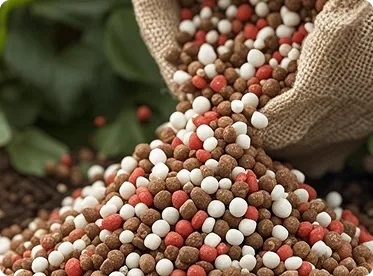
| NPK fertilizer | Long shelf life when stored properly | Nutrient separation |
| Liquid fertilizer | Shorter shelf life compared with dry fertilizer | Temperature and chemical stability |
| Organic fertilizers | Depends on organic ingredients | Odor and microbial activity |
For international buyers, proper storage starts before the product reaches the farm. Our fertilizer export process includes quality inspection, moisture control, and suitable packaging recommendations.
NPK fertilizer is one of the most widely used fertilizer types because it provides three essential nutrients: nitrogen, phosphorus, and potassium. These nutrients support plant growth, root development, flowering, and crop production.
However, customers often ask if NPK fertilizer can expire. The answer is that NPK fertilizer usually does not technically expire, but poor storage may reduce its performance.
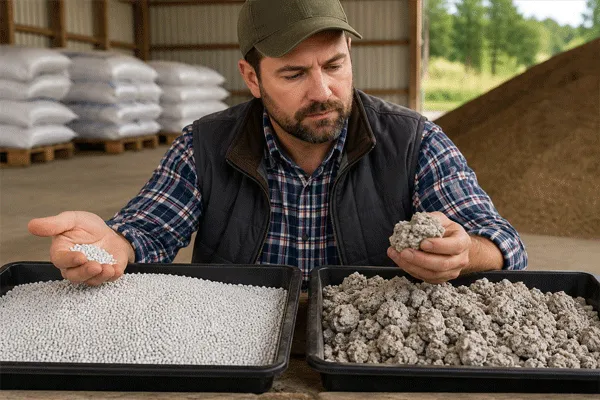
For example, when NPK fertilizer absorbs water, granular fertilizers may begin to clump. A clump does not always mean the fertilizer has gone bad, but it can make application more difficult and affect even nutrient distribution.
High-quality NPK fertilizer should maintain:
Our company works with agricultural distributors, fertilizer brand owners, and OEM clients to provide customized NPK solutions designed for different markets and crop requirements.
Knowing how to tell if your fertilizer has gone bad helps farmers avoid applying ineffective products. Different fertilizer types show different signs when quality decreases.
For granular fertilizer, common signs include:
For liquid fertilizer, customers should check:
If fertilizer has lost its effectiveness, plants may not receive the expected nutrient supply. This can impact crop quality, production efficiency, and fertilizer cost management.
When customers purchase from a professional fertilizer supplier, quality control records and production standards provide additional confidence.
Liquid fertilizer generally has a shorter shelf life than dry fertilizer because its nutrients remain in a dissolved state. Temperature, formulation, and packaging have a direct influence on stability.
Liquid plant food and liquid organic fertilizers may require additional care because natural ingredients can change over time. Synthetic liquid fertilizers are usually more stable, but they still need proper storage.
To maximize liquid fertilizer shelf life:
Many customers who purchase liquid fertilizer internationally choose customized packaging and transportation solutions to maintain product quality.
Does Fertilizer Expire? Understanding Fertilizer Shelf Life, NPK Performance, and Storage Tips
Understanding fertilizer types helps buyers select the right products for different applications. Fertilizers can generally be divided into granular fertilizers, liquid fertilizers, organic fertilizers, and controlled-release products.
Granular products are popular among large farms because they are easy to handle, store, and apply. When stored properly, granular fertilizers may last much longer than expected.
Liquid products provide fast nutrient availability and are often used in irrigation systems or precision agriculture. However, liquid fertilizers typically require better storage management.
Organic fertilizers contain natural materials and may have more variable storage characteristics. Buyers should pay attention to odor, moisture, and biological activity.
Controlled release fertilizer is designed to provide nutrients gradually. Proper packaging and storage help maintain its performance.
As a China-based fertilizer manufacturer, we support different fertilizer types based on customer markets, including agricultural distributors, commercial farms, and fertilizer brands.
Proper storage is one of the most important factors affecting fertilizer quality. Even premium fertilizer may experience problems if storage conditions are poor.
The best fertilizer storage practices include:
A well-managed fertilizer warehouse helps protect nutrient value and reduce product waste.
For global buyers, storage advice is especially important because imported fertilizer may spend weeks traveling before reaching the final customer.
Many growers discover leftover fertilizer and wonder whether old fertilizer is still useful. In many cases, old fertilizer can still be applied to soil if it has been stored properly and the nutrient quality remains stable.
Before using old fertilizer, check:
If fertilizer has gone bad and becomes unusable, it should be handled according to local waste management requirements.
For gardens, lawns, and commercial farms, using quality fertilizer helps maintain soil health and improve plant growth.
Choosing the right fertilizer supplier is about more than purchasing products. Reliable suppliers provide stable production, quality control, technical support, and customized solutions.
Our fertilizer manufacturing capabilities support:
We work with agricultural distributors, importers, government projects, NGOs, and fertilizer brand owners who need consistent quality and dependable supply.
A professional fertilizer partner helps customers reduce risks related to storage, transportation, and product performance.
Before purchasing fertilizer, buyers should consider:
| Buying Factor | Why It Matters |
|---|---|
| Nutrient formula | Matches crop requirements |
| Packaging quality | Protects fertilizer during storage |
| Supplier experience | Ensures stable production |
| Storage guidance | Extends product shelf life |
| Export capability | Supports international supply chains |
Whether you need NPK fertilizer, granular fertilizer, liquid fertilizer, or other plant nutrition products, working with an experienced manufacturer can improve purchasing confidence.
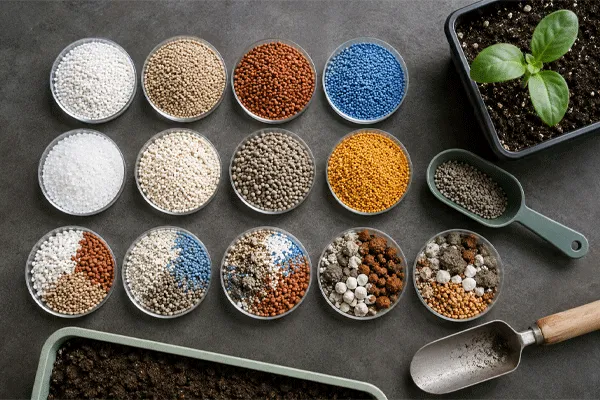
Does Fertilizer Expire? Understanding Fertilizer Shelf Life, NPK Performance, and Storage Tips
Fertilizer usually does not expire like food, but its effectiveness may decrease if it is exposed to moisture, heat, or poor storage conditions.
NPK fertilizer can last for many years when stored properly in a dry environment with sealed packaging.
Yes. Moisture can cause fertilizer to clump, reduce application efficiency, and affect nutrient performance.
Generally, liquid fertilizer has a shorter shelf life because nutrient stability can change depending on temperature and formulation.
If expired fertilizer has been stored properly and still maintains good condition, it may still be usable. Always check for odor, mold, and clumping before application.
Always store fertilizer in original packaging, keep it dry, avoid direct sunlight, and maintain suitable storage conditions.