Avoid your inquiry is delay response, please enter your WhatsApp/Skype along with the message, so we can contact you at the very first time.
We will reply you within 24 hours. If for urgent case, please add WhatsApp/WeChat: ,. Or call directly.
Starting a new lawn is exciting, but choosing the wrong fertilizer can slow grass development, weaken roots, and waste time and money. Many growers struggle with selecting the correct NPK ratio for starter fertilizer. As a professional fertilizer manufacturer and exporter in China, we help global distributors, agricultural businesses, and lawn care companies choose the right fertilizer solutions for different grass types and growing conditions.
The best NPK ratio for starter fertilizer depends on soil conditions and grass requirements, but common starter fertilizer ratios include 10-20-10, 12-24-12, and similar formulas with higher phosphorus levels. These fertilizer ratios support strong root development while providing nitrogen and potassium for healthy early grass growth.
What Is the Best NPK Ratio for Starter Fertilizer? Understanding Fertilizer Ratios for New Grass and Lawn Growth
When establishing a new lawn, the first weeks are critical. Grass seedlings need available nutrients to develop strong roots, grow evenly, and create a healthy foundation. This is where starter fertilizer becomes important.
Unlike regular fertilizer designed mainly for maintaining an established lawn, starter fertilizer is specially formulated to support early grass development. The main difference is usually the nutrient balance, especially the phosphorus content.
A fertilizer label normally shows three numbers, such as 10-20-10. These numbers represent the percentage of:
| Fertilizer Number | Nutrient | Main Function |
|---|---|---|
| First number | Nitrogen (N) | Supports leaf growth and green color |
| Second number | Phosphorus (P) | Supports root development and seed establishment |
| Third number | Potassium (K) | Improves stress resistance and plant strength |
Understanding fertilizer numbers helps homeowners, lawn care professionals, and commercial buyers select the correct product instead of choosing based only on price.
As a China-based fertilizer manufacturer and exporter, we work with customers worldwide to develop fertilizer products based on soil conditions, climate, crop requirements, and market demand. Our experience shows that the correct fertilizer ratio can significantly influence early lawn performance.
For distributors and fertilizer brands, selecting the right starter fertilizer formula is also important because different markets have different grass varieties, application methods, and customer expectations.
The best NPK ratio for starter fertilizer is not exactly the same for every lawn. It depends on soil nutrient levels, grass type, climate, and whether you are planting grass seed or installing new sod.
However, some popular starter fertilizer ratios include:
| NPK Ratio | Best Application | Benefit |
|---|---|---|
| 10-20-10 | New lawns and grass seed | Supports strong root growth |
| 12-24-12 | Poor phosphorus soil conditions | Encourages early root establishment |
| 15-30-15 | Professional lawn projects | Provides higher phosphorus support |
| 10-10-10 | General balanced applications | Suitable when nutrients are already balanced |
For many new lawns, formulas with a higher middle number are preferred because phosphorus supports root formation. Strong roots help grass absorb water and nutrients more effectively.
However, more phosphorus is not always better. A soil test is the best way to determine whether your lawn actually needs additional phosphorus. Applying unnecessary nutrients can increase costs and may negatively affect soil health.
A professional fertilizer supplier should help customers select formulas based on real growing conditions rather than offering a single universal product.
Our company provides customized fertilizer solutions for agricultural distributors, lawn care brands, and OEM clients. We can adjust nutrient ratios, particle size, packaging, and formulations according to customer requirements.
Internal resources:
Understanding fertilizer numbers is one of the most important steps when choosing fertilizer for new grass. Many customers see numbers like 10-20-10 on a fertilizer bag but do not know what they mean.
The first number represents nitrogen. Nitrogen encourages green leaves and faster growth. However, too much nitrogen during early lawn establishment may encourage leaf growth before roots are fully developed.
The second number represents phosphorus. Phosphorus plays a major role in root development, especially when planting new seed or new turf.
The third number represents potassium. Potassium helps grass handle environmental stress, including temperature changes, drought, and disease pressure.
For example:
10-20-10 fertilizer
This means the fertilizer contains twice as much phosphorus as nitrogen, making it a common starter food option.
When choosing a fertilizer product, buyers should always read the fertilizer label carefully. The correct fertilizer ratios depend on lawn needs, soil conditions, and the type of grass being grown.
For commercial lawn projects, professional lawn care companies often combine soil testing with fertilizer planning to create a more precise nutrient program.
A new lawn has very different nutrient requirements compared with an established lawn. When grass seed begins to germinate, the young roots are still small and need immediate access to nutrients. Using the correct starter fertilizer can help new grass develop a stronger root system and improve early survival.
Many lawn problems happen because people focus only on making grass look green. However, healthy grass starts below the surface. Strong roots help grass absorb water, resist stress, and create a thicker lawn over time.
For customers asking about fertilizer for new grass, the most important factors include:
A balanced fertilizer program supports both root and leaf growth. While phosphorus is important during establishment, nitrogen and potassium are also necessary for complete grass development.
As a fertilizer manufacturer serving international markets, we often advise customers not to choose fertilizer only by the highest nutrient number. Instead, they should select a formula that matches actual lawn needs.
For example, a customer establishing a new lawn in sandy soil may need a different fertilizer ratio compared with someone planting grass in nutrient-rich soil. Professional recommendations help reduce fertilizer waste and improve lawn performance.
What Is the Best NPK Ratio for Starter Fertilizer? Understanding Fertilizer Ratios for New Grass and Lawn Growth
When creating a new lawn, many homeowners and professional landscapers ask whether they should use starter fertilizer with grass seed or sod. The answer depends on the installation method and soil condition.
Grass seed requires early nutrient support because seedlings have limited root systems. A suitable starter fertilizer provides nutrients near developing roots and helps young plants establish faster.
For new grass seed, many professionals prefer fertilizer formulas with a higher phosphorus level because phosphorus supports:
Applying starter fertilizer before or during seeding can create a better environment for grass seedlings.
New sod already contains mature grass plants, but the roots still need to connect with the soil underneath. A quality fertilizer helps encourage root growth and improves sod establishment.
When choosing fertilizer for new sod, consider:
| Application | Main Goal | Recommended Consideration |
|---|---|---|
| Grass seed | Support germination | Focus on root development |
| New sod | Encourage root connection | Balanced nutrient support |
| Existing lawn | Maintain growth | Regular lawn fertilizer |
A professional fertilizer supplier can help determine whether a starter formula or regular fertilizer is more suitable.
Our company provides fertilizer solutions for different applications, including lawn projects, commercial landscaping, agricultural distributors, and OEM fertilizer brands.
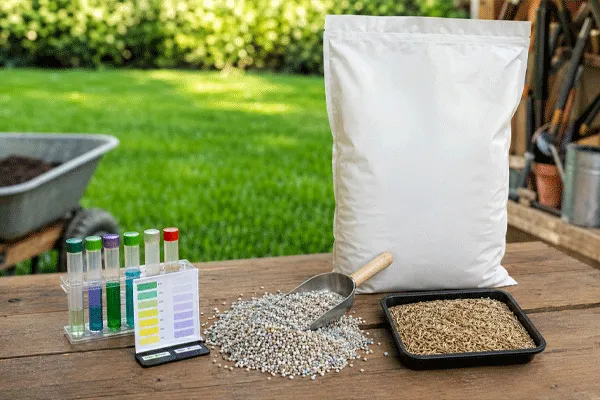
A soil test is one of the most reliable tools for selecting the correct fertilizer. Many people choose fertilizer based on general recommendations, but soil conditions vary greatly between locations.
A soil test measures important factors such as:
Without testing, applying a high-phosphorus starter fertilizer may not always be necessary. Some soils already contain enough phosphorus, while others may require additional nutrients.
For professional lawn projects, soil testing improves fertilizer efficiency and reduces unnecessary fertilizer use.
For example, a landscaping company working on a large commercial lawn project may test the soil before selecting fertilizer ratios. The result helps them choose a formula that supports long-term grass health.
As a fertilizer manufacturer and exporter, we understand that different regions require different fertilizer formulas. Soil conditions in North America, Europe, Southeast Asia, and the Middle East can vary significantly.
This is why we support customized fertilizer production for customers who need specific nutrient ratios.
Many customers confuse starter fertilizer with regular lawn fertilizer because both products provide nitrogen, phosphorus, and potassium. However, their purposes are different.
Starter fertilizer is designed for:
It usually provides additional phosphorus to support root growth.
Regular lawn fertilizer is designed for maintaining an established lawn. It usually focuses more on nitrogen because mature grass needs continuous leaf growth and color improvement.
The difference can be summarized as:
| Feature | Starter Fertilizer | Regular Lawn Fertilizer |
|---|---|---|
| Main Purpose | Establish new grass | Maintain existing lawn |
| Focus | Root development | Leaf growth |
| Application Stage | Before or after planting | During lawn maintenance |
| Common Users | New lawn owners, landscapers | Homeowners, lawn professionals |
Using the wrong fertilizer type can create problems. For example, applying too much nitrogen fertilizer during early growth may increase leaf growth but fail to support strong roots.
Understanding fertilizer ratios allows customers to choose the right fertilizer for each stage of grass growth.
Our fertilizer products include customized formulations for different markets, helping customers create effective lawn care programs.
What Is the Best NPK Ratio for Starter Fertilizer? Understanding Fertilizer Ratios for New Grass and Lawn Growth
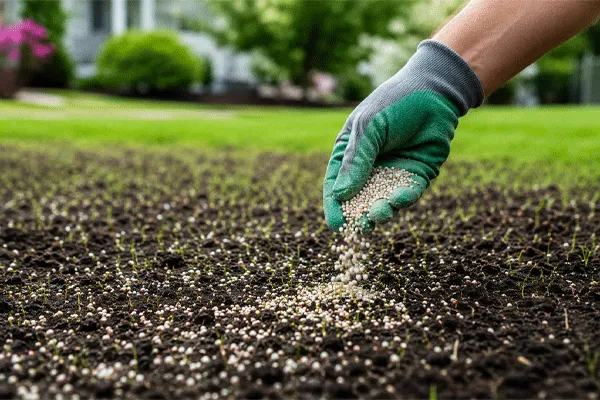
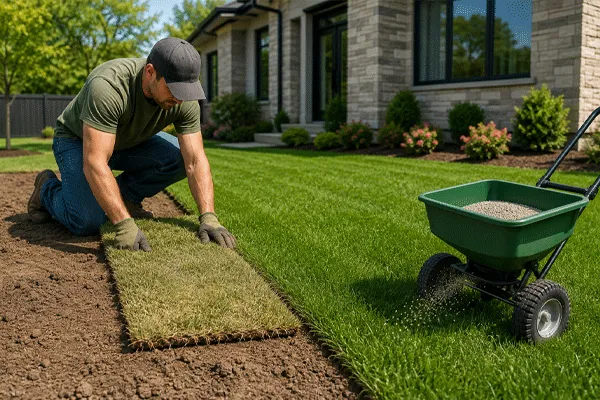
Applying starter fertilizer correctly is just as important as choosing the right formula. Even the best fertilizer will not perform well if application methods are incorrect.
The general process includes:
Before planting, remove debris and create suitable soil conditions. Healthy soil provides a better environment for grass roots.
Always follow the recommended application rate on the fertilizer bag. Using excessive fertilizer can cause fertilizer burn and damage young grass.
Uneven application can create areas with excessive nutrients and areas with poor growth.
After applying fertilizer, water your lawn according to grass requirements. Proper moisture helps nutrients move into the soil where plant roots can access them.
For commercial applications, professional lawn fertilization companies often use calibrated equipment to apply precise amounts.
As a manufacturer, we help customers select suitable fertilizer products based on application methods, packaging requirements, and market conditions.
Choosing the best fertilizer requires understanding your lawn situation. There is no single product that works perfectly for every location.
Consider these factors before choosing fertilizer:
Different grass varieties have different nutrient requirements. Cool-season grass and warm-season grass may require different fertilizer programs.
A new lawn requires different nutrients compared with a mature lawn.
A soil test provides valuable information about nutrient shortages.
Customers can choose between:
Each fertilizer type has advantages depending on application requirements.
For example:
| Fertilizer Type | Advantage |
|---|---|
| Granular fertilizer | Easy storage and controlled application |
| Liquid fertilizer | Fast nutrient availability |
| Organic fertilizer | Supports natural soil improvement |
| Synthetic fertilizer | Precise nutrient control |
When choosing a fertilizer supplier, buyers should consider product quality, manufacturing experience, export capability, and customization options.
As a China-based fertilizer manufacturer, we support global partners with reliable fertilizer production, OEM services, and customized nutrient formulas.
A landscaping company planning a large residential development contacted our team because they needed fertilizer for establishing new grass across multiple areas.
Their main challenges were:
After reviewing their requirements, we recommended a customized starter fertilizer formula instead of a standard product.
The solution included:
The result was improved grass establishment and easier fertilizer management for their team.
This example shows why understanding fertilizer ratios is important. The right fertilizer is not always the one with the highest nutrient percentage. It is the one designed for the actual growing environment.