Avoid your inquiry is delay response, please enter your WhatsApp/Skype along with the message, so we can contact you at the very first time.
We will reply you within 24 hours. If for urgent case, please add WhatsApp/WeChat: ,. Or call directly.
Giving a plant too little fertilizer can slow growth, but feeding too often may cause salt buildup, weak growth, or fertilizer burn. The answer is not simply “every week” or “every month.” The right schedule starts with the plant, the soil, the season, and the fertilizer label.
Most plants need NPK fertilizer mainly during active growth. Liquid fertilizer may be applied every 2–4 weeks at the label rate or a reduced rate, while slow-release fertilizer may last several months. The correct frequency depends on the plant type, N-P-K ratio, soil fertility, growing season, irrigation, and product instructions. A soil test is the best starting point for field crops.
As a fertilizer manufacturer and exporter based in China, we work with agricultural distributors, commercial farms, cooperatives, government projects, and fertilizer brand owners. One question appears again and again: “How often should I fertilize?”
The answer matters because more fertilizer does not always mean more growth. Good plant nutrition means giving plants the right nutrient, at the right rate, at the right stage.
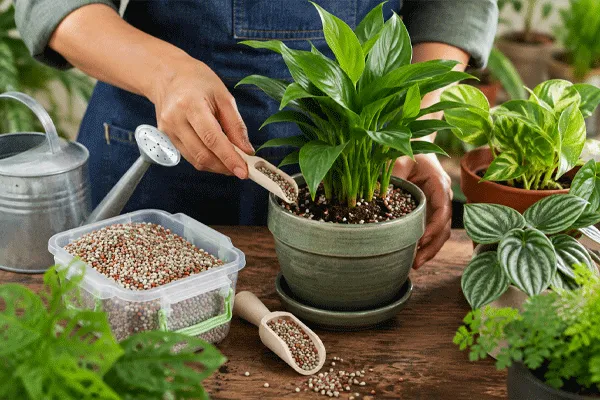
How Often Should I Give NPK Fertilizer to Plants? Complete Fertilizer Guide
The ABCs of NPK begin with three major plant nutrients: nitrogen, phosphorus, and potassium. These are the three numbers you normally see on a fertilizer label, such as 15-15-15, 20-10-10, or 10-20-30.
The first number represents nitrogen. The second represents phosphate, expressed as P₂O₅, and the third represents potash, expressed as K₂O. The Oregon State University Extension Service fertilizer guide explains how these fertilizer numbers help growers understand the nutrient content of a product.
| Nutrient | Main Role in Plant Growth | When It Is Especially Important |
|---|---|---|
| Nitrogen (N) | Supports leaves, stems, chlorophyll, and vegetative growth | Early and active growth |
| Phosphorus (P) | Supports energy transfer, roots, flowering, and reproduction | Root establishment and reproductive stages |
| Potassium (K) | Supports water regulation, plant strength, and stress response | Throughout growth, especially fruit development |
Put simply, nitrogen helps plants grow green tissue, phosphorus supports processes linked to root growth and reproduction, while potassium contributes to the overall plant’s ability to regulate water and maintain normal function.
Plants also need other nutrients. Calcium, magnesium, sulfur, iron, zinc, boron, manganese, and other micronutrients all contribute to a healthy plant. NPK is important, but it is not the complete nutrient story.
For commercial crop programs requiring balanced N-P-K formulas, buyers can explore our NPK compound fertilizer solutions with ratios designed for different crops, soils, and application systems.
There is no single schedule that works for every type of plant.
As a general starting point, actively growing plants may receive soluble or liquid fertilizer every few weeks when the product label supports that schedule. Slow-release products may feed for several months. Field crops often follow specific basal and top-dressing schedules rather than a simple weekly or monthly routine.
For example, University of Minnesota Extension recommends that houseplants returning to active spring growth can start with a balanced fertilizer at half strength about every 2–4 weeks. This is a useful example, not a universal rule. Different plants, growing conditions, and fertilizer concentrations require different schedules.
A simple reference looks like this:
| Situation | General Feeding Approach |
|---|---|
| Actively growing houseplants | Often every 2–4 weeks with diluted soluble fertilizer |
| Slow-growing indoor plants | Less frequently |
| Container vegetables | Regular light feeding may be useful |
| Field vegetables | Follow crop-specific basal and top-dress recommendations |
| Slow-release fertilizer | Apply according to stated release period |
| Newly transplanted plants | Avoid heavy feeding until established |
| Dormant or very slow-growing plants | Reduce or stop routine feeding |
The most important phrase here is “according to the label and crop need.”
Do not automatically fertilize simply because a calendar says it is time.
Before applying fertilizer, read the label.
If a fertilizer contains 20% nitrogen, it delivers twice as much nitrogen per kilogram as a product containing 10% nitrogen. Using both at the same amount and frequency could result in very different nutrient rates.
For example:
The numbers on fertilizer tell you concentration, not how often every plant should receive it.
Penn State Extension explains that fertilizer recommendations should be matched to the nutrient concentration of the product. This is important because a soil may already contain enough phosphorus and potassium, while additional nitrogen is still required.
That is why choosing the best fertilizer is not simply choosing the largest N-P-K numbers.
When deciding which fertilizer to use, check:
The label should always take priority over a generic online schedule.
No.
A soluble plant fertilizer can make nutrients available relatively quickly. A slow-release fertilizer, on the other hand, is designed to release nutrients gradually over a longer period.
That changes how often you should fertilize.
A liquid or soluble type of fertilizer is useful when crops require flexible nutrient management. Farmers can change the formula and concentration according to crop development.
Our water-soluble NPK fertilizer range includes balanced, high-phosphorus, and high-potassium formulas for fertigation, foliar programs, greenhouse crops, vegetables, and commercial agriculture.
A slow-release product may continue supplying nutrients for weeks or months. Adding another full fertilizer dose too soon can supply much fertilizer beyond what the plant can use.
So, do not always fertilize at the same interval.
Ask two questions:
How quickly is the fertilizer releasing nutrients?
How quickly is the plant using them?
Those two answers are more useful than a fixed calendar.
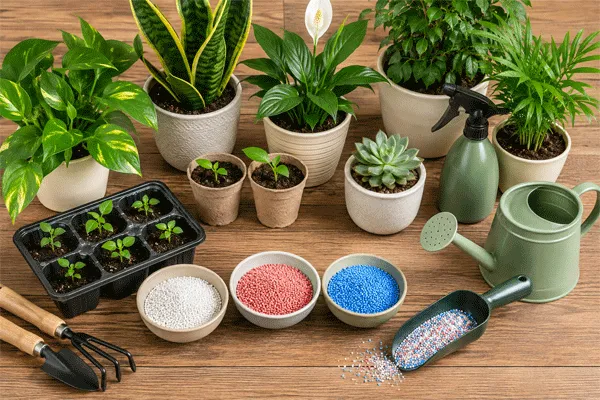
How Often Should I Give NPK Fertilizer to Plants? Complete Fertilizer Guide
For many indoor plants, active growth is the best time to feed.
University of Minnesota Extension suggests starting spring houseplant feeding gently, with balanced fertilizer at about half strength every 2–4 weeks. Plants receiving strong light and producing new leaves may need more nutrients than plants growing slowly in low light.
A useful rule is:
More active growth = potentially greater nutrient demand.
Less active growth = less fertilizer demand.
This does not mean you should keep adding fertilizer until a plant grows faster. Light, temperature, water, root health, and genetics also limit plant growth.
If an indoor plant receives poor light, extra plant food will not replace sunlight.
Watch the plant. Healthy new leaves, steady growth, normal root development, and good color often show that nutrition is adequate. If plants begin growing slowly, do not immediately assume a fertilizer shortage. Check light, watering, pests, temperature, roots, and soil first.
The University of Minnesota also advises following fertilizer labels because overfeeding container plants can damage plants and increase nutrient loss.
Vegetables and flowering plants often have changing nutrient requirements as they move through the growing season.
During the early stages of plant growth, nitrogen may play an important role in leaf and stem development. Later, nutrient balance may change as crops move toward flowering and fruit production.
For example:
Establishment → vegetative growth → flowering → fruit development → maturity
A grower may therefore use different NPK ratios at different stages rather than use one formula throughout the whole season.
Flowering plants may need a nutrient balance different from leafy vegetables. High nitrogen throughout the entire season is not automatically desirable. Too much nitrogen may promote vegetative growth without giving the crop the balanced nutrition required for flower and fruit development.
Phosphorus contributes to important plant processes, while potassium is especially important for plants in many metabolic and water-regulation functions. However, adding extra phosphorus or potassium when soil already contains enough does not guarantee better results.
For commercial vegetable, fruit, cereal, and cash-crop programs, our custom NPK compound fertilizer formulas can be adjusted according to crop stage and regional soil requirements.
The three primary nutrients do not always need to be applied at exactly the same time or frequency.
Nitrogen is relatively dynamic in agricultural systems. Plants use it heavily during active vegetative growth, and some nitrogen forms can be lost from the root zone under certain soil and weather conditions. For that reason, nitrogen is often divided into several applications for many crops.
A nitrogen fertilizer program might include:
Commercial buyers looking for targeted nitrogen products can review our nitrogen fertilizer range, including ammonium sulphate and other nitrogen-rich formulas.
Phosphorus behaves differently in soil and is often applied according to soil-test recommendations and crop requirements. Potassium demand can also become high in productive crops, especially where large amounts of biomass or harvested produce remove potassium from the field.
This is why good nutrient use depends on matching the nutrient with the correct timing.
A soil test is one of the best tools for deciding whether fertilizer is needed.
Why?
Because plants may show similar symptoms for different reasons. Yellow leaves can result from nitrogen deficiency, root damage, waterlogging, drought, disease, poor pH, or other problems.
If you fertilize every time a leaf turns yellow, you can easily overapply nutrients.
Oregon State University Extension recommends using soil information and plant needs to guide fertilizer decisions. Penn State likewise notes that additional phosphate or potash may not be necessary when the soil already contains more than the crop needs for the season.
Think of fertilizer as a way to fill a nutrient gap:
Crop Nutrient Requirement
          ↓
What the Soil Can Supply
          ↓
Nutrient Deficit
          ↓
Fertilizer Application
That is much better than:
Plant exists
     ↓
Add fertilizer every week
The needs of the plants should control the program.
Commercial farms should also consider expected yield, irrigation, soil texture, previous crops, organic matter, rainfall, nutrient removal, and local agronomic recommendations.
Plants grow best when nutrients are available to the plant in the right amount—not when the soil simply contains the largest possible amount of fertilizer.
More is not always better.
Excess fertilizer can cause soluble salts to accumulate around roots. In containers, this can happen faster because the root zone is limited.
Common signs associated with excessive fertilization may include:
This is often described as fertilizer burn.
When plants already receive enough nutrients, adding fertilizer does not force them to absorb unlimited amounts. The plant can use only what its biology and growing conditions allow.
Too much nitrogen may also create an imbalance between leafy growth and reproduction in some crops.
If you suspect overfertilization, do not respond by adding another nutrient product. Review the rate, irrigation, soil or substrate EC where relevant, and plant condition.
Sometimes the correct decision is to reduce fertilizer, not change the N-P-K ratio.
Not necessarily.
The term organic fertilizers covers many materials. Some nutrients become available only after soil microbes break organic matter down. Temperature, moisture, soil biology, and the raw material itself can affect nutrient release.
Conventional soluble NPK products may provide nutrients faster.
This means you cannot assume that one kilogram of organic fertilizer and one kilogram of mineral NPK will feed the plant in the same way or at the same speed.
Some growers therefore use integrated nutrient strategies that combine organic matter with mineral nutrition.
Our organic-inorganic compound fertilizer solutions combine organic components with nitrogen, phosphorus, potassium, and other nutrients for buyers seeking a blended approach to crop nutrition.
Whatever fertilizer is being used, the objective stays the same: help plants grow healthy while avoiding unnecessary nutrient loss.

How Often Should I Give NPK Fertilizer to Plants? Complete Fertilizer Guide
Commercial agriculture requires more than asking, “How often to use fertilizer?”
A better question is:
How can we supply each nutrient when the crop can use it most efficiently?
That changes fertilizer management from a calendar task into a crop nutrition strategy.
For distributors, commercial farms, cooperatives, and agricultural projects, we recommend considering:
This approach helps maximize your use of fertilizers and improve nutrient efficiency.
For example, a distributor serving rice farmers may need a very different formula from a supplier serving greenhouse tomatoes. Even two farms growing the same crop may require different fertilizer because soil fertility is different.
That is why there is rarely one universal NPK formula for different plant types.
As a China-based fertilizer manufacturer, we support global buyers with custom fertilizer manufacturing and OEM services, including customized NPK formulas, packaging, labeling, and private-brand supply.
For fertilizer distributors and brand owners, this makes it possible to develop fertilizer products around local crops and market needs instead of forcing every customer to use the same standard formula.
The following chart is a general decision guide, not a replacement for the product label or local agronomic advice.
| Plant Situation | Nutrient Strategy | Frequency Approach |
|---|---|---|
| Young plants | Mild nutrition after establishment | Avoid heavy early feeding |
| Active leafy growth | Adequate nitrogen with balanced nutrition | Split applications may help |
| Flowering stage | Balanced NPK based on crop need | Adjust ratio rather than blindly increasing rate |
| Fruit development | Adequate potassium and complete nutrition | Match crop demand |
| Indoor plants in active growth | Diluted balanced fertilizer | Often every 2–4 weeks as a starting reference |
| Indoor plants in low-light winter conditions | Lower nutrient demand | Reduce fertilizer |
| Container crops | Nutrients can leach with irrigation | Smaller, regular applications may help |
| Field crops | Based on soil and crop plan | Basal + targeted top dressing |
| Slow-release products | Gradual nutrient supply | Follow stated release period |
The exact use and how often will always depend on the fertilizer product and the crop.
Possibly, but only when the product is designed for frequent diluted application and the crop requires it. A concentrated fertilizer applied every week could create salt buildup or excessive nutrient supply. Follow the fertilizer label rather than adopting a weekly schedule for every plant.
During active growth, many indoor plants can be fed with a diluted balanced fertilizer every few weeks. University of Minnesota Extension gives half-strength fertilizer every 2–4 weeks as a spring starting point for many houseplants. Reduce feeding when growth slows.
The growing season is usually when nutrient demand is highest because plants are producing roots, leaves, flowers, or fruit. However, fertilizer during the growing season should still match plant demand, soil fertility, and product instructions.
There is no universal best fertilizer ratio. The right N-P-K ratio depends on the crop, growth stage, soil test, and production goal. Balanced fertilizers may work in some cases, while high-nitrogen, high-phosphorus, or high-potassium formulas may suit specific situations.
Not always. Young plants and transplants need healthy roots and suitable moisture first. Excess fertilizer around newly developing roots can cause stress. Follow crop-specific recommendations and allow plants to establish where appropriate.
Not ideally. A different plant may have different nutrient needs. Leafy crops, fruit crops, flowering ornamentals, cereals, and indoor foliage plants do not always require the same nutrient ratio or application schedule. Choosing the best formula requires understanding the plant and its production environment.
If you remember only one point from this fertilizer guide, remember this:
Feed according to plant demand, not simply according to the calendar.
Plants need nutrients to build new tissue, maintain normal metabolism, develop roots, and produce flower and fruit, but they do not need unlimited fertilizer.
Good fertilization is about balance.
As global food and agriculture systems seek better productivity and more efficient nutrient management, precise fertilizer selection and application will continue to become more important.
For agricultural distributors, large farms, cooperatives, government projects, and fertilizer brand owners, working with an experienced NPK fertilizer manufacturer and exporter in China can also make it easier to select or develop formulas matched to crop, soil, and market requirements.