Avoid your inquiry is delay response, please enter your WhatsApp/Skype along with the message, so we can contact you at the very first time.
We will reply you within 24 hours. If for urgent case, please add WhatsApp/WeChat: ,. Or call directly.
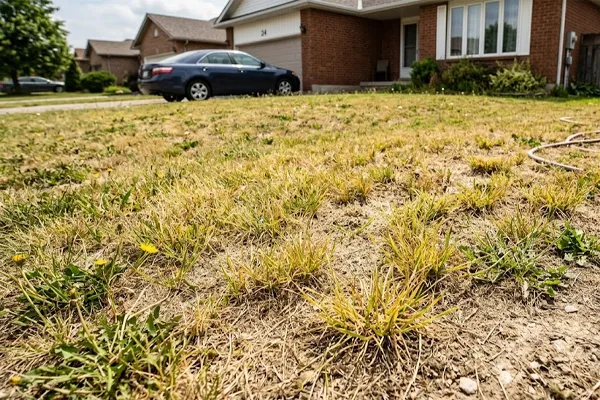
A new lawn can fail fast when the soil lacks balanced nutrient support. Weak roots, pale grass, slow turf cover, and poor early growth all cost time and money. A good starter fertilizer can help, but only when the formula matches the soil.
15-15-15 fertilizer can be a good starter fertilizer when the soil needs balanced nitrogen, phosphorus, and potassium. It supplies equal parts of NPK, so it supports early leaf growth, root development, and plant health. However, for many lawns, a soil test should guide use because established turf often needs more nitrogen than phosphorus or potassium.
What does 15-15-15 fertilizer mean?
Is 15-15-15 a good starter fertilizer for lawn?
What are the benefits of 15-15-15 fertilizer?
When should you use 15-15-15 fertilizer on turf?
What is the right application rate for 15-15-15 fertilizer?
Is 15-15-15 better than 10-10-10 fertilizer or urea?
What are the advantages and disadvantages of 15-15-15 fertilizer?
How do soil test results and soil pH affect fertilizer choice?
Can 15-15-15 fertilizer improve lawn care programs?
How can distributors and OEM buyers choose the right NPK fertilizer?
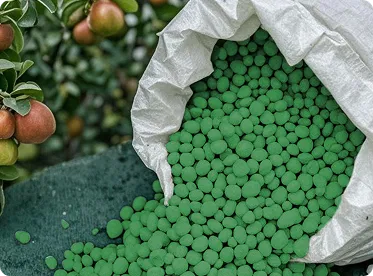
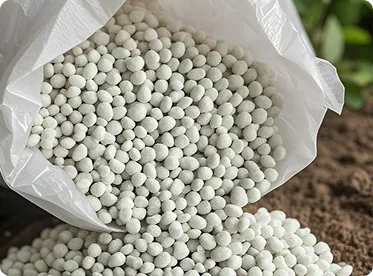
15-15-15 fertilizer is a balanced fertilizer. The three numbers show the NPK ratio: 15% nitrogen, 15% phosphorus, and 15% potassium. These are the three major nutrients that plants need in large amounts. Nitrogen supports green growth, phosphorus helps root development, and potassium supports plant strength and stress tolerance.
For lawn care, this balanced nutrient profile can be useful when the soil needs all three nutrients. It can support new sod, reseeding, landscape planting, vegetable beds, and general plant nutrition. But it is not always the best fertilizer for every lawn. The right choice depends on soil test results, turf type, season, and nutrient needs.
LV Fertilizer supplies NPK compound fertilizer formulas including balanced ratios such as 15-15-15, 19-19-19, and 20-20-20 for different crop and soil requirements, with OEM formulas and bulk supply support for global agricultural buyers.
Yes, 15-15-15 fertilizer is good as a starter fertilizer when the soil needs nitrogen, phosphorus, and potassium together. It can help young grass build early growth because it supplies equal amounts of the three key nutrients. This makes it useful for some new lawn projects, turf establishment, and landscape planting.
However, a starter fertilizer should not be chosen only by the NPK ratio on the bag. Soil condition matters. The University of Minnesota Extension explains that for a home lawn, nitrogen is usually the most important nutrient to add regularly, while phosphorus is often already high in many soils and should be applied based on soil test need.
So the answer is practical: 15-15-15 can work well for new lawns or poor soils, but it may not be ideal for established lawns that mainly need nitrogen. If the soil already has enough phosphorus and potassium, using 15-15-15 may add more of these nutrients than needed.
The main benefits of 15-15-15 fertilizer come from its balanced formula. It gives plants equal parts of nitrogen, phosphorus, and potassium. This makes it simple for growers, landscapers, and distributors who want one general-purpose product for many soil and plant situations.
For lawn and turf, the benefits may include:
| Nutrient | Role in Lawn and Turf | Benefit |
|---|---|---|
| Nitrogen | Supports leaf growth and green color | Helps grass look stronger |
| Phosphorus | Supports early roots | Helps new turf establish |
| Potassium | Supports stress resistance | Helps plant health in heat or drought |
| Balanced NPK | Supplies equal amounts | Easy to explain and apply |
A balanced 15-15-15 fertilizer is also useful for agricultural distributors and fertilizer brand owners because it is easy to position. It can be sold as general plant food, starter fertilizer, landscape fertilizer, and base fertilizer for various soil types.
For buyers who need a flexible product line, NPK mixed fertilizer can support balanced nutrient delivery with uniform field distribution, which is important for consistent plant performance.
You can use 15-15-15 fertilizer on turf when the lawn is new, the soil test shows low phosphorus and potassium, or the project needs balanced nutrient support. It may be useful before laying new sod, during landscape establishment, or when repairing weak turf in poor soil.
For established lawns, the decision is different. Virginia Tech Extension notes that mature lawns generally need more nitrogen than phosphorus and potassium, so fertilizer ratios such as 4-1-2 or 4-1-3 are commonly recommended for many warm season grasses.
Timing also matters. Cool season lawns often respond well to fertilization in spring and fall. Warm season lawns often need feeding when they are actively growing in warmer months. Always match the schedule to local climate, turf species, and soil needs.
The right application rate depends on how much nitrogen you want to apply. Since 15-15-15 fertilizer contains 15% nitrogen, every 100 pounds of product contains 15 pounds of nitrogen. For lawn care, many recommendations are based on pounds of nitrogen per 1,000 square feet.
For example, to apply about 1 pound of nitrogen per 1,000 square feet, you would need about 6.7 pounds of 15-15-15 fertilizer per 1,000 square feet. But this would also apply about 1 pound of phosphorus and 1 pound of potassium. That may be too much if the soil does not need them.
This is why a soil test is important. Missouri Extension explains that soil testing helps estimate plant-available nutrients and supports sound fertilization by correcting deficiencies, avoiding excess fertilizer applications, and maintaining a healthy lawn.
| Target Nitrogen | Product Needed with 15-15-15 | Important Note |
|---|---|---|
| 0.5 lb N / 1,000 sq ft | About 3.3 lb product | Light feeding |
| 1.0 lb N / 1,000 sq ft | About 6.7 lb product | Common calculation example |
| 1.5 lb N / 1,000 sq ft | About 10 lb product | Use carefully |
For B2B fertilizer buyers, clear recommended application instructions are important. Good packaging should explain rate, timing, watering, storage, and safety.

15-15-15 fertilizer is stronger than 10-10-10 fertilizer because it has higher nutrient content. Both products are balanced fertilizers, but 15-15-15 provides 15% each of nitrogen, phosphorus, and potassium, while 10-10-10 provides 10% each. This means less 15-15-15 product is needed to deliver the same amount of nutrient.
Urea is different. Urea is mainly a nitrogen fertilizer. It is useful when the lawn needs nitrogen but does not need phosphorus or potassium. However, urea does not provide balanced plant nutrition by itself. It is not the same type of fertilizer as 15-15-15.
Here is a simple comparison:
| Fertilizer | Nutrient Profile | Best Use |
|---|---|---|
| 15-15-15 fertilizer | Balanced NPK, higher strength | Starter use when N, P, K are needed |
| 10-10-10 fertilizer | Balanced NPK, lower strength | General garden and landscape use |
| Urea | High nitrogen | Established lawns needing nitrogen only |
| High nitrogen fertilizer | More N than P or K | Green growth and turf recovery |
| Organic fertilizers | Slow nutrient release | Soil health and long-term feeding |
For buyers who need high nitrogen content for active vegetative growth, LV Fertilizer also offers NPK water soluble fertilizer and high-nitrogen formulas for fertigation and fast nutrient uptake.
The biggest advantage of 15-15-15 fertilizer is balance. It is easy to understand, easy to sell, and easy to use. It gives equal amounts of the three key macronutrients, so it can support many crops, lawns, gardens, and landscape plants.
The main disadvantage is also balance. Equal amounts are not always what the soil needs. Many established lawns need more nitrogen and much less phosphorus. If a soil test shows high phosphorus, using 15-15-15 may waste product and increase environmental risk.
University of Minnesota Extension warns that choosing the wrong fertilizer ratio can add too much of one nutrient and not enough of another, and repeated over-application of nitrogen and phosphorus can cause environmental and water quality issues.
| Advantages | Disadvantages |
|---|---|
| Balanced nutrient supply | May add unnecessary phosphorus |
| Simple NPK ratio | Not ideal for every lawn |
| Supports new roots and green growth | Application rate must be calculated |
| Good for poor or mixed soils | Soil test still needed |
| Easy for distributors to explain | Can be overused by beginners |
This is why we often say: 15-15-15 is a strong general fertilizer, not a universal answer.
A soil test helps you understand what nutrients your lawn already has. It can show phosphorus, potassium, soil pH, and other important soil properties. Without testing, fertilization becomes guesswork.
Soil pH matters because it affects nutrient availability. If the pH is too low or too high, grass may not absorb nutrients well even when fertilizer is applied. Soil testing for lawns and gardens can help buyers understand pH, organic matter, and the availability of nitrogen, phosphorus, and potassium.
For global fertilizer distributors, soil conditions vary by region. One country may need more potassium. Another may need nitrogen-focused lawn fertilizer. Some markets may prefer synthetic fertilizers, while others want organic fertilizers or organic-inorganic blends.
That is why OEM fertilizer service is useful for brand owners. Custom formulas, packaging, labeling, and bulk supply allow distributors to match products to local soil needs and buyer habits.
Yes, 15-15-15 fertilizer can improve lawn care programs when it is used at the right time and rate. It can help build a starter fertilizer program for new sod, new turf, and weak soil where balanced nutrients are needed.
For healthy lawns that are already established, 15-15-15 may be used less often. In many cases, a turf-specific fertilizer with higher nitrogen and lower phosphorus may be better. But for landscape contractors, distributors, and garden supply brands, 15-15-15 still has strong value as a general balanced fertilizer.
A simple lawn care program may look like this:
For clients who want both lawn and crop fertilizer products, NPK fertilizer supplier manufacturer bulk OEM ODM from China is a useful product and sourcing page because it shows custom formulas such as 10-10-10, 15-15-15, 20-20-20, 19-19-19, and 12-24-12, plus traceable batch support.
Agricultural distributors, importers, commercial farm owners, cooperatives, government projects, and fertilizer brand owners should choose NPK fertilizer based on market demand and soil needs. A balanced 15-15-15 formula is useful, but a complete product line often needs more than one ratio.
For example, a distributor may need 15-15-15 for general plant nutrition, high-nitrogen fertilizer for turf greening, organic-inorganic compound fertilizer for soil improvement, and water-soluble fertilizer for fertigation. This product mix can serve farms, lawn care companies, landscape contractors, garden centers, and government agricultural programs.
A practical product selection table:
| Buyer Type | Product Need | Suggested Direction |
|---|---|---|
| Lawn care distributor | Turf greening and starter fertilizer | 15-15-15 plus high-N options |
| Garden retailer | Easy plant food | 10-10-10 and 15-15-15 |
| Commercial farm | Crop-stage nutrition | Custom NPK formulas |
| OEM fertilizer brand | Private label products | Custom packaging and formulas |
| Government project | Reliable bulk supply | Stable quality and export documents |
| Landscape contractor | Broad-use fertilizer | Balanced fertilizer and organic options |
As a leading manufacturer and exporter of high-quality fertilizer products based in China, we focus on stable supply, OEM packaging, custom formulas, and export support. The goal is not only to sell fertilizer. The goal is to help buyers create products that fit their market.
npk fertilizer
Is 15-15-15 a good starter fertilizer?
Yes, 15-15-15 can be a good starter fertilizer when soil needs balanced nitrogen, phosphorus, and potassium. It is especially useful for new lawns, landscape planting, and poor soils. But established lawns often need more nitrogen than phosphorus.
Can I use 15-15-15 fertilizer on my lawn?
Yes, you can use 15-15-15 fertilizer on a lawn if a soil test shows the lawn needs balanced NPK. For regular lawn care, nitrogen-focused fertilizer may be better if phosphorus and potassium are already sufficient.
What does 15-15-15 fertilizer do?
15-15-15 fertilizer supplies equal amounts of nitrogen, phosphorus, and potassium. It supports green growth, root development, plant health, and general plant nutrition.
Is 15-15-15 better than 10-10-10 fertilizer?
15-15-15 is more concentrated than 10-10-10 because it has 15% of each major nutrient instead of 10%. It is not always “better.” It simply delivers more nutrient per pound of product.
How much 15-15-15 fertilizer should I apply?
The rate depends on the target nutrient amount and soil test results. To apply about 1 pound of nitrogen per 1,000 square feet, you need about 6.7 pounds of 15-15-15 product. Always follow label instructions and local guidance.
Is 15-15-15 good for established lawns?
Sometimes, but not always. Established lawns often need more nitrogen and less phosphorus. Use 15-15-15 only when your soil test shows that phosphorus and potassium are also needed.
Can 15-15-15 improve soil?
15-15-15 provides nutrients, but it does not directly improve soil structure like compost or organic matter. If your goal is to improve soil, consider organic fertilizers, compost, or organic-inorganic fertilizer programs.
15-15-15 fertilizer contains equal parts nitrogen, phosphorus, and potassium.
It can be a good starter fertilizer when the soil needs balanced NPK.
It supports green growth, strong roots, and general plant nutrition.
For established lawns, nitrogen is often the main nutrient needed, so 15-15-15 may not always be ideal.
Always use a soil test to check nutrient levels and soil pH before choosing fertilizer.
The application rate should be calculated based on target nitrogen and label guidance.
15-15-15 is more concentrated than 10-10-10 fertilizer.
Urea is different because it mainly supplies nitrogen, not balanced NPK.
Distributors can position 15-15-15 as a balanced lawn, garden, turf, and landscape fertilizer.
OEM buyers should choose fertilizer formulas based on local soil, crop needs, packaging requirements, and buyer habits.