Avoid your inquiry is delay response, please enter your WhatsApp/Skype along with the message, so we can contact you at the very first time.
We will reply you within 24 hours. If for urgent case, please add WhatsApp/WeChat: ,. Or call directly.
Onions look easy to grow, but poor fertilizer timing can lead to small bulbs, weak tops, and low harvest quality. Too much nitrogen can delay bulbing. Too little nutrition slows onion growth. The solution is choosing the right onion fertilizer at the right stage.
The best fertilizer for onions is a balanced fertilizer before planting, followed by nitrogen fertilizer during early leaf growth. Onions need nitrogen to build strong tops, but they also need phosphorus and potassium for root development and bulb quality. Stop heavy nitrogen once onions start to bulb so the plant can focus on forming firm, harvest-ready onion bulbs.
Why do onion plants need fertilizer?
What is a good fertilizer for onions before planting?
How much nitrogen do onions need during the growing season?
Should you use organic fertilizer or compost for onion growing?
When should you fertilize onions after planting?
How do onion variety and day length affect fertilizer needs?
What soil conditions help onions grow bigger bulbs?
How should a gardener water, weed, and mulch onions?
When should you stop fertilizing before harvesting onions?
How can commercial farms and distributors choose the right onion fertilizer program?
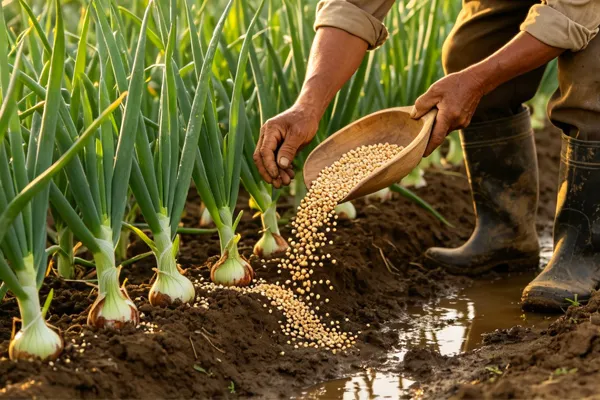
Onion plants are heavy feeders. They have a shallow root system, so they cannot search deeply for nutrients like some other crops. This means onions need a steady supply of fertilizer near the active root zone, especially during early growth.
The onion bulb grows from the leaves. Each healthy leaf helps form another ring inside the bulb. In simple words, stronger early tops often lead to better bulb size later. That is why nitrogen matters in the early growing season.
But balance is important. Onion plants do not need only nitrogen. They also need phosphorus for early root development and potassium for plant strength, water balance, and bulb quality. University of Minnesota Extension recommends growing onions in well-drained soil with pH 6.0 to 7.0 and applying phosphorus and potassium according to soil test recommendations.
For fertilizer distributors and farm buyers, this is the key message: onion fertilizer should support early leaf growth first, then bulb development later.
A good fertilizer for onions before planting is usually a balanced fertilizer such as 10-10-10, 15-5-10, or a similar NPK formula, depending on the soil test. The goal is to prepare the soil before planting so onion seedlings, onion sets, or transplants can start quickly.
Before you plant onions, loosen the soil and mix fertilizer into the top few inches. Texas A&M AgriLife Extension recommends spreading 2 to 3 pounds of a fertilizer such as 15-5-10, or 5 to 8 pounds of organic fertilizer, over 100 square feet of garden area, then mixing it into the top 3 to 4 inches of soil. For B2B fertilizer buyers, this is where NPK compound fertilizer fits well. A balanced NPK fertilizer can be used as a base fertilizer before planting, especially when buyers need standard formulas for vegetable farms, cooperatives, or agricultural projects.
| Fertilizer Type | Best Use for Onions | Notes |
|---|---|---|
| Balanced NPK fertilizer | Before planting | Supports early growth |
| Nitrogen fertilizer | Early top growth | Use as side-dress |
| Organic fertilizer | Soil improvement | Use mature products |
| Ammonium sulfate | Nitrogen + sulfur supply | Useful in many onion programs |
| Water-soluble fertilizer | Fertigation or quick feeding | Good for drip systems |
| BB blending fertilizer | Custom farm programs | Flexible NPK ratio |
Nitrogen is one of the most important nutrients for onion growth. It helps onion plants build leaves, and those leaves support bulb formation. However, nitrogen should be managed carefully. Too little nitrogen can reduce yield. Too much nitrogen late in the season can delay maturity and reduce storage quality.
Utah State University Extension says onions need additional nitrogen fertilizer after planting to produce optimum yields, and it recommends side-dressing onions with nitrogen fertilizer in mid-May and again in late June, while avoiding fertilization after mid-July because extra nitrogen may reduce storage potential.
For commercial farms, nitrogen rates should be based on local soil test data, crop target, irrigation method, and onion variety. Utah State University’s vegetable fertility guidance notes that a typical onion crop may use about 150 to 200 pounds of actual nitrogen per acre during the growing season, with much nitrogen uptake happening after bulbing begins.
Yes, organic fertilizer and compost can help onions, especially when the soil lacks organic matter. Compost improves soil structure, water holding, and microbial activity. Onion roots are shallow, so a loose and fertile topsoil layer is very helpful.
However, not every organic input is good right before planting. Fresh manure can be too strong and may create uneven nutrient release. Mature compost or a stable organic-inorganic compound fertilizer is usually safer for vegetable production.
Organic options are useful when growers want to improve fertility and soil health at the same time. For onion growing, organic nitrogen fertilizer can be part of a program, but farmers still need to track total nitrogen. Organic does not mean “apply without limit.”
A simple organic fertilizer plan may include:
For brand owners and importers, organic fertilizer products can be positioned around soil improvement, steady nutrition, and vegetable crop quality.
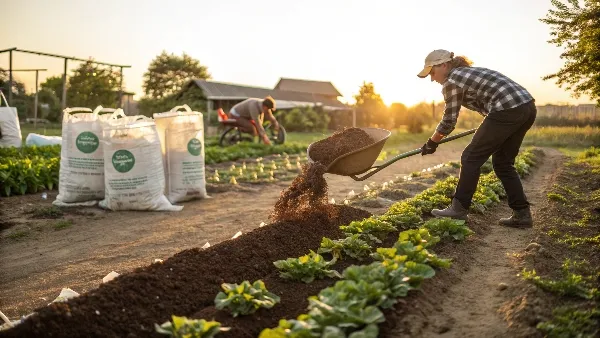
organic fertilizer application
You should fertilize onions after the plants are established and actively growing. For many gardens, the first side-dress happens a few weeks after planting. Then growers may fertilize every few weeks until the bulbs begin to form.
Texas A&M AgriLife Extension advises using about ½ cup of fertilizer for each 10 feet of onion row, scattering it evenly between rows, and watering onions after fertilizing. This matters because fertilizer left dry on the soil surface may not reach the roots effectively.
Here is a practical onion fertilization schedule:
| Growth Stage | Fertilizer Action | Purpose |
|---|---|---|
| Soil before planting | Mix balanced fertilizer into soil | Start root and leaf growth |
| Seedling or transplant stage | Keep soil moist, avoid overfeeding | Reduce stress |
| Early leaf growth | Side-dress nitrogen fertilizer | Build strong tops |
| Before bulbing | Continue light feeding if needed | Support growth |
| Bulbing begins | Reduce or stop heavy nitrogen | Focus on bulb formation |
| Before harvesting | Stop fertilizer and manage water | Improve maturity and curing |
For farms using drip irrigation, water-soluble fertilizer may be useful because nutrients can be delivered with irrigation water. This is especially helpful for commercial growers managing large areas.
Onion variety matters. Short-day onions, long-day onions, and intermediate-day onions form bulbs under different day lengths. If you choose the wrong onion variety for your region, even a good fertilizer program may not produce strong bulbs.
Short-day onions are often used in warmer southern regions. Long-day onions are used in northern regions. Intermediate-day types work between the two. The fertilizer plan supports growth, but the variety decides whether the plant responds correctly to day length.
A good onion fertilizer program should match:
For commercial buyers, this is important. A fertilizer supplier should not only sell a product. A good supplier should also ask: “What onion type are you growing? What soil do you have? What is your harvest goal?”
Onions do best in loose, fertile, well-drained soil. Wet or compacted soil can reduce root growth and increase disease risk. Poor drainage can also make onion bulbs softer and harder to store.
Soil pH matters too. University of Minnesota Extension recommends a pH between 6.0 and 7.0 for onions, with high organic matter and soil testing before applying phosphorus or potassium. Minnesota Extension’s broader fertilizer guidance also explains that soil pH affects nutrient availability and that many fruits and vegetables grow best in slightly acidic to neutral soil, around pH 5.5 to 7.0.
Before planting onions, growers should prepare the soil carefully:
Remove large stones and hard clods
Add compost or aged manure to improve fertility
Mix base fertilizer into the soil before planting
Keep the soil well-drained
Avoid very acidic soil
Use raised beds if drainage is poor
For large farms, soil test results can guide NPK selection. For example, if phosphorus is already high, growers may not need a high-phosphorus formula. If potassium is low, a potassium-supported program may improve crop quality.
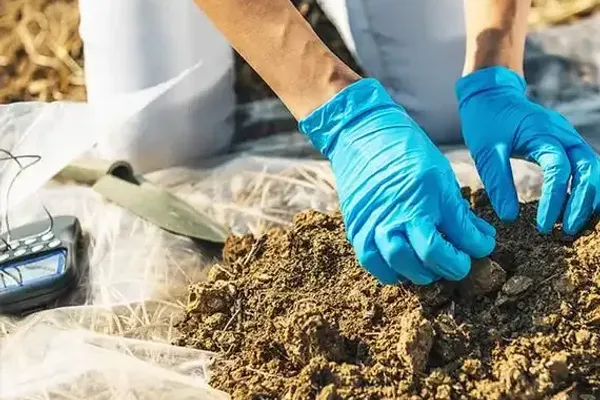
Soil test
Fertilizer works best when water and weed control are managed well. Onion roots are shallow, so plants need even moisture. Dry soil can slow onion growth, while waterlogged soil can damage roots.
A gardener should keep the soil evenly moist, especially during active leaf growth and early bulbing. Many onion growing guides recommend about 1 inch of water per week from rainfall or irrigation, though local climate and soil type matter. Recent gardening guidance also notes that onion plants have shallow roots and need consistent moisture for good growth.
Weeds are a big problem for onion plants. Onions do not shade the ground well, so weeds can compete for water, fertilizer, and light. Mulch can help hold moisture and suppress weeds, but it should not bury the bulb too deeply.
Basic care tips:
Weed early and often
Avoid deep cultivation around the plants
Keep soil moist, not flooded
Use mulch lightly
Watch for pest pressure
Keep rows open for airflow
Stop watering when tops begin to fall before harvest
Good fertilizer cannot fix poor field management. The best onion crop comes from fertilizer, water, soil, and weed control working together.
Stop heavy nitrogen fertilizer when onions start to bulb. At this stage, the plant should shift from leaf growth to bulb formation. If growers keep applying high nitrogen late, onion tops may stay green too long, and bulbs may not cure well.
Onions are ready to harvest when their tops begin to yellow and fall over. After harvesting, lift the bulbs gently and let them cure in a dry, airy place until the skins are papery. Good curing helps storage onions last longer.
| Harvest Sign | Meaning |
|---|---|
| Tops begin to fall | Bulbs are maturing |
| Neck softens | Growth is slowing |
| Skins are papery | Cure is improving |
| Bulbs are firm | Ready for storage |
| Tops dry down | Storage quality improves |
For commercial farms, harvest timing affects market value. Bulbs that are harvested too early may not store well. Bulbs left too long in wet soil may rot or lose quality.
Commercial farms should choose onion fertilizer based on soil test results, onion variety, irrigation method, growing season, and target market. Fresh green onions, large bulb onions, and storage onions do not always need the same program.
For agricultural distributors and importers, the best onion fertilizer product is not always one formula. A full product line may include base NPK fertilizer, nitrogen fertilizer, water-soluble fertilizer, organic fertilizer, and custom BB fertilizer. LV Fertilizer’s website shows product categories including NPK compound fertilizer, NPK water-soluble fertilizer, NPK blending fertilizer, nitrogen fertilizer, and organic-inorganic compound fertilizer.
A practical distributor program may include:
| Product Type | Buyer Need | Suggested Positioning |
|---|---|---|
| NPK compound fertilizer | Base application | Balanced nutrition before planting |
| Nitrogen fertilizer | Side-dressing | Strong leaf growth before bulbing |
| Ammonium sulphate | N + sulfur supply | Good for vegetable growth programs |
| Water-soluble fertilizer | Fertigation | Fast nutrient response |
| BB blending fertilizer | Local custom formulas | Flexible NPK ratio |
| Organic-inorganic fertilizer | Soil + nutrient support | Balanced growth and soil improvement |
For fertilizer brand owners, NPK blending fertilizer can support custom ratios for local soil and crop needs. This is useful when distributors want private-label onion fertilizer for specific markets.
As a China-based fertilizer manufacturer and exporter, LV Fertilizer supports OEM production, custom formulas, packaging, labeling, and bulk supply for global distributors and agricultural brands. Its website highlights OEM service, NPK formulas, packaging, labeling, and export support.
A fertilizer distributor wanted to serve vegetable growers who planted onions in early spring. Many farmers used the same fertilizer for all crops. The result was mixed: good leaf growth in some fields, but small bulbs and weak storage quality in others.
We suggested a simple onion-focused program. First, test the soil. Second, use a balanced base fertilizer before planting. Third, side-dress with nitrogen during early leaf growth. Fourth, reduce nitrogen when onions start to bulb. Fifth, support harvest quality with proper water and curing.
The distributor then positioned its onion fertilizer line around clear crop stages:
“Feed the tops early. Build the bulbs later. Stop heavy nitrogen before harvest.”
This simple message helped sales teams explain the product more clearly to farm owners and cooperatives.
What is the best fertilizer for onions?
The best fertilizer for onions is usually a balanced fertilizer before planting, followed by nitrogen fertilizer during early growth. Choose the formula based on a soil test and stop heavy nitrogen when bulbs begin to form.
Is 10-10-10 fertilizer good for onions?
Yes, 10-10-10 can be a good fertilizer before planting if the soil needs balanced NPK nutrients. It should be mixed into the soil before planting. Later, onions often need more nitrogen for leaf growth.
Do onions need a lot of nitrogen?
Onions need nitrogen during early growth because strong leaves help build bigger bulbs. But too much nitrogen late in the season can delay maturity and reduce storage quality.
Can I use organic fertilizer for onions?
Yes. Organic fertilizer and compost can improve soil structure and provide nutrients. Use mature compost or stable organic fertilizer, not fresh manure right before planting.
When should I stop fertilizing onions?
Stop applying heavy nitrogen when onions start to bulb. In many regions, this is several weeks before harvest. The goal is to let bulbs mature and cure properly.
Is ammonium sulfate good for onions?
Ammonium sulfate can be useful because it supplies nitrogen and sulfur. It is often used as a side-dress fertilizer in onion programs. Application rate should follow local soil test and crop guidance.
How do I know onions are ready to harvest?
Onions are ready to harvest when their tops begin to yellow and fall over. After lifting the bulbs, let them cure in a dry, ventilated place until the outer skins become papery.
Onions are heavy feeders and need steady nutrition for good bulb growth.
Use a balanced fertilizer before planting, then side-dress nitrogen during early growth.
Nitrogen helps onion plants build leaves, and healthy leaves support larger bulbs.
Do not keep applying high nitrogen after onions start to bulb.
Phosphorus and potassium should be applied based on soil test results.
Organic fertilizer and compost can improve soil structure and support long-term fertility.
Water, weed control, mulch, and soil drainage are just as important as fertilizer.
Harvest onions when the tops begin to fall, then cure them until the skins are papery.
Commercial onion fertilizer programs should be matched to soil, variety, irrigation, and market goals.
For distributors, cooperatives, government projects, and OEM fertilizer brands, a clear onion fertilizer program can improve grower trust and product sales.