Avoid your inquiry is delay response, please enter your WhatsApp/Skype along with the message, so we can contact you at the very first time.
We will reply you within 24 hours. If for urgent case, please add WhatsApp/WeChat: ,. Or call directly.
Salty soil can make farming difficult. Even when farmers apply enough fertilizer, crops may still grow slowly, develop weak roots, or show nutrient deficiencies. Choosing the wrong NPK fertilizer can make the problem worse. The solution starts with understanding soil salinity and selecting nutrients carefully.
The best NPK fertilizer for saline soil depends on soil electrical conductivity (EC), sodium levels, crop salt tolerance, and existing nutrient levels. Farmers should prioritize soil testing, avoid excessive fertilizer applications, consider lower-salt nutrient sources where appropriate, and combine fertilizer management with proper irrigation and drainage. Potassium sulfate may be preferable to potassium chloride for chloride-sensitive crops.
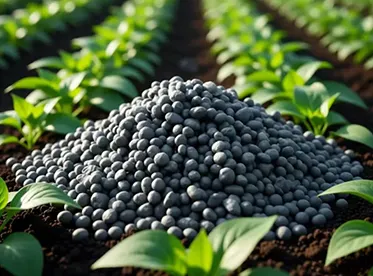
NPK Fertilizer for Saline Soil: How to Manage Salt Stress and Improve Nutrient Uptake
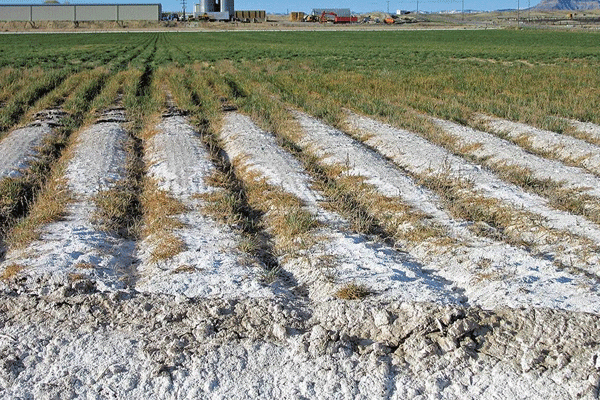
Soil salinity refers to the buildup of dissolved salts in soil. These salts may include sodium, chloride, calcium, magnesium, and sulfate. Some salts are essential nutrients, but excessive concentrations can make it difficult for plants to absorb water and maintain healthy growth.
The main problem is osmotic stress. When the salt concentration in soil water becomes too high, plant roots must use more energy to absorb water. Even when the soil looks moist, plants may experience water stress. This can result in slow growth, weak root systems, leaf damage, and reduced crop yields.
High salinity can also affect nutrient uptake. Excess sodium and chloride may interfere with the absorption of potassium, calcium, and other essential nutrients. Some crops may show symptoms that look like fertilizer deficiency, even when the soil contains enough nutrients.
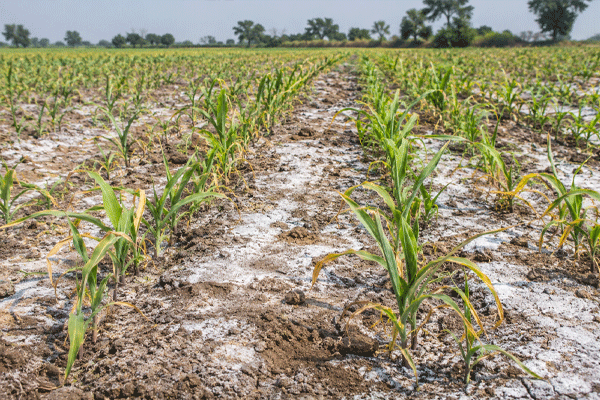
Common signs of salt stress include:
Crops also differ in their ability to tolerate salinity. Barley, cotton, and some forage crops generally tolerate more salt than beans, strawberries, and many other sensitive crops. Therefore, fertilizer selection should consider both soil conditions and crop requirements.
Saline soil and sodic soil are related, but they are not the same. Understanding this difference is important because each condition requires a different management approach.
Saline soil contains excessive soluble salts. These salts increase soil electrical conductivity and reduce the amount of water available to plant roots.
Sodic soil contains excessive exchangeable sodium. Sodium can damage soil structure by causing clay particles to disperse. This reduces water infiltration, drainage, and aeration.
Some fields have both problems. These are called saline-sodic soils.
| Soil Type | Main Problem | Typical Characteristics | Main Management Focus |
|---|---|---|---|
| Saline soil | Excess soluble salts | High EC | Leaching and drainage |
| Sodic soil | Excess exchangeable sodium | High SAR or ESP | Calcium amendment and drainage |
| Saline-sodic soil | High salts and sodium | High EC and SAR | Combined soil reclamation |
| Normal soil | No major salt problem | Lower salt levels | Regular nutrient management |
Traditional soil classification often uses the following reference values:
| Parameter | Saline Soil | Sodic Soil |
|---|---|---|
| ECe | Above 4 dS/m | Usually below 4 dS/m |
| SAR | Below 13 | 13 or higher |
| ESP | Below 15% | 15% or higher |
| pH | Usually below 8.5 | Often above 8.5 |
These are traditional classification thresholds, not universal crop safety limits. Sensitive crops can experience yield losses at lower salinity levels. Soil texture, crop type, sampling method, and irrigation conditions must also be considered.
For farmers, the practical lesson is simple: do not treat every salt-affected field in the same way. A fertilizer program designed for saline soil may not solve a sodic soil problem.
Yes. Every soluble fertilizer adds ions to the soil solution. When farmers apply more fertilizer than crops can absorb, or when irrigation and drainage are poor, these salts may accumulate around the root zone.
This does not mean NPK fertilizer is unsuitable for saline soil. Crops still require nitrogen, phosphorus, and potassium. The challenge is supplying these nutrients without adding unnecessary salt stress.
Three factors are especially important:
1. Fertilizer concentration
Highly concentrated fertilizer solutions can increase the salt concentration around roots, especially when applied in large amounts or close to young plants.
2. Application method
Applying too much fertilizer in one application may create a high concentration of dissolved salts in a small soil area. Splitting the total nutrient requirement into smaller applications can help manage this risk.
3. Water and drainage conditions
If irrigation water contains high levels of dissolved salts, or if the field cannot drain properly, fertilizer salts may remain in the root zone.
The salt index is a relative measure used to compare the potential salt effect of fertilizers. It is useful when evaluating different fertilizer sources, although it does not replace field-specific EC measurements or crop recommendations.
Some commonly referenced relative salt index values are:
| Fertilizer Material | Approximate Salt Index |
|---|---|
| Ammonium sulfate | 54 |
| Ammonium nitrate | 49 |
| Urea | 27 |
| Monoammonium phosphate (MAP) | 7 |
| Diammonium phosphate (DAP) | 8 |
| Potassium chloride (MOP) | 32 |
| Potassium sulfate (SOP) | 14 |
For example, potassium sulfate has a lower salt index than potassium chloride in commonly used fertilizer comparisons. This can make it a useful alternative for certain crops and soil conditions.
However, even a lower-salt fertilizer can increase soil salinity when applied excessively.
Electrical conductivity, or EC, measures how easily an electrical current passes through water or a soil extract. Because dissolved salts increase conductivity, EC is widely used to assess soil and irrigation water salinity.
There are two important measurements:
These measurements help farmers understand how much salt enters the field and how much remains in the soil.
A typical laboratory soil test may report ECe in dS/m at 25°C.
A general traditional classification is:
| ECe (dS/m) | General Interpretation |
|---|---|
| Below 2 | Low salinity |
| 2–4 | Slightly saline |
| 4–8 | Moderately saline |
| 8–16 | Strongly saline |
| Above 16 | Very strongly saline |
This table is a general soil classification guide. It should not be treated as a crop-specific fertilizer recommendation. Yield response varies significantly among crops.
Soil is not the only source of salt. Irrigation water can also introduce sodium, chloride, bicarbonates, and other dissolved materials.
If farmers continue using saline irrigation water without sufficient drainage, soil salinity may gradually increase.
A good monitoring program should include:
By checking these values, growers can make better decisions about fertilizer sources, application rates, and irrigation practices.
NPK Fertilizer for Saline Soil: How to Manage Salt Stress and Improve Nutrient Uptake
There is no single NPK formula that works for every saline soil. The best formulation depends on the crop, soil EC, nutrient deficiencies, irrigation water, and fertilizer application method.
A common mistake is choosing a fertilizer simply because it has a lower NPK concentration or a balanced ratio. Neither factor alone guarantees lower salt stress.
Instead, farmers should evaluate the complete formulation.
Different crops have different nitrogen, phosphorus, and potassium requirements.
For example:
| Crop Stage | Main Nutrient Considerations |
|---|---|
| Early establishment | Support root development without excessive salt concentration |
| Vegetative growth | Supply nitrogen according to crop demand |
| Flowering | Maintain balanced nutrient availability |
| Fruit development | Pay attention to potassium and calcium requirements |
| Harvest preparation | Avoid unnecessary late nutrient applications |
For commercial farms, the choice may include:
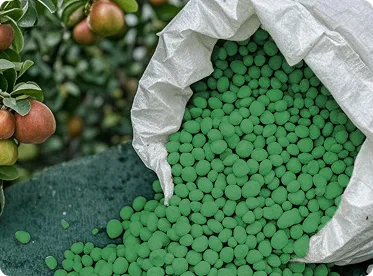
NPK compound fertilizer
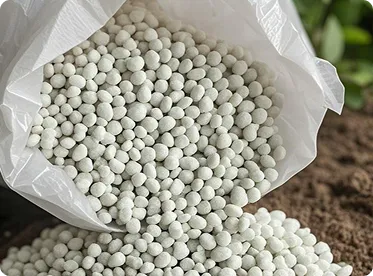
Suitable when a crop requires several primary nutrients in a consistent granular formulation. Product analysis should match the soil test and crop recommendation.
Explore the NPK compound fertilizer range for different nutrient formulations.
Water-soluble NPK fertilizer
Useful for fertigation systems where growers want to deliver measured nutrient quantities through irrigation water. However, water quality, solution EC, and compatibility must be checked carefully.
Explore water-soluble NPK fertilizers for different crop nutrition programs.
BB fertilizer
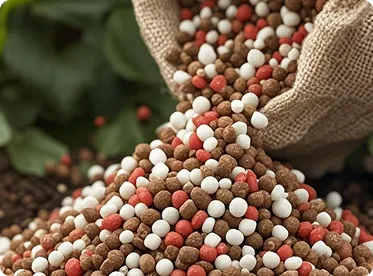
Bulk-blended fertilizers can provide different nutrient combinations based on regional crop requirements. Their physical compatibility and granule uniformity should be considered during product selection.
See the BB fertilizer and NPK blending product range.
Do not automatically select high-nutrient formulas or apply more fertilizer to correct poor crop growth. If salinity is restricting water uptake, additional fertilizer may increase the problem.
The better approach is to correct the underlying soil and water conditions while maintaining an appropriate nutrient supply.
Potassium is essential for water regulation, enzyme activity, and overall crop development. It also helps plants maintain normal physiological functions under environmental stress.
However, potassium fertilizer sources differ in their chemical composition.
The two common choices are:
The main difference is the additional anion supplied with potassium.
| Comparison | SOP | MOP |
|---|---|---|
| Chemical formula | K₂SO₄ | KCl |
| Typical K₂O content | 50–52% | 60–62% |
| Additional nutrient | Sulfur | None |
| Chloride content | No chloride from the fertilizer itself | Contains chloride |
| Relative salt index | Lower in common comparisons | Higher |
| Main consideration | Useful for chloride-sensitive crops | Economical potassium source for suitable crops |
Some crops are sensitive to excessive chloride. When chloride levels are already high in soil or irrigation water, adding more chloride through fertilizer may increase the risk of crop injury.
SOP supplies potassium without adding chloride and also contributes sulfur.
This makes it a useful option for certain fruit, vegetable, and specialty crops grown under saline conditions.
However, SOP is not a salt-free product. It still adds soluble ions to the soil and must be applied at suitable rates.
MOP is widely used because it offers a high potassium concentration and often has a lower purchase cost per unit of K₂O.
It may remain suitable for chloride-tolerant crops when soil and irrigation water conditions allow its use.
The decision should consider:
Fertilizer application in saline soil requires more attention to nutrient quantity and placement.
Instead of applying a large amount at one time, farmers may benefit from dividing the total nutrient requirement into smaller applications. This can help reduce high salt concentrations around roots and better match nutrient supply with crop demand.
However, the correct application plan depends on crop requirements, soil conditions, and the irrigation system.
Start by identifying how much nitrogen, phosphorus, and potassium the soil can already supply.
For example, if soil testing shows sufficient phosphorus and potassium but low nitrogen, applying a complete NPK fertilizer may introduce nutrients that the crop does not need.
A nitrogen-focused program may be more appropriate.
Split applications can be useful because they:
Seedlings are particularly sensitive to high salt concentrations.
Avoid placing concentrated fertilizer directly against seeds or young roots unless a locally validated placement method and product recommendation support it.
For example, banding fertilizer too close to the seed can increase the risk of salt injury.
Sometimes the problem is not the total amount of fertilizer but the source of a particular nutrient.
If chloride is already high, changing from MOP to SOP may be useful. If phosphorus is already sufficient, reducing additional phosphorus inputs may be more appropriate.
The goal is to supply the nutrients plants need without increasing unnecessary salt loading.
Fertilizer selection alone cannot solve soil salinity. Irrigation and drainage are essential parts of a successful management program.
Saline soil contains dissolved salts in the root zone. To reduce their concentration, farmers need to move those salts away from plant roots using suitable irrigation water and effective drainage.
Leaching involves applying sufficient low-salinity water to move soluble salts downward through the soil profile.
But there is an important condition: the field must have adequate drainage.
If water cannot move out of the root zone, leaching may simply move salts around or cause waterlogging.
Drip irrigation can help maintain more stable soil moisture around the active root zone.
It also creates a particular salt distribution pattern. Salts may move toward the edges of the wetted soil area as water moves outward and evaporates.
This means fertilizer placement and emitter location should be considered together.
Sodic soil needs a different approach.
Where laboratory testing confirms excessive exchangeable sodium, gypsum may be recommended as a calcium source. Calcium helps replace exchangeable sodium, which can then be removed through suitable leaching and drainage.
Important: Gypsum is not a universal treatment for ordinary saline soil. It should be used when soil analysis confirms a need for calcium amendment, particularly in sodic or saline-sodic conditions.
Adding gypsum without diagnosis can increase the total salt load.
NPK Fertilizer for Saline Soil: How to Manage Salt Stress and Improve Nutrient Uptake
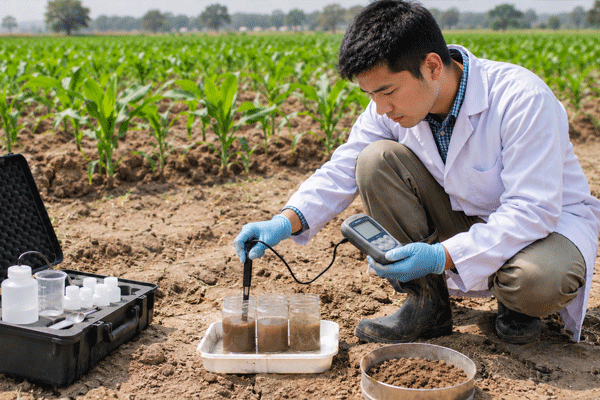
Soil testing should be the starting point for any fertilizer program in salt-affected agricultural areas.
Without reliable data, growers may choose an unsuitable NPK formula, apply excessive potassium, or overlook sodium and chloride problems.
A complete testing program should include several parameters.
| Test Parameter | What It Tells You | Why It Matters |
|---|---|---|
| Soil ECe | Total soluble salt level | Measures soil salinity |
| Soil pH | Acidity or alkalinity | Affects nutrient availability |
| SAR | Relative sodium hazard | Helps identify sodicity |
| ESP | Exchangeable sodium percentage | Evaluates sodium on soil particles |
| Available N | Nitrogen supply | Supports nitrogen planning |
| Available P | Phosphorus supply | Guides phosphorus application |
| Exchangeable K | Potassium supply | Guides potassium application |
| Chloride | Chloride concentration | Important for sensitive crops |
| Irrigation water EC | Water salinity | Identifies additional salt inputs |
Imagine a commercial farm growing vegetables in a semi-arid region.
Its soil test indicates:
A standard NPK fertilizer containing MOP may not be the most suitable first choice.
The farm could evaluate a potassium source without chloride, reduce unnecessary phosphorus inputs, and review irrigation practices.
The final fertilizer program should still depend on crop requirements, potassium recommendations, water quality, and local agronomic advice.
Salt levels may differ between the surface and deeper soil layers.
Taking samples from different depths can help identify whether salts are accumulating near the surface or moving downward.
For large farms and agricultural projects, regular monitoring provides a better basis for long-term fertilizer purchasing and crop planning.
Saline soil management creates a specific opportunity for fertilizer distributors, importers, and fertilizer brand owners.
Customers in salt-affected regions do not always need the same standard NPK products sold in other markets. They may require customized nutrient ratios, alternative potassium sources, specific sulfur levels, or suitable water-soluble formulations.
As a China-based fertilizer manufacturer and exporter, SHANDONG LVFENG FERTILIZER CO., LTD. supports global agricultural customers with NPK compound fertilizer, water-soluble NPK, BB fertilizer, ammonium sulfate, and customized fertilizer formulations.
| Product Development Factor | Commercial Importance |
|---|---|
| Target crop | Determines nutrient requirements |
| Regional soil conditions | Helps define the formulation |
| Irrigation water quality | Identifies potential salt and chloride concerns |
| NPK analysis | Matches local fertilizer demand |
| Potassium source | Supports chloride management where needed |
| Micronutrient content | Addresses specific regional deficiencies |
| Product form | Granular, compound, blended, or water-soluble |
| Packaging | Matches wholesale and retail channels |
| OEM customization | Supports private-label brands |
For importers and distributors, a reliable manufacturing partner can help develop products that match local market needs.
This may include:
However, a fertilizer formulation should never be marketed as universally salt-proof or suitable for all saline soils. Product recommendations must be based on the actual crop, soil, and water conditions.
LVFENG works with agricultural distributors, importers, commercial farms, cooperatives, and fertilizer brand owners to discuss product specifications and customized supply requirements.
If you are developing an NPK fertilizer portfolio for a saline agricultural market, explore our OEM fertilizer manufacturing service to discuss customized formulations, packaging, and bulk supply.
There is no universal best NPK formula. The right product depends on soil EC, crop salt tolerance, nutrient deficiencies, irrigation water, and fertilizer salt characteristics. Soil testing should guide the final choice.
Yes. All soluble fertilizers add ions to the soil solution. Excessive application, poor drainage, and saline irrigation water can increase salt accumulation in the root zone.
Potassium sulfate is often preferred for chloride-sensitive crops or where chloride levels are already high. It also supplies sulfur. However, the final choice depends on crop needs, soil conditions, and irrigation water quality.
Yes, but the nutrient concentration and irrigation solution EC must be carefully managed. Water-soluble fertilizer does not remove existing salts from the soil. Good irrigation water and drainage remain important.
Gypsum is mainly used to supply calcium for sodic soil management. It is not a universal solution for ordinary saline soil. Its use should be based on soil testing and a suitable reclamation plan.
Testing frequency depends on soil conditions, irrigation quality, crop sensitivity, and management practices. For commercial farms, testing before major fertilizer planning and monitoring during the growing season can help identify changes early.
Looking for a reliable NPK fertilizer manufacturer for your regional agricultural market? Contact SHANDONG LVFENG FERTILIZER CO., LTD. to discuss compound NPK fertilizer, water-soluble fertilizer, BB fertilizer, and customized OEM formulations for your target crops and markets.