Avoid your inquiry is delay response, please enter your WhatsApp/Skype along with the message, so we can contact you at the very first time.
We will reply you within 24 hours. If for urgent case, please add WhatsApp/WeChat: ,. Or call directly.
Poor crop growth often starts with a quiet problem: the soil lacks the right nutrient balance. When nitrogen and sulfur are low, yield can drop, leaves can yellow, and buyers may lose trust. Ammonium sulfate offers a simple, proven answer.
Ammonium sulfate, also called ammonium sulphate, is commonly used as a nitrogen and sulfur fertilizer. It is also used in fertilizer blending, some industrial applications, food processing as a regulated additive, laboratory purification, and limited water treatment uses. In agriculture, it helps supply ammonium nitrogen and sulfate sulfur, especially for crops and soils that need both nutrients.
Ammonium sulfate and ammonium sulphate are two spellings for the same inorganic salt. In American English, “sulfate” is common. In British English and many export markets, “sulphate” is still widely used. For global fertilizer buyers, both terms matter because customers may search both names.
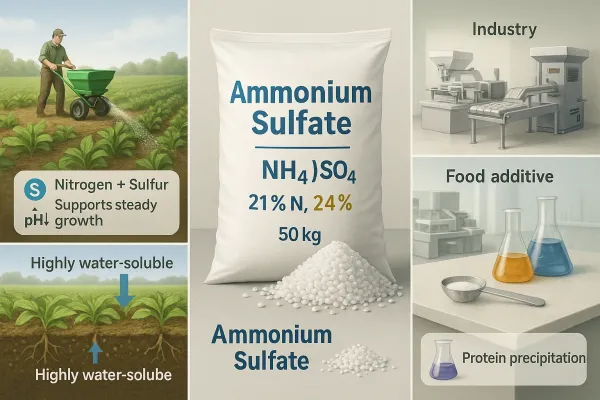
Chemically, ammonium sulfate is an inorganic sulfate salt obtained from ammonia and sulfuric acid. It contains ammonium and sulfate, which are useful forms for many agricultural applications. FAO describes ammonium sulphate as a traditional nitrogen and sulfur fertilizer containing about 21% nitrogen and 23–24% sulfur, all nitrogen in ammonium form and sulfur in sulphate form.
For international fertilizer buyers, this matters. A distributor may call it ammonium sulfate fertilizer, while a UK, African, Middle Eastern, or Asian buyer may ask for ammonium sulphate fertilizer. As a China-based manufacturer and exporter of high-quality fertilizer products, we use both names in communication to make sourcing easier for importers, farm cooperatives, OEM clients, and agricultural project buyers.
The main use of ammonium sulfate is as a fertilizer. It provides two important crop nutrients in one product: nitrogen and sulfur. Nitrogen supports leaf growth, plant color, and yield building. Sulfur helps with protein formation, enzyme activity, and crop quality.
FAO notes that ammonium sulphate is used directly or as an ingredient in fertilizer mixtures, either as basal dressing or top-dressing. The Sulphur Institute also lists ammonium sulphate as one of the oldest nitrogen and sulfur-containing fertilizers and says it remains popular around the world.
This is why many distributors buy ammonium sulfate fertilizer for bulk supply. It is simple, familiar, and easy to explain to farmers. It is especially useful where crops need a fast nutrient source and where fertilizer brands need a stable product for blending, bagging, or private label sales.
What Is Ammonium Sulfate / Ammonium Sulphate Commonly Used As? Fertilizer, Soil, Nitrogen, Sulfur, and Water Treatment Uses
Ammonium sulfate works by releasing ammonium ion and sulfate ion after it dissolves. The ammonium ion supplies ammonium nitrogen, while the sulfate ion supplies plant-available sulfur. Because it is soluble in water, it can move into the soil solution after irrigation or rainfall.
The product is acid-forming. This means ammonium sulfate is often helpful in alkaline soils, but it should be used carefully in acidic soil. Oklahoma State University notes that its acid-forming reaction can be useful in high-pH soils and for acid-requiring crops, while it may be undesirable in soils already needing liming.
For buyers, this creates a clear sales point: ammonium sulphate is not just “another nitrogen fertilizer.” It is a practical fertilizer for alkaline soils when used under local agronomy advice. Still, the final rate should depend on crop type, soil ph, climate, and the full nutrient plan.
Many crops can benefit from ammonium sulphate fertilizer, especially when both nitrogen and sulfur are needed. Common examples include corn, wheat, rice, oilseed crops, vegetables, pasture, tea, fruit trees, and crops grown on light or sulfur-deficient soil.
The product is widely used as a fertilizer because it supports both yield and crop quality. Sulfur is often important for oilseed crops, brassicas, legumes, onions, garlic, and high-protein crops. For commercial farm owners and cooperatives, the value is simple: one product can help correct two nutrient gaps.
For distributors, this also makes ammonium sulfate easier to sell across a wide range of applications in agriculture. It can be included in nitrogen fertilizer sourcing programs or paired with other fertilizer sources such as urea, ammonium nitrate, calcium ammonium nitrate, or compound NPK fertilizers.
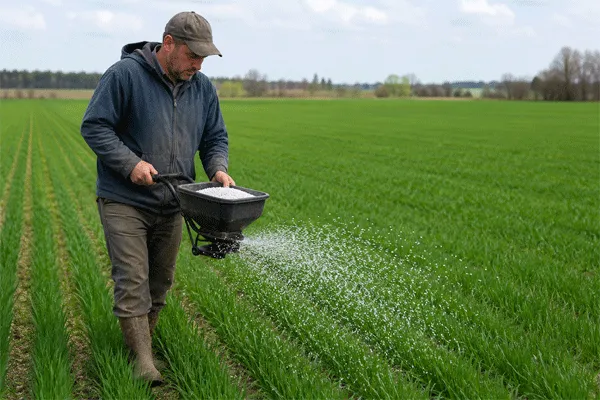
Farmers may apply ammonium sulfate before planting, during early crop growth, or as a top-dressing, depending on crop needs. Some use it in blends. Others apply it directly to the field. The best method depends on local soil testing, rainfall, irrigation, crop stage, and target nutrient concentration.
Because ammonium sulfate is soluble, it can dissolve and become available after moisture reaches the soil. For even application, farmers should use calibrated spreaders, avoid over-application, and follow local agricultural advice. This is especially important where soil or water conditions are already acidic.
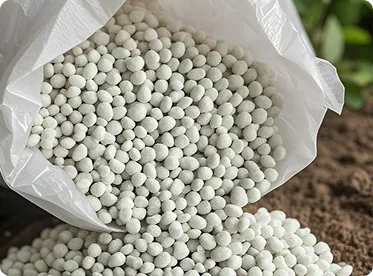
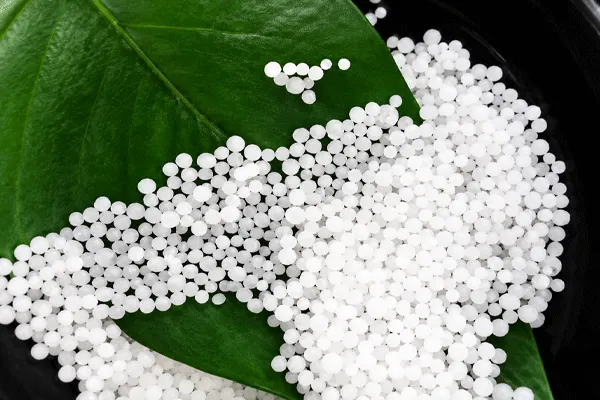
For large projects, we suggest buyers match product grade with the end use. Granular ammonium sulphate is often preferred for field spreading and blending. Crystalline product may suit some industrial applications or specialty needs. For OEM clients, packaging, particle size, and anti-caking performance can be just as important as chemical content.
Ammonium sulfate, urea, and ammonium nitrate are all nitrogen fertilizer options, but they are not the same. Urea has a higher nitrogen concentration, while ammonium sulfate gives both nitrogen and sulfur. Ammonium nitrate supplies nitrate and ammonium nitrogen but may face more regulatory limits in some markets.
| Product | Main Nutrient Value | Common Buyer Reason | Key Note |
|---|---|---|---|
| Ammonium sulfate / ammonium sulphate | 21% N, 23–24% S | Nitrogen + sulfur supply | Acid-forming, good for high-pH soils |
| Urea | High N | Cost-effective nitrogen | Often needs careful handling to reduce losses |
| Ammonium nitrate | Nitrogen | Quick nitrogen source | More regulated in many countries |
| Calcium ammonium nitrate | Nitrogen + calcium | Safer nitrate-based option | Common in some regions |
The use of ammonium sulfate becomes more attractive when sulfur is part of the crop plan. If a buyer only wants maximum nitrogen per ton, urea may look cheaper. But if the farm needs sulfur too, ammonium sulfate can be a better value because it supplies both nutrients in one bag.
Yes. Ammonium sulfate used in blends is common because it brings nitrogen and sulfur into NPK formulas. The Sulphur Institute explains that ammonium sulphate can be used directly or for blending with other fertilizers, and granular material can improve handling and bulk blending performance when size is controlled.
For fertilizer brand owners, this is important. A good blend needs more than the right formula on paper. It needs matched particle size, stable granules, low dust, low caking, and reliable bag weight. A poor physical mix can separate during transport. That creates uneven field performance.
As a manufacturer and exporter, we support buyers looking for custom fertilizer products and blending materials. For OEM orders, we can discuss private label bags, neutral bags, bulk jumbo bags, export pallets, and container loading plans.
What Is Ammonium Sulfate / Ammonium Sulphate Commonly Used As? Fertilizer, Soil, Nitrogen, Sulfur, and Water Treatment Uses
Yes. Ammonium sulphate is one of the most widely used nitrogen and sulfur fertilizer sources. The Sulphur Institute says sulphate-containing fertilizers supply sulfur in the SO₄²⁻ form, which is immediately available for plant uptake.
Sulfur deficiency can look like nitrogen deficiency at first glance. Leaves may become pale, growth may slow, and yield may suffer. The difference is that sulfur shortage often appears first on younger leaves, while nitrogen shortage often starts on older leaves. Local testing is the best way to confirm the problem.
For regions with sandy soil, high rainfall, or low organic matter, sulfur can leach more easily. This creates steady demand for sulfur fertilizer supply solutions. Ammonium sulfate is considered a practical answer because it combines sulfate sulfur with ammonium nitrogen.
Yes. Ammonium sulfate is soluble in water. PubChem identifies ammonium sulfate as a white solid that dissolves in water and describes ammonium sulphate as very soluble in water.
This solubility helps explain why ammonium sulfate solution can be used in some liquid fertilizer systems. It also means that storage matters. Bags should stay dry, closed, and protected from moisture. If the product absorbs water, caking can reduce flow and make handling harder.
For importers and distributors, good packaging protects profit. We usually recommend strong woven bags with inner liners, clear labels, correct batch information, and suitable container loading. For humid destinations, packaging and storage advice should be discussed before shipment.
Yes, ammonium sulfate has a wide range of applications beyond farming. It may be used in water treatment, laboratory purification, fermentation, textile processing, and other industrial applications. In some systems, it can support nutrient control or chemical processes, but specifications should match the exact end use.
In non-agricultural markets, buyers may ask for different purity, particle size, moisture level, or chloride control. Some may compare it with ammonium chloride, ammonium bisulfate, ammonium carbonate solution, nickel sulfate, or barium sulfate depending on the process. These are different ammonium compounds or sulfate salts, so buyers should not treat them as interchangeable.
The effect of ammonium sulfate in industry depends on concentration, solution quality, and process design. If your company needs ammonium sulfate used in water treatment or as a process material, the best step is to share the target specification first. We can then recommend whether agricultural grade, industrial grade, or another grade is more suitable.
In some regulated uses, ammonium sulfate can be used as a food additive. U.S. federal regulation lists ammonium sulfate as generally recognized as safe when used according to good manufacturing or feeding practice.
In food applications, ammonium sulfate may be used as a dough conditioner or processing aid under local rules. This does not mean every fertilizer-grade product is suitable for food. Food, feed, industrial, and agricultural grades have different quality controls, documentation, and legal requirements.
That is why buyers must be clear about final use. A fertilizer importer buying for field crops needs one type of product. A food processor needs another. Exposure to ammonium sulfate should follow the safety data sheet, local law, and responsible handling procedures.
B2B buyers should check product grade, nitrogen and sulfur content, moisture, appearance, particle size, packaging, documents, and supplier export experience. Price matters, but consistency matters more. One cheap shipment can become expensive if bags cake, labels are wrong, or granules do not match the blending line.
Here is a practical buying checklist:
For fertilizer brand owners, we also support OEM fertilizer and private label packaging. A stable export partner can help you reduce sourcing risk, protect your brand image, and respond faster to seasonal demand.
What Is Ammonium Sulfate / Ammonium Sulphate Commonly Used As? Fertilizer, Soil, Nitrogen, Sulfur, and Water Treatment Uses
Imagine an agricultural distributor serving commercial corn and vegetable farms in a high-pH region. Farmers already buy urea because it is familiar. But some fields show weak color and poor growth even after nitrogen application. Soil testing shows low sulfur and alkaline soils.
The distributor introduces ammonium sulphate as a two-in-one nutrient option. The message is simple: “This product supplies ammonium nitrogen and sulfate sulfur in one fertilizer.” It is not sold as magic. It is sold as a practical, test-based tool.
The result is better product positioning. Farmers understand when to use ammonium sulphate, distributors add a new value line, and the brand owner gains a product that supports repeat orders.
Field note: In our export work, the best buyers do not only ask, “What is the FOB price?” They also ask, “Will this product fit my farmers, my label, my warehouse, and my local registration needs?” That is the right question.
China has strong fertilizer production and export experience. For importers, cooperatives, government agricultural projects, and NGO programs, the main goal is not only finding ammonium sulfate. The goal is finding steady supply, stable quality, clear documents, and responsive communication.
As a leading manufacturer and exporter of high-quality fertilizer products based in China, we focus on B2B supply. We understand that agricultural distributors need sellable products. Farm cooperatives need dependable performance. Government and NGO projects need documentation and shipment control. OEM clients need packaging that protects their brand.
Our value is practical:
When you need ammonium sulfate fertilizer for wholesale, brand supply, or project procurement, we can help you compare specifications and build a sourcing plan that fits your market.
Ammonium sulfate is used as a fertilizer, mainly to supply nitrogen and sulfur. It is also used in fertilizer blends, industrial applications, water treatment, purification work, and some regulated food-related uses.
Yes. Ammonium sulphate and ammonium sulfate are the same chemical product. “Sulfate” is common in American English, while “sulphate” is common in British English and many international markets.
Yes. Ammonium sulfate is a nitrogen fertilizer. It contains about 21% nitrogen, all in ammonium form, plus 23–24% sulfur as sulfate. This makes it useful when crops need both nutrients.
Yes, ammonium sulfate can be useful for alkaline soils because it is acid-forming. However, application rates should be based on soil testing, crop demand, and local agronomy advice.
It depends on the goal. Urea has higher nitrogen concentration, but ammonium sulfate supplies both nitrogen and sulfur. If sulfur is needed, ammonium sulfate may be the better fertilizer choice.
Ammonium sulfate is widely used, but it should still be handled responsibly. Workers should follow the product SDS, avoid dust exposure, keep bags dry, and comply with local storage and transport rules.