Avoid your inquiry is delay response, please enter your WhatsApp/Skype along with the message, so we can contact you at the very first time.
We will reply you within 24 hours. If for urgent case, please add WhatsApp/WeChat: ,. Or call directly.
Poor crop growth often starts below the surface. When soil lacks nitrogen or sulfur, plants turn pale, roots weaken, and yield can drop. Ammonium sulfate helps farmers fix this problem by feeding crops with two key nutrients in one simple fertilizer.
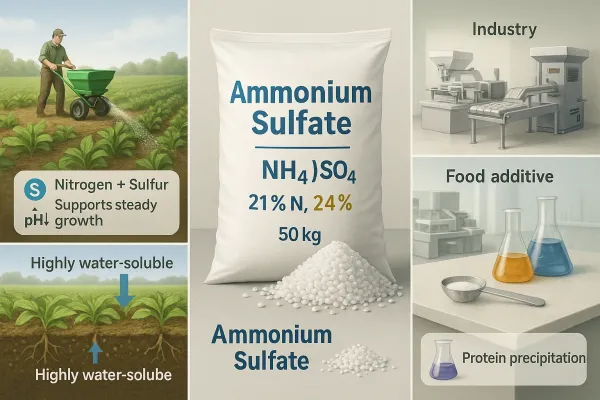
Farmers use ammonium sulfate because it supplies fast-available ammonium nitrogen and sulfate sulfur, supports crop growth, improves sulfur nutrition, and works especially well in many alkaline soils. It is widely used for cereals, vegetables, fruits, oil crops, and pasture when growers need a reliable nitrogen and sulfur fertilizer.
Why Do Farmers Use Ammonium Sulfate Fertilizer for Soil, Nitrogen, and Sulfur Nutrition?
Ammonium sulfate is a nitrogen and sulfur fertilizer. It is also written as ammonium sulphate in many markets. In farming, it is widely used because it gives crops two important nutrients in one product: ammonium nitrogen and sulfate sulfur.
A common agricultural grade contains about 20.5–21% nitrogen and 23–24% sulfur, depending on the product standard. For example, Lvfeng supplies ammonium sulphate fertilizer 20.5-0-0+23S for global agricultural buyers who need a stable nitrogen and sulfur source.
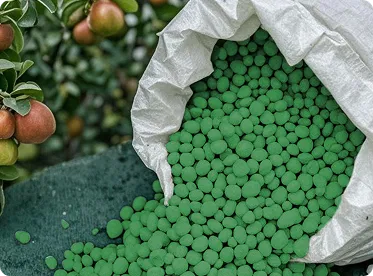
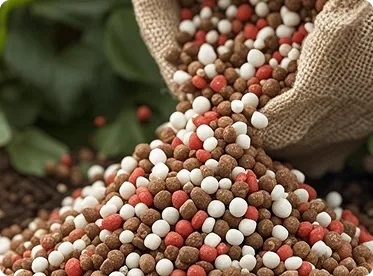
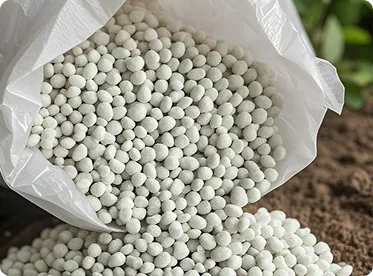
In appearance, ammonium sulfate is usually white to beige in crystal or granule form. It has good solubility, so it can release nutrients into the soil solution and support plant roots when moisture is available.
Farmers use ammonium sulfate because crops need both nitrogen and sulfur to grow well. Nitrogen helps leaves grow green and strong. Sulfur supports amino acid formation, protein building, enzyme activity, and overall plant nutrition.
In practical crop production, sulfur deficiency can look like nitrogen deficiency. Young leaves may turn pale. Growth may slow. Crop yield may suffer. This is why farmers and agronomists often choose ammonium sulfate when a soil test shows low sulfur or when the crop has high sulfur demand.
For distributors and importers, this also makes ammonium sulfate fertilizer easy to explain to customers: it is not just a nitrogen fertilizer. It is an excellent source of nitrogen and sulfur for balanced crop nutrition.
After application, ammonium sulfate dissolves in the soil. It releases ammonium nitrogen and sulfate sulfur. The ammonium form can attach to soil particles, while nitrate nitrogen can move more easily with water.
Soil bacteria slowly oxidize ammonium through nitrification. During this process, ammonium becomes nitrate, which plants can also absorb. This process can also release acidity, so soil pH decreases over time when ammonium sulfate is used regularly.
This is one reason ammonium sulfate works particularly well in many soils with high soil pH. In alkaline soils, it can help improve the availability of phosphorus and micronutrients such as iron, zinc, and manganese. Still, it should be used based on soil test results and local agronomist advice.
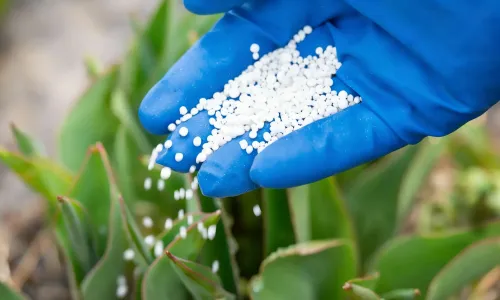
Why Do Farmers Use Ammonium Sulfate Fertilizer for Soil, Nitrogen, and Sulfur Nutrition?
Farmers can apply ammonium sulfate before planting, during early growth, or as a top dressing. The best timing depends on the crop, soil type, rainfall, irrigation system, and growing season.
Common application methods include:
If you need custom formulas for local crops, our custom NPK compound fertilizer options can combine nitrogen, phosphorus, potassium, sulfur, and micronutrient needs into one crop-specific plan.
Ammonium sulphate is used for many crops. It is common in cereals, oil crops, vegetables, fruits, forage, tea, sugarcane, onion, garlic, corn, wheat, rice, and pasture grasses.
Crops with strong sulfur demand often benefit from sulfur fertilizer. These include oilseed crops, brassicas, onions, garlic, and some high-yield grain crops. In sandy soils or areas with heavy rain, sulfate sulfur can leach, so sulfur supply may become more important.
| Crop Type | Why Ammonium Sulfate Is Used | Common Buyer Need |
|---|---|---|
| Corn, wheat, rice | Supports leaf growth and nitrogen uptake | Bulk nitrogen fertilizer |
| Onion, garlic, brassicas | Supports sulfur nutrition and crop quality | Stable sulfur fertilizer |
| Oil crops | Helps protein and oilseed development | Nitrogen and sulfur source |
| Fruits and vegetables | Supports growth, color, and yield potential | Custom crop nutrition |
| Pasture and forage | Promotes green biomass | Cost-efficient fertilizer use |
For irrigation-based farming, farmers may also consider water soluble fertilizer when fast dissolving and precision feeding are required.
Urea contains more nitrogen, usually about 46%. Ammonium sulfate contains less nitrogen, but it also supplies sulfur. So the choice is not only about nitrogen percentage. It is about crop need, soil condition, cost, application method, and nutrient balance.
Urea can be a strong nitrogen source, but it may lose nitrogen through ammonia volatilization if left on the soil surface under warm, moist, and alkaline conditions. Urea and ammonium sulfate behave differently because ammonium sulfate already contains ammonium nitrogen and sulfate sulfur.
| Fertilizer | Main Nutrient Strength | Key Concern | Best Fit |
|---|---|---|---|
| Ammonium sulfate | Nitrogen + sulfur | Can acidify soil over time | Crops needing N and S |
| Urea | High nitrogen | Volatilization risk if unmanaged | Low-cost N supply |
| Ammonium nitrate | Fast nitrogen | Availability and regulation vary | Quick crop response |
| NPK blends | Balanced nutrition | Formula must match soil | Full crop program |
For many distributors, the best solution is not “ammonium sulfate vs urea” only. It is a smart blend. Our NPK blending fertilizer supplier service helps buyers create practical formulas for different crops, regions, and price levels.
Ammonium sulfate can acidify soil over time. This is helpful in some alkaline soils, but it must be managed carefully in acidic soil. The application of ammonium fertilizer should always match soil pH, crop tolerance, and local fertilization plans.
In high soil pH areas, acidifying the soil slightly may improve nutrient availability. This can help crops access phosphorus and micronutrients better. But in already acidic soil, overuse may lower pH too much and reduce soil health.
A simple rule is this: test first, apply second. A soil test helps the grower know if ammonium sulfate is the right choice, what rate to use, and whether lime or other amendments are needed.
Nitrogen loss happens when fertilizer is not matched with soil, water, and crop demand. Loss can happen through leaching, denitrification, runoff, or gaseous ammonia volatilization. Good management improves efficient use and protects profit.
Farmers can reduce loss by applying ammonium sulfate before rain or irrigation, placing it below the soil surface when possible, avoiding over-application, and matching timing with crop uptake. In no-tillage systems, surface application should be planned with care.
Practical tips include:
This is where fertilizer planning becomes more than product buying. It becomes sustainable agriculture.
Agricultural distributors and importers should check more than price. Product quality, granule size, moisture, caking control, packaging, export documents, batch testing, and supply stability all matter.
A good ammonium sulfate supplier should provide clear specifications. Typical items include nitrogen content, sulfur content, moisture, pH, water insoluble matter, particle size, and packaging options. Stable quality helps distributors protect their brand reputation.
| Buying Factor | Why It Matters |
|---|---|
| Nitrogen and sulfur content | Confirms nutrient value |
| Granule size | Supports even spreading |
| Moisture level | Reduces caking risk |
| Solubility | Helps nutrient release |
| Packaging | Supports retail, wholesale, and OEM sales |
| Export documents | Reduces import risk |
If you sell under your own brand, our OEM fertilizer service can support private label packaging, formula customization, bag design, and bulk export supply.

Why Do Farmers Use Ammonium Sulfate Fertilizer for Soil, Nitrogen, and Sulfur Nutrition?
For global fertilizer buyers, China remains an important fertilizer production and export base. A reliable manufacturer can offer stable supply, flexible packaging, competitive pricing, and product customization for local markets.
As a leading manufacturer and exporter of high-quality fertilizer products based in China, we support agricultural distributors, commercial farm owners, cooperatives, government agricultural projects, NGO farming programs, and OEM fertilizer brand owners.
Lvfeng also supplies a broader nitrogen fertilizer manufacturer product range, so buyers can compare ammonium sulphate, CAN, urea-based formulas, and custom nitrogen blends in one purchasing plan.
A fertilizer importer serving commercial farms in an alkaline soil region wants to launch a practical nitrogen and sulfur fertilizer. Farmers already use urea, but some crops show pale growth and weak sulfur response.
The importer can position ammonium sulfate used as a dual nutrient product. The selling message is simple: one granule, two nutrients, strong fit for alkaline soils and sulfur-demanding crops.
A smart launch plan may include:
This approach helps the importer sell not only one fertilizer, but a full crop nutrition program.
Ammonium sulfate is useful in many soils, especially where crops need nitrogen and sulfur. It works particularly well in alkaline soils. In acidic soil, farmers should use it carefully and monitor soil pH.
Yes, it can support increased crop yields when nitrogen or sulfur is limiting growth. The result depends on soil condition, crop type, application rate, weather, and overall crop management.
No. Ammonium sulfate supplies nitrogen and sulfur. Ammonium nitrate supplies nitrogen in ammonium and nitrate forms but does not provide sulfur. Availability and regulations for ammonium nitrate also vary by market.
Yes, farmers can use urea and ammonium sulfate together in some programs. The blend can raise total nitrogen while adding sulfur. Rates should be based on soil test results and crop demand.
Like many fertilizer sources, ammonium sulfate can damage seed or young plants if too much is placed too close. Avoid direct seed contact at high rates and follow local application guidance.
Yes. Ammonium sulfate is suitable for OEM fertilizer brands because it can be sold in bulk, retail bags, or customized packaging. It can also be included in compound or blended fertilizer programs.